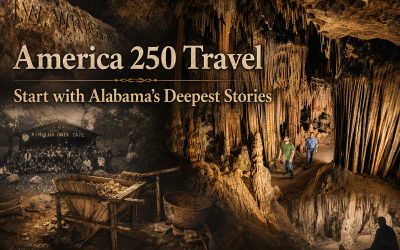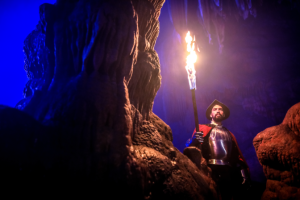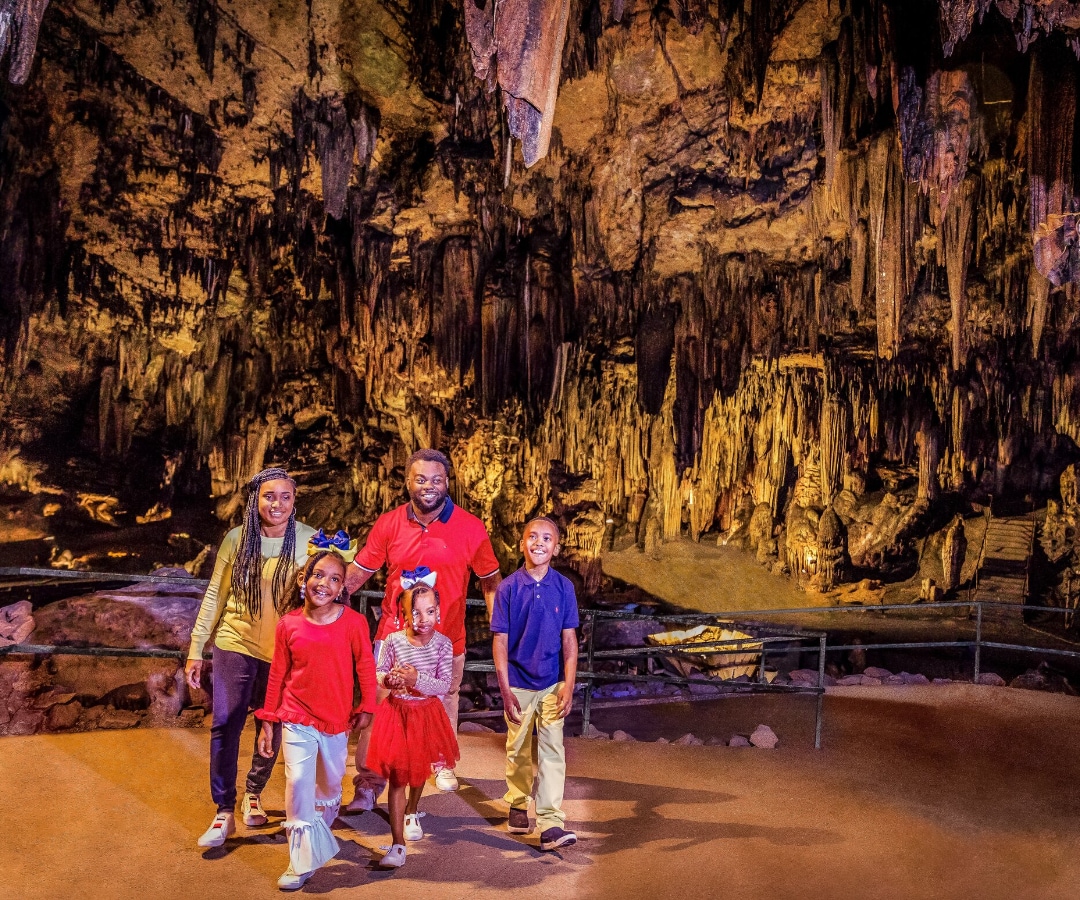

In December 1796, a federal official appointed by President George Washington entered a sacred cave in what is now Childersburg, Alabama.
His name was Benjamin Hawkins.
He wrote about what he saw.
And because he recorded it in his official capacity as a United States officer, that cave became one of the earliest federally documented caves in the United States.
That cave is now known as Majestic Caverns.
This article explains what that means, why it matters, and why it is historically significant as America approaches 2026 and the 250th anniversary of the United States.
Who Was Benjamin Hawkins?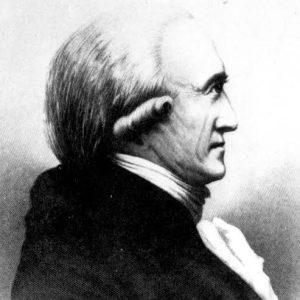
Benjamin Hawkins (1754–1816) was one of the most influential federal officials of the early American republic.
He served as:
• A Revolutionary War officer
• A United States Senator from North Carolina
• General Superintendent of Indian Affairs for all tribes south of the Ohio River, appointed during the Washington administration
In that final role, Hawkins lived among the Muscogee (Creek) people and served as a diplomatic intermediary between the United States government and Native nations in the Southeast.
He was not a tourist or explorer passing through.
He was a senior federal officer operating under presidential authority.
What Happened in December 1796?
During a visit to the Muscogee (Creek) Nation in December 1796, Hawkins was taken to a sacred cave used and revered by the local people.
He recorded:
• The physical structure of the cave
• The size and magnitude of its chambers
• The presence of mineral deposits, including saltpeter-related materials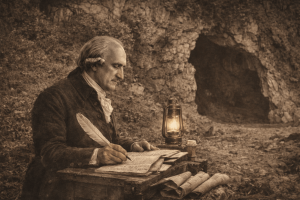
• His impressions of its grandeur
Historical summaries note that Hawkins described the cave’s beauty in vivid terms, comparing its formations to artistic works and elaborate European interiors.
His written account was part of his official correspondence as General Superintendent of Indian Affairs. That documentation places the cave in the formal record of the United States government during George Washington’s presidency.
What Does “Federally Documented” Actually Mean?
The phrase “federally documented” is often misunderstood.
It does not mean:
• The federal government owned the cave
• President Washington personally visited the cave
• The site was designated as a federal landmark in 1796
It means something more precise and historically meaningful:
A federally appointed United States official, acting in his official capacity, recorded and reported the cave in formal government correspondence during the Founding Era.
Because Hawkins was serving as General Superintendent of Indian Affairs, his reports were part of the official federal record.
This places Majestic Caverns among the earliest natural features in the United States to be described in federal documentation.
Why This Predates Alabama Statehood
In 1796:
• Alabama was not yet a state (statehood came in 1819).
• The region was still frontier territory.
• The United States Constitution was less than a decade old.
Hawkins’ visit occurred during the Washington administration, when the federal government itself was still being structured and defined.
This means the cave’s federal documentation predates:
• Alabama statehood
• The War of 1812
• The Civil War
• Most state-level historic preservation systems
The cave entered the national record before Alabama existed as a state.
Why This Matters in 2026 (America 250)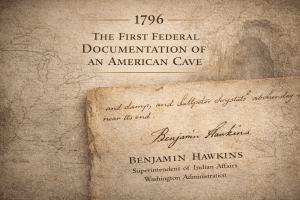
In 2026, the United States will mark 250 years since the Declaration of Independence.
Many sites will commemorate:
• Revolutionary battlefields
• Early government buildings
• Homes of Founding Era leaders
Very few natural sites can demonstrate:
• Documented presence in the federal record during the Washington presidency
• Continuous historical relevance from Indigenous sacred site to Civil War resource to modern stewardship
• Primary-source documentation tied directly to federal governance
Majestic Caverns is one of those rare sites.
Its significance lies not only in its geology, but in its early placement within the national historical framework of the United States.
Broader Historical Context
Majestic Caverns was already culturally significant long before Hawkins’ visit:
• Used during the Woodland Period for burials
• Associated with Muscogee (Creek) sacred traditions
• Located near the Coosa capital encountered during the 1540 expedition of Hernando de Soto
Later, the cave:
• Became a saltpeter mining center during the Civil War
• Was purchased in 1912 by Ida Elizabeth Brandon Mathis, preserving it within the same family stewardship
But the Hawkins documentation represents the pivotal moment when the cave enters the official narrative of the United States government.
Why This Claim Is Historically Strong
From a historian’s perspective, the strength of this claim rests on:
• A named federal official
• A documented visit in December 1796
• A defined federal office under the Washington administration
• Surviving correspondence and secondary documentation confirming the report
This is not folklore.
It is part of the written federal record of the early republic.
A Natural Site in the Founding Era Record
Most natural landscapes in America were known locally long before they were written about nationally.
Very few were described in federal documentation during the presidency of George Washington.
Majestic Caverns was.
In 1796, while the United States was still defining its political identity, a federal officer stood inside this cave and formally recorded its existence.
That moment places the caverns within the earliest layers of documented American history.
And that is why the 1796 Hawkins documentation matters.
Sources
• Letters of Benjamin Hawkins, 1796–1806, Georgia Historical Society / University of Georgia Libraries
• Show Caves of the United States of America – Majestic Caverns
• The Story Behind the Iconic DeSoto Caverns – This Is Alabama
• Majestic Caverns – Atlas Obscura