PRESS & MEDIA
A Federally Documented American Landmark
Preserved by One Family and Still Open to the Public
Majestic Caverns (formerly DeSoto Caverns) is a family-owned historic cavern located in Childersburg, Alabama, recognized for its archaeological, federal, and preservation significance.
With documented history spanning thousands of years, the site offers journalists and educators access to one of the most continuously known natural landmarks in the southeastern United States.
Public Hours
Fri, Sat & Mon: 10 AM–5:30 PM
Sun: 12–5:30 PM
Groups of 20+ may schedule visits any day, including Tuesdays–Thursdays and outside public hours.
Check events calendar for future hours, as park hours vary.
ADDRESS
5181 DeSoto Caverns Parkway
Childersburg, AL 35044
Formerly DeSoto Caverns
PHONE
256.378.7252
General Email
Info@MajesticCaverns.com
Press Related Questions Email
press@MajesticCaverns.com
A Place That Has Witnessed America’s Story
Some places preserve history behind glass.
Others allow you to step directly into it.
Long before the United States existed, the limestone chambers beneath what is now Childersburg, Alabama were already forming — shaped by water, time, and the lives that passed through them.
For thousands of years, these caverns offered shelter, stability, and refuge. Indigenous communities gathered here. Explorers passed nearby. Generations came and went above ground while the cave quietly endured below.
Today, Majestic Caverns remains open to the public — inviting visitors to walk through the same chambers that witnessed the earliest chapters of America’s unfolding story.
NATIONAL SIGNIFICANCE
Some stories don’t live in museums — they live beneath our feet.
Majestic Caverns preserves verified human history spanning thousands of years, representing one of the most continuously known natural sites in the southeastern United States.
Verified historical claims on this page are supported by federal documentation, state designation records, and primary source materials.
Archaeological evidence confirms Indigenous use of the cave during the Woodland period, including documented Copena burial traditions. The site is formally listed on the Alabama Register of Landmarks and Heritage under Criterion D for Archaeology, with a prehistoric period of significance recognized by the State of Alabama.
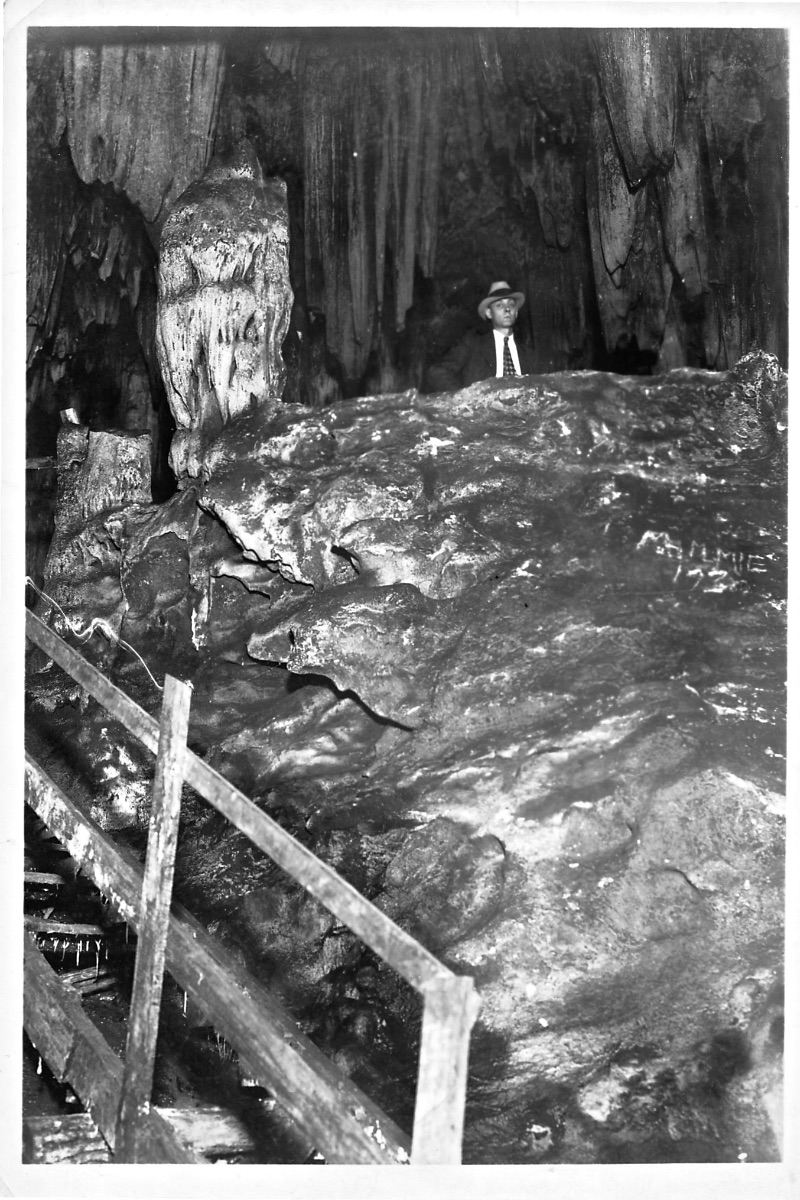
In 1796, during the presidency of George Washington, Majestic Caverns was personally visited and documented by Benjamin Hawkins, General Superintendent for Indian Affairs for the United States. Guided by Creek Indians, Hawkins explored the cave and recorded its physical structure and the presence of saltpeter crystals in official correspondence later published as Letters of Benjamin Hawkins (1796–1806) and preserved by the University of Georgia Libraries.
This documentation places Majestic Caverns among the earliest federally documented caves in the United States, predating Alabama statehood and establishing the site as part of America’s founding-era record.
During the American Civil War, the caverns were mined for saltpeter, a critical component in the production of gunpowder. Original mining trenches and wells remain visible within the cave today, offering physical evidence of its role in wartime industry.
In 1912, the property was purchased by nationally recognized agricultural reformer Ida E. Brandon Mathis. Her stewardship marked a turning point in the cave’s history — shifting it from extraction to preservation during a period when many historic sites were permanently lost.
Opened to the public in 1965, Majestic Caverns remains privately owned and continuously preserved by the Mathis family, spanning multiple generations.
Together, these layers of Indigenous heritage, federal documentation, Civil War industry, and family stewardship establish Majestic Caverns as a rare American site where prehistory, the founding era, and modern preservation meet — still open to the public today.
Quick Facts
Early America: Earliest known federally documented cave in the United States
Early Federal Record: Documented during the presidency of George Washington (1796)
Historic Designation: Alabama Register of Landmarks and Heritage (1976)
Period of Significance: Prehistoric (Criterion D — Archeology)
Indigenous History: Woodland-period Copena burial evidence
Civil War Role: Saltpeter mining for Confederate gunpowder production
Ownership: Family-owned and preserved since 1912
Tourism: Open to the public since 1965
Former Name: DeSoto Caverns
Accessibility: Family-friendly, beginner-accessible
Featured Media Topics

America 250 & the American Story
Founding-era documentation linking the caverns to the Washington administration.

History the Caverns Have Witnessed
From Indigenous heritage to Civil War industry and preservation.
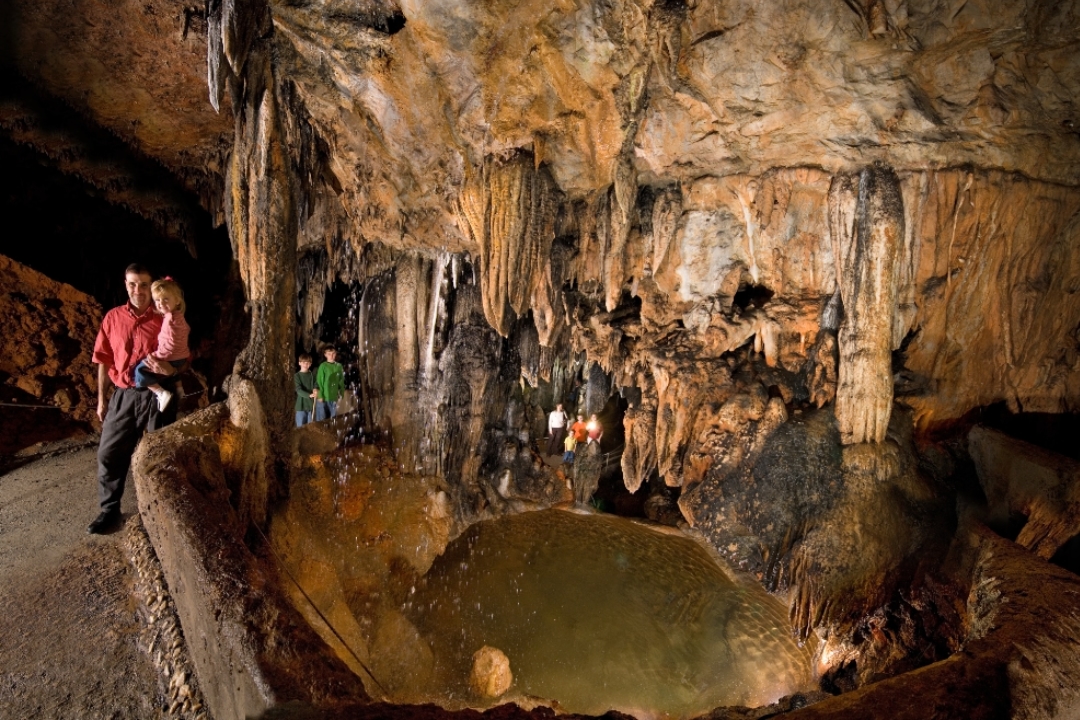
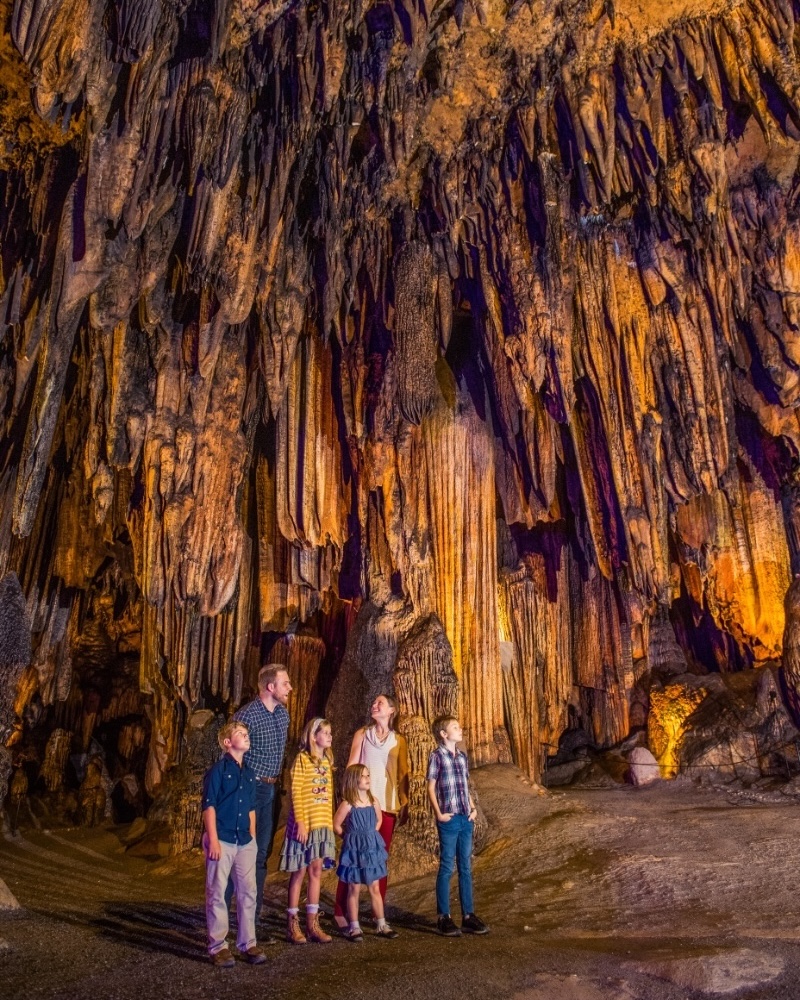
Science & Geology
A living limestone cave, ideal for STEM stories.

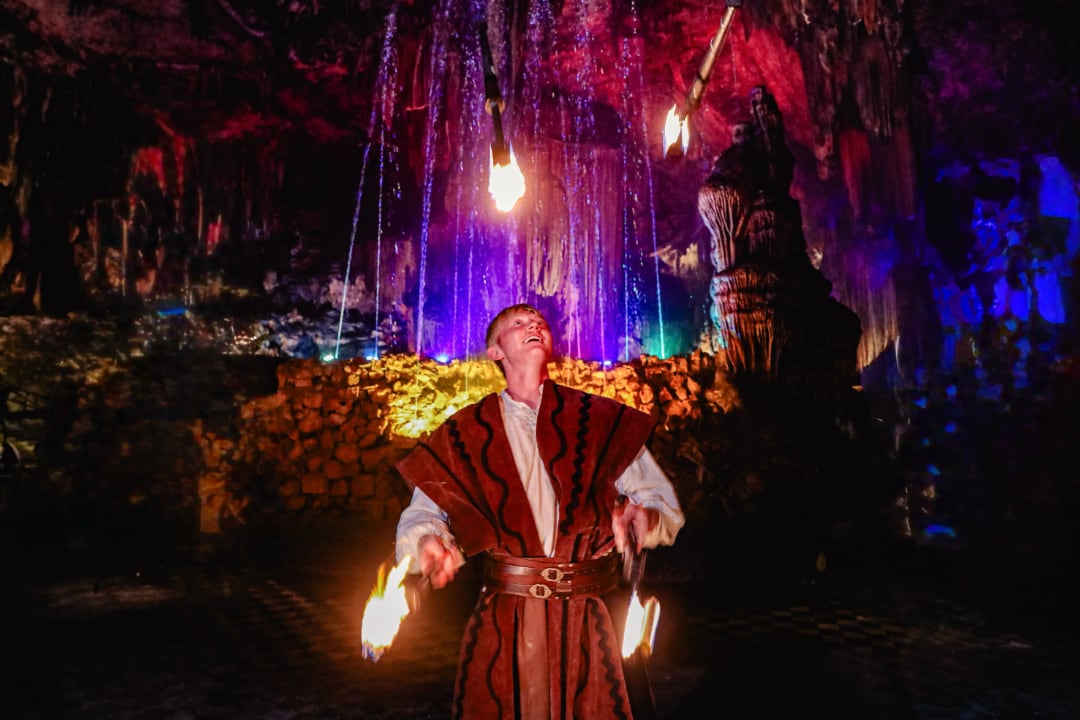
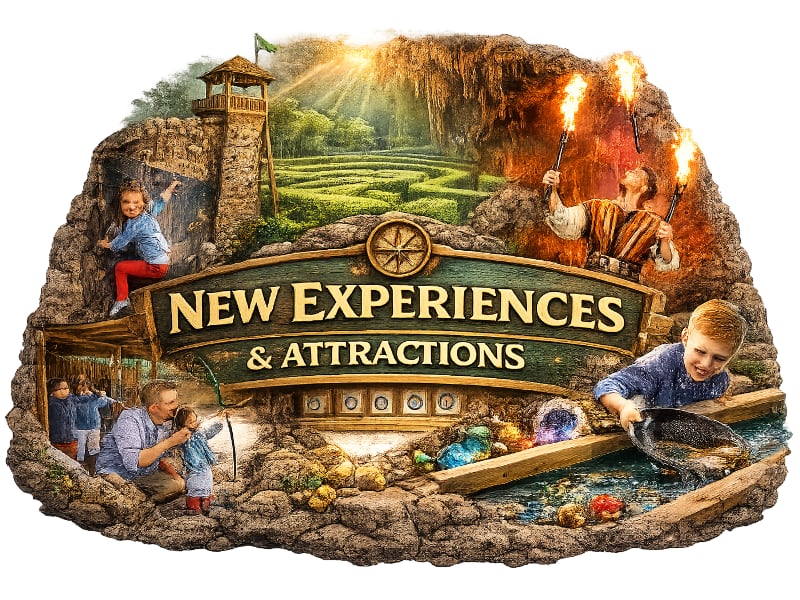
New Attractions & Experiences
New seasonal events and activities added regularly.

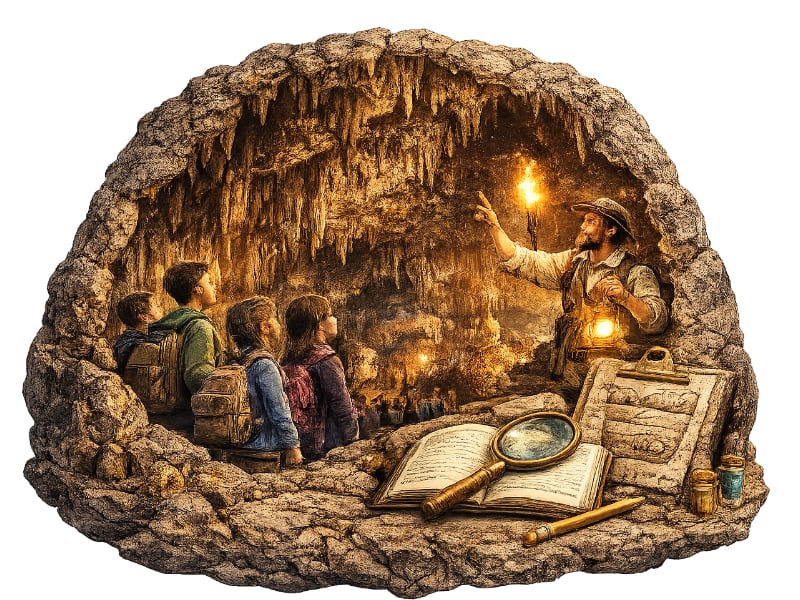
Education & Field Trips
Curriculum-based programming for schools and groups.

Family-Owned Preservation
More than a century of continuous stewardship by one Alabama family.

America 250 featured coverage
A Living Landmark for America’s 250th Anniversary
In 2026, the United States marks 250 years since its founding. Long before that moment — and long before Alabama became a state — Majestic Caverns was already part of the American story.
Story angles
The cave George Washington placed on record still welcomes families today.
More than a century of continuous stewardship by one Alabama family.
Indigenous heritage recognized by the State of Alabama
From saltpeter mining to preservation: how a cave helped shape American history
America’s 250th anniversary is not only about cities and battlefields — but the land beneath them
A living historic site spanning prehistory, the founding era, and modern America

Discover Stories That Run Deep
Where America’s story, Alabama’s heritage, and one family’s stewardship run deep.
For more than a century, one Alabama family has cared for a place whose story stretches back thousands of years. Long before modern tourism, and long before Alabama became a state, generations found shelter, wonder, celebration, and discovery within these limestone chambers.
As journalists and travelers seek authentic heritage stories with deep roots and lasting significance, Majestic Caverns offers a rare place where those stories can still be experienced firsthand. Family owned and independently operated since 1912, the caverns continue to welcome new generations to discover the history, heritage, and human stories that have always run deep beneath the surface.
Historical Timeline
Historical Eras Represented
-
Prehistoric – Mastodon remains discovered.
-
Native American – Woodland Indian sacred use and burials.
-
Explorer Era (1540) – De Soto Expedition which establishing Childersburg as the oldest continuously occupied settlement in the United States.
-
Frontier Era (1723) – Earliest confirmed cave inscription in the US.
-
Founding Era (1796) – Federal documentation under George Washington placing Majestic Caverns as the first cave on record in the U.S.
-
Civil War Era (1864) – Saltpeter mining for gunpowder— original trenches still visible today.
-
Progressive Era (1912) – Ida Mathis, Alabama Women’s Hall of Fame inductee, purchased the caverns.
-
Prohibition Era (1920s) – The caverns briefly operated as a speakeasy known as The Bloody Bucket.
-
Public Show Cave Era (1965) – Fred Layton leased the caverns from Allen Mathis Jr. and opened for guided public tours.
-
Modern Preservation Era (1975–Present) – Allen Mathis, Ida Mathis’ great-grandson, began operating the caverns in 1975 joined by his daughter and son-in-law in 2015.
Contact & Media Assets
press@majesticcaverns.com
256.379.7252
• High-resolution images and b-roll available
• Verified historical documentation and timelines
• Interviews with ownership may be arranged upon request
• On-site visits and media coordination available with advance notice
Location & Media Access
Majestic Caverns is located in Childersburg, Alabama, within easy driving distance of Birmingham, Montgomery, and Atlanta.
The site offers ample parking and year-round access for visiting families, school groups, and media crews.
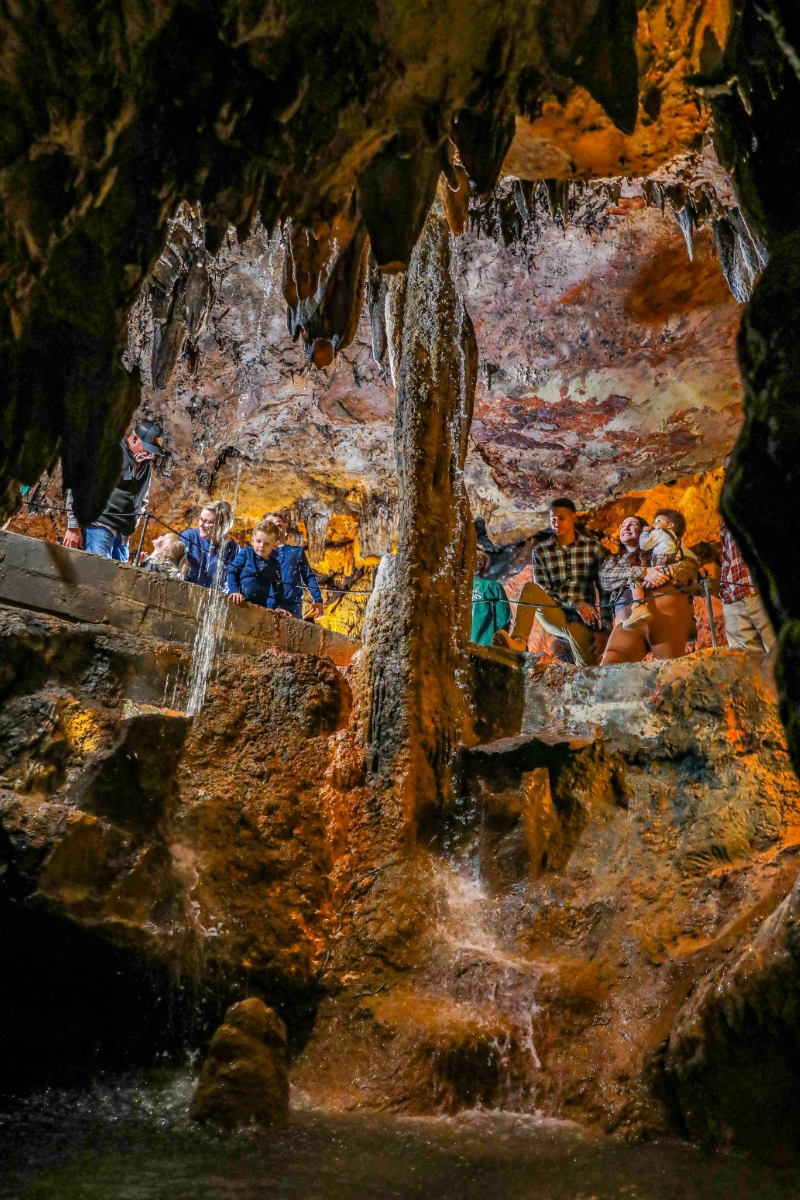
Guided cave tours operate in a climate-controlled 60° environment, allowing filming and photography opportunities regardless of outdoor weather conditions.
Majestic Caverns features a wide, gently sloped tunnel entrance that allows wheeled access into the cavern system.
Unlike many caves that require stairs or narrow passages, the primary entrance is large enough to accommodate utility vehicles, rolling camera cases, and professional media equipment when coordinated in advance.
This unique access has made Majestic Caverns particularly well suited for:
• documentary filming
• historical features
• educational programming
• broadcast and digital media production
All filming activity, equipment transport, and on-site coordination must be arranged in advance and is subject to site approval.
Editorial FAQs
Is Majestic Caverns the first cave ever recorded in the United States?
Carefully worded answer explaining “among the earliest federally documented” and Benjamin Hawkins’ 1796 record.
Did George Washington visit Majestic Caverns?
Clear no, with explanation of documentation occurring during his administration.
Is photography or video allowed inside the cave?
Yes, we encourage the use of photography and video in the cave!
What makes the 1796 documentation significant?
Explain federal record-keeping and early national context.
What Indigenous history is documented at the site?
Woodland period, Copena burial traditions, University of Alabama archaeology, Alabama Register listing.
Is there physical evidence of Civil War activity inside the cave?
Yes — saltpeter mining trenches and wells remain visible.
Has the cave been continuously owned by one family?
Yes — since 1912, with multi-generational stewardship.
Is Majestic Caverns still an active cave?
Yes — formations continue to grow; it is a living limestone cave.
Can media use images and historical information freely?
Yes, with attribution; direct them to media kit.
Historical Articles
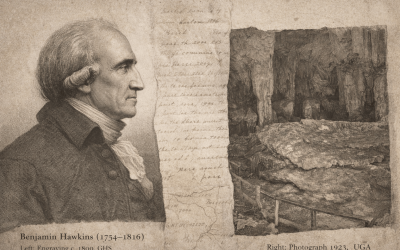
Benjamin Hawkins and the First Federal Documentation of an American Cave (1796)
In December 1796, a federal official appointed by President George Washington entered a sacred cave in what is now Childersburg, Alabama. His name was Benjamin Hawkins. He wrote about what he saw. And because he recorded it in his official capacity as a United States...
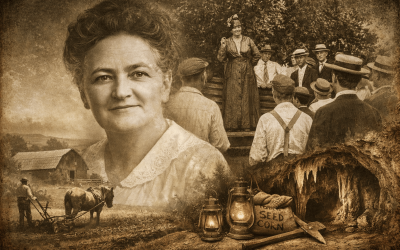
Ida Mathis and the Stewardship of Majestic Caverns
A case study in family preservation, agricultural reform, and the rare continuity of place Why Preservation Stories Matter Across the United States, historic landscapes often follow a familiar arc. Land is extracted, subdivided, redeveloped, or transferred through...

Benjamin Hawkins and the First Federal Documentation of Majestic Caverns (1796)
Intro: Why this Moment Matters In December 1796, a federal official traveling through the Upper Creek Nation recorded the existence of a large limestone cave in what is now Childersburg, Alabama. His description was not casual travel writing. It appeared in official...