A case study in family preservation, agricultural reform, and the rare continuity of place
Why Preservation Stories Matter
Across the United States, historic landscapes often follow a familiar arc. Land is extracted, subdivided, redeveloped, or transferred through institutions until its original human story thins into abstraction. Mines become quarries. Farms become subdivisions. Natural landmarks become attractions detached from the people who first cared for them.
Continuous family stewardship is rare.
When a historic site remains under the care of one family across generations, it offers something fundamentally different from institutional preservation alone. Decisions are personal rather than procedural. Memory is inherited, not reconstructed. History is not frozen behind glass but carried forward through use, care, and responsibility.
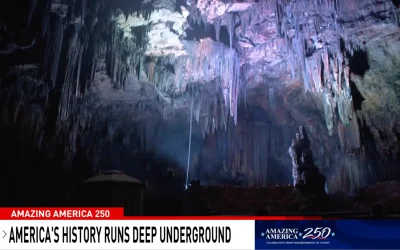
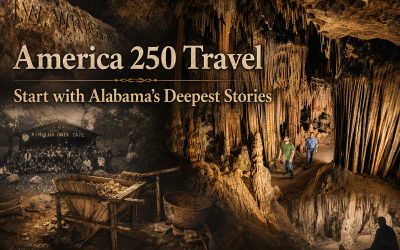
This article is part of Majestic Caverns’ ongoing historical documentation prepared in advance of America’s 250th anniversary, examining the individuals and decisions that shaped one of the nation’s earliest federally documented natural sites.
Among those individuals, few left a more enduring imprint than Ida Elizabeth Brandon Mathis.
Who Ida Mathis Was
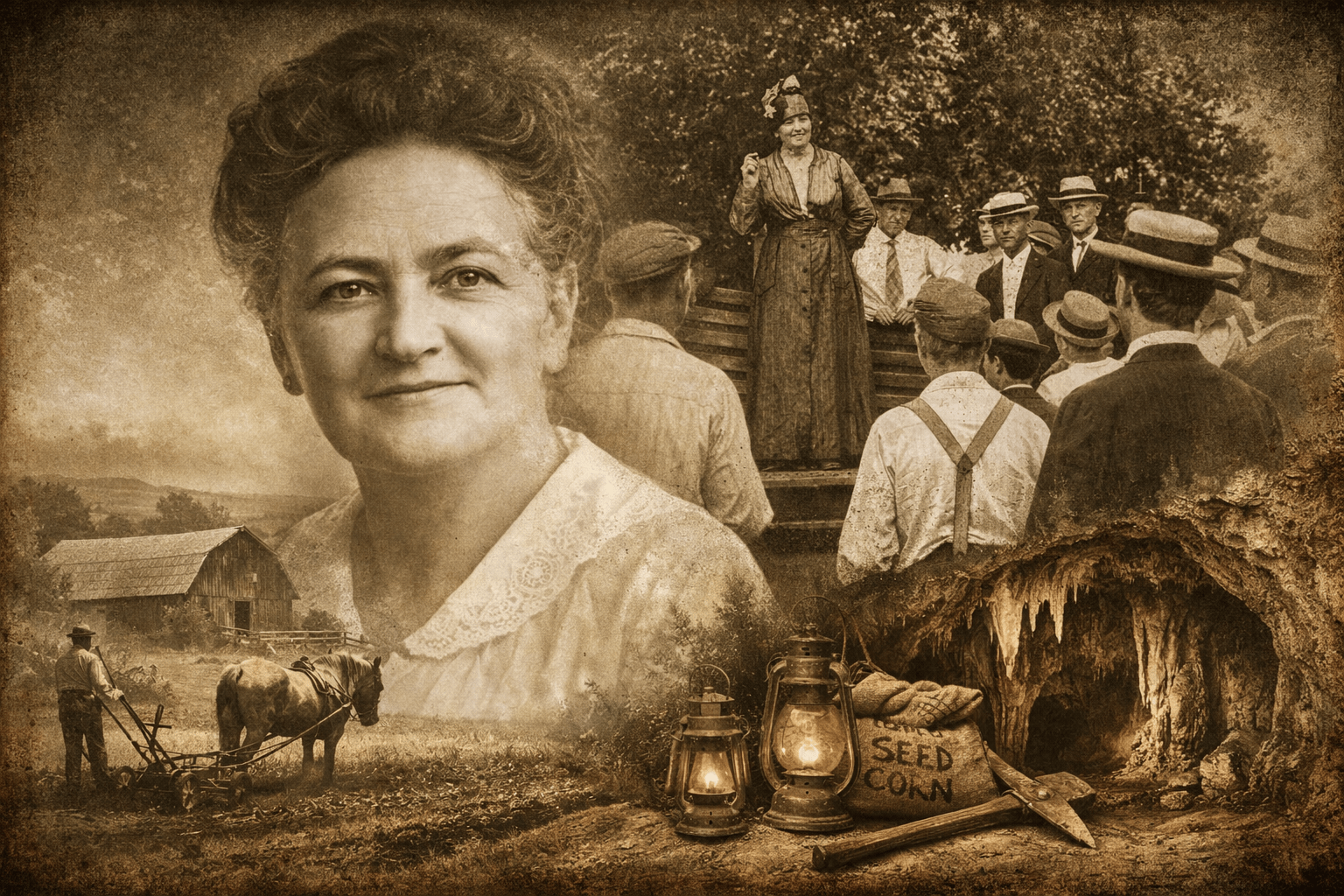
Born in Florence, Alabama, in 1857, Ida Elizabeth Brandon grew up the daughter of a farmer at a time when Southern agriculture was both economically fragile and ecologically strained. Educated at Florence Synodical Female College—earning both bachelor’s and master’s degrees, an uncommon achievement for women of her era—she combined formal training with practical field knowledge.
After marrying Giles Huffman Mathis in 1882, she began managing farmland herself. What distinguished her was not land ownership alone but method.
Mathis rejected the prevailing cotton monoculture that had depleted Southern soils and trapped farmers in cycles of debt. Instead, she promoted crop rotation, diversified planting, soil restoration through legumes, and a “safety in food crops” philosophy that emphasized growing what families could eat before what markets demanded.
Her credibility rested on results. She tested every recommendation on her own farms.
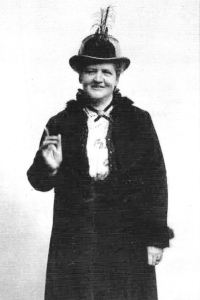
By the 1910s, governors, bankers, and agricultural organizations sought her counsel. She spoke at conferences across the country, addressed the inaugural Alabama Chamber of Commerce meeting in 1916, and delivered lectures to thousands of farmers. Her address to the Farm Mortgage Bankers Association was forwarded to President Woodrow Wilson. Federal officials consulted her on wartime food production.
Contemporaries credited her reforms with stabilizing Alabama’s agricultural economy and generating millions of dollars in value for the state. Journalist Mittie McDavid famously called her the “Economic Moses of the South,” a title reflecting both her moral authority and her practical leadership.
In 1993, she was inducted into the Alabama Women’s Hall of Fame, formal recognition of her statewide and national influence.
Yet in the middle of this agricultural career, she made a purchase that would quietly shape a different legacy.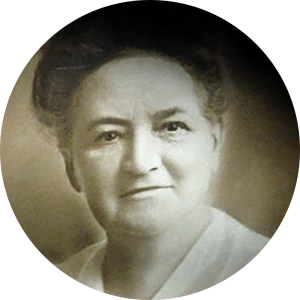
Purchase and Stewardship of the Cave
In 1912, Mathis acquired an onyx cave near Childersburg—then known locally as Kymulga Cave.
Like many Progressive-era investors, she initially viewed the property through an extractive lens. The formations appeared commercially valuable. Mining onyx seemed feasible.
The market quickly proved otherwise. Cheaper imported stone rendered domestic mining unprofitable.
At that point, many owners would have sold.
Mathis did not.
Instead, she bought out her partners and retained the cave in her family’s ownership. What began as a speculative mineral venture shifted into quiet preservation. The land remained intact. The cave was protected from heavy industrial development. Its formations were left largely undisturbed.
The decision mirrored her agricultural philosophy. She believed land should be sustained, not exhausted.
Though she did not live to develop the site as a public attraction—she died in 1925—the choice to hold rather than liquidate the property preserved something far rarer than onyx: continuity.
Transition to Public Access
Public access came in the next generation.
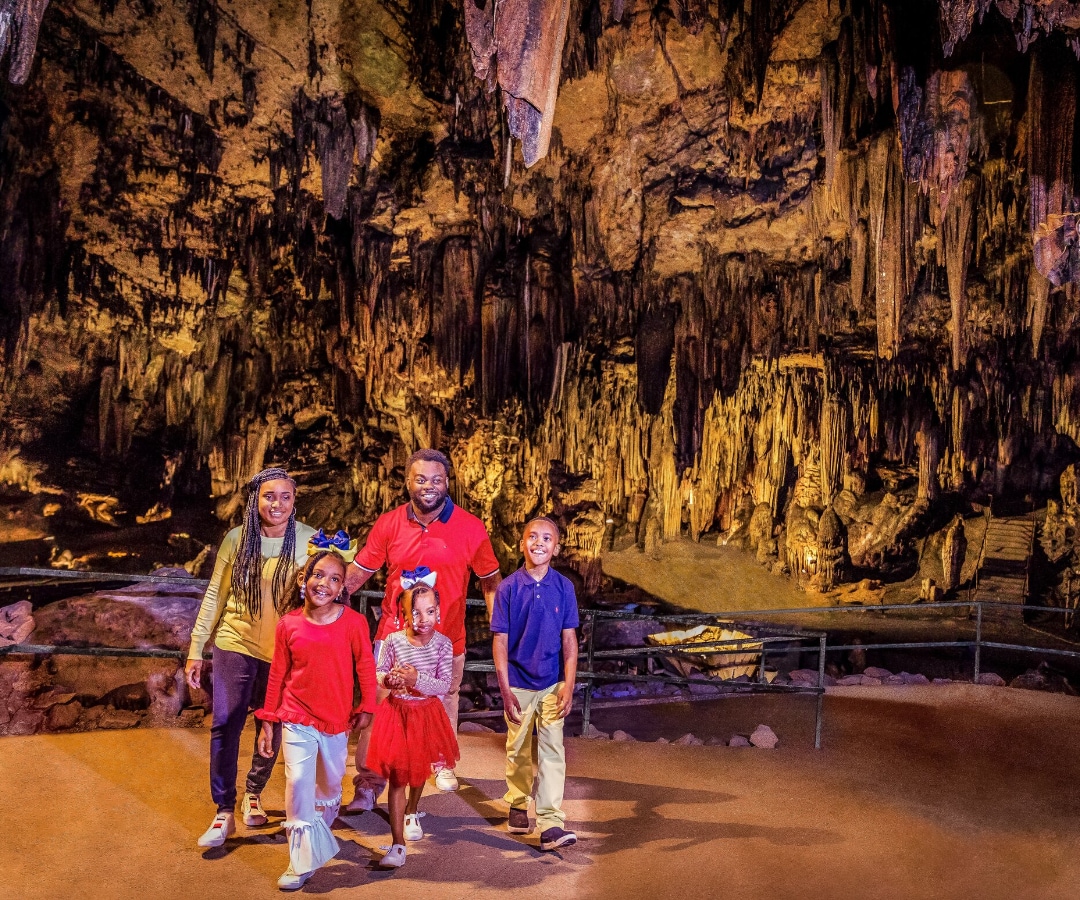
In 1965, under lease to Fred Layton, the cave was opened as a show cave, allowing visitors to experience its cathedral-like chambers, underground waterfall, and geological features without destroying them. Tourism became a means of protection rather than extraction.
This approach aligned with the broader historical record of the site, which includes Indigenous use, early federal documentation during the Washington administration, wartime resource extraction, and more than a century of private stewardship.
Rather than transforming the cave into a commercial mine or subdividing the land, the Mathis family chose interpretation and education—an approach that preserved authenticity while allowing continued use.
Family Continuity
Today, the site—known as Majestic Caverns, formerly DeSoto Caverns—remains family owned.
Ida Mathis is the great-great-grandmother of Joy Sorensen and the great-grandmother of Allen Washington Mathis III, who continue to guide the property’s care. More than a century after its purchase, stewardship remains within the same family line.
This level of continuity is increasingly uncommon among American historic sites. Many natural landmarks have passed through corporate consolidation, public acquisition, or fragmented ownership. While institutional preservation has strengths, it often separates decision-making from lived memory.
Family stewardship operates differently. Stories are inherited. Responsibility is personal. Decisions are measured not in quarters, but in generations.
As a result, Majestic Caverns remains not simply a preserved site, but a living historic place—still used, still interpreted, and still shaped by those whose ancestors once walked the same ground.
This generational stewardship—carried forward by Ida Mathis’s descendants today—is explored in greater depth through the family’s History & Stewardship record, which documents how care for the caverns has remained personal, continuous, and intentional across more than a century.
Why This Matters Nationally
Preservation in America often defaults to one of two extremes: neglect or museumization.
Sites are either overdeveloped or frozen in time.
Living historic places offer a third path.
They allow continued use while protecting authenticity. They accept change without erasing memory. They keep history relational rather than static.
Ida Mathis’s legacy demonstrates that preservation does not always begin with formal policy or government designation. Sometimes it begins with a private decision: to keep, to care for, to pass forward.
Her work in agriculture taught farmers to sustain the soil so it could sustain future generations. Her decision regarding the cave applied the same ethic to land itself.
In both cases, the principle was identical.
Use what you need.
Protect what remains.
Leave something whole for those who come next.
In an era when many historic landscapes are reduced to assets on a balance sheet, the Mathis family’s century-long stewardship of Majestic Caverns stands as a reminder that preservation can be personal, continuous, and quietly enduring.
It is less a story of ownership than of guardianship.
And guardianship, once assumed, tends to last.
Sources and Further Reading
This article draws upon published research, public records, and historical documentation, and family stewardship records related to Majestic Caverns, which are represented below.
• Alabama Women’s Hall of Fame. “Ida Elizabeth Brandon Mathis (1857–1925).”
• Crowell, Merle. “She Has Increased the Wealth of Thousands.” American Magazine, 1917.
• Farm Mortgage Bankers Association proceedings, 1915.
• Muscle Shoals National Heritage Area. Women of the Shoals Educational Packet.
• Cruz, Laura M. “Ida Mathis: Farmer, Financier and all around Badass,” Medium, 2021.
• Encyclopedia of Alabama and related agricultural reform archives
• Family and site history materials related to Majestic Caverns (formerly DeSoto Caverns)
Members of the media, educators, and researchers may access additional primary sources, historical summaries, and documentation through the Majestic Caverns Press & Media archive.