AMERICA 250 &
THE AMERICAN STORY
A Place That Watched America Before a Nation — Documented Since 1796
Majestic Caverns is a family-owned historic cavern located in Childersburg, Alabama.
With verified documentation spanning Indigenous history, the Founding Era, the Civil War, and modern preservation, the site offers journalists and educators access to one of the most continuously recorded natural landmarks in the southeastern United States.
Public Hours
Fri, Sat & Mon: 10 AM–5:30 PM
Sun: 12–5:30 PM
Groups of 20+ may schedule visits any day, including Tuesdays–Thursdays and outside public hours.
Check events calendar for future hours, as park hours vary.
AMERICA 250 RELEVANCE
Founding-era documentation • Indigenous archaeology • Civil War industry • Continuous preservation
Formerly DeSoto Caverns
HISTORIC RECOGNITION
Listed on the Alabama Register of Landmarks and Heritage (1976)
STATUS
Family-owned historic site, open to the public
Why Majestic Caverns Belongs in the America 250 Story
A Cave that Has Served as the Setting for Many of America’s Most Historic Moments
Majestic Caverns matters to the America 250 story not because of a single moment—but because of its continuity across time.
• Federally documented during the Founding Era — officially recorded in 1796 during George Washington’s presidency
• Recognized Indigenous archaeological site — Woodland-period use and Copena burials formally documented
• Civil War industrial resource — saltpeter mining supported wartime gunpowder production
• Continuously preserved by the same family since 1912 — stewardship shifted from extraction to education
• Still open to the public today — a living historic site rather than a static monument

As America turns 250, Majestic Caverns reminds us that some of the nation’s most powerful stories aren’t written on paper, they’re written in stone.
Before America Had a Name, This Land Already Had a Story
Long before America had a name, this land already held a story.
Before there were states.
Before there was a nation.
Before independence was declared.
The limestone chambers beneath what is now Childersburg were already here — quiet, unchanging, waiting.
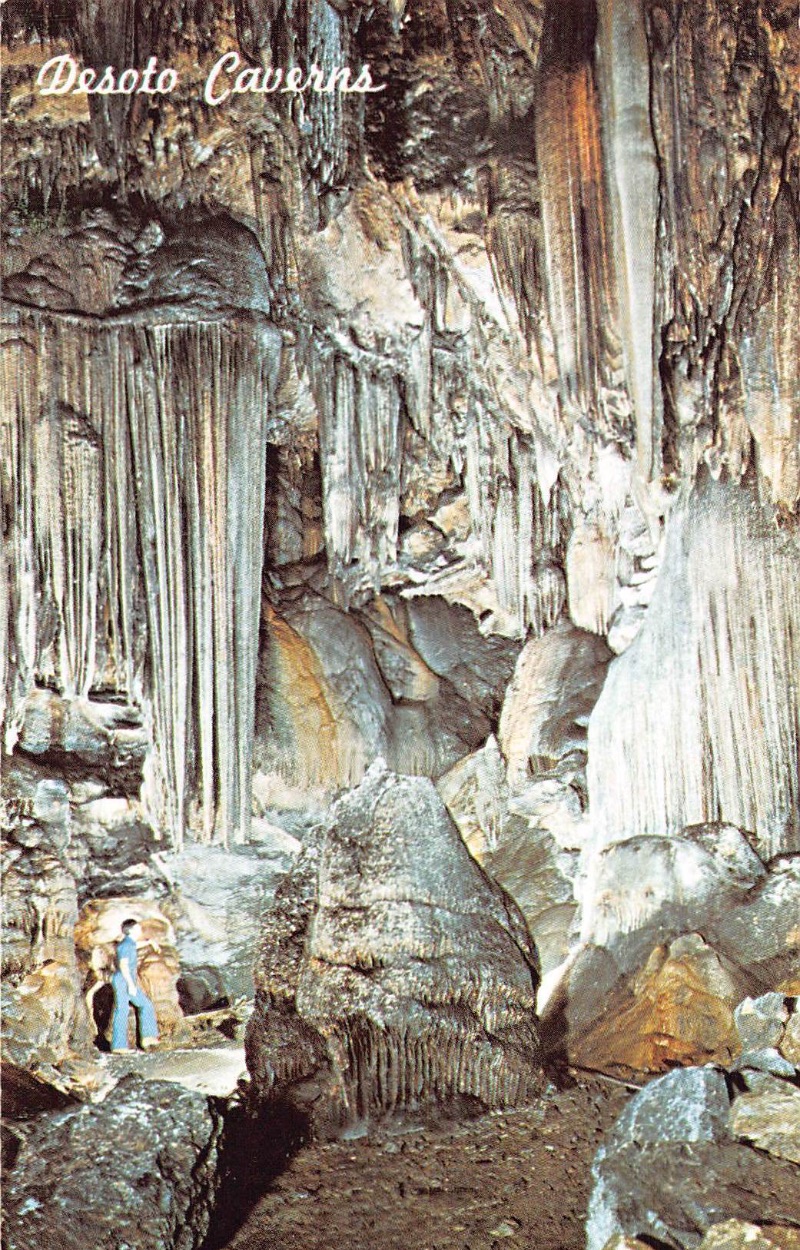
Older than the pyramids of Egypt, these caverns have watched generations pass through their shadows.
Animals sought shelter.
Families gathered.
History unfolded.
In 1796, during George Washington’s presidency, the cave was officially recorded in 1796 by U.S. Superintendent Benjamin Hawkins during the Washington administration — becoming the earliest documented cavern in the United States.
Today, as America approaches its 250th anniversary, Majestic Caverns remains one of the few places where that story can still be physically experienced.
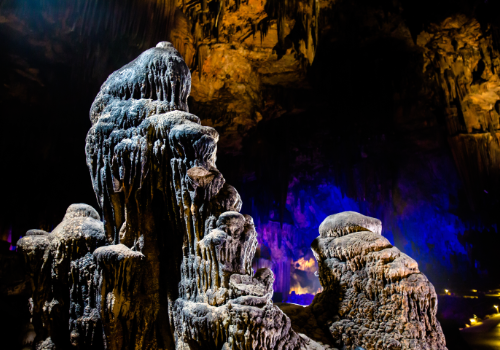
America 250 Historical Timeline
A Chronology of Human Presence, National History, and Preservation
This timeline reflects documented archaeological findings, historical records, and preservation milestones associated with Majestic Caverns.
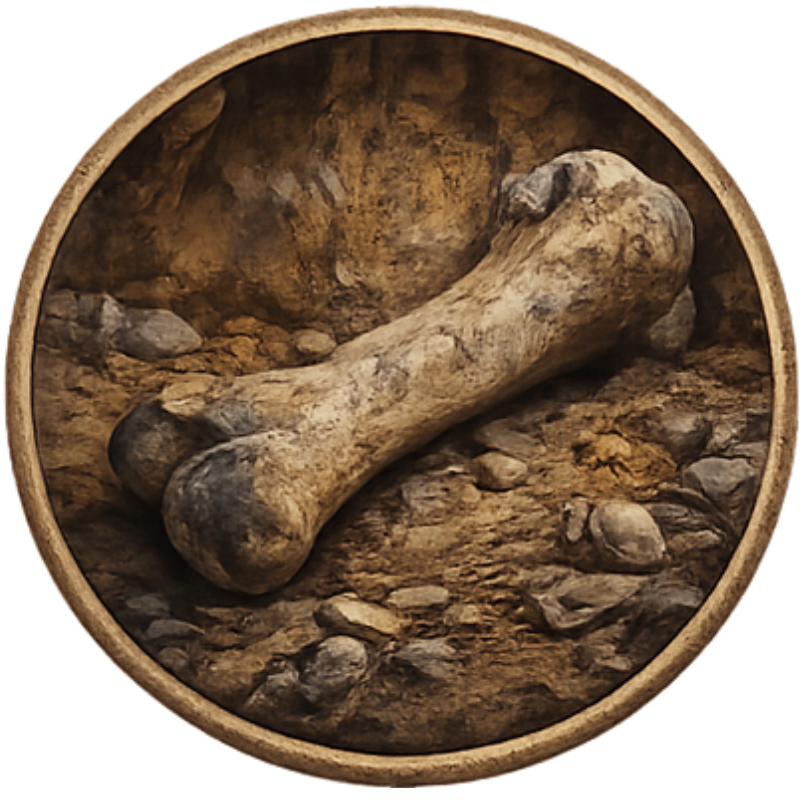
Before the Nation: Deep Time and an Ancient Presence
Prehistoric Era
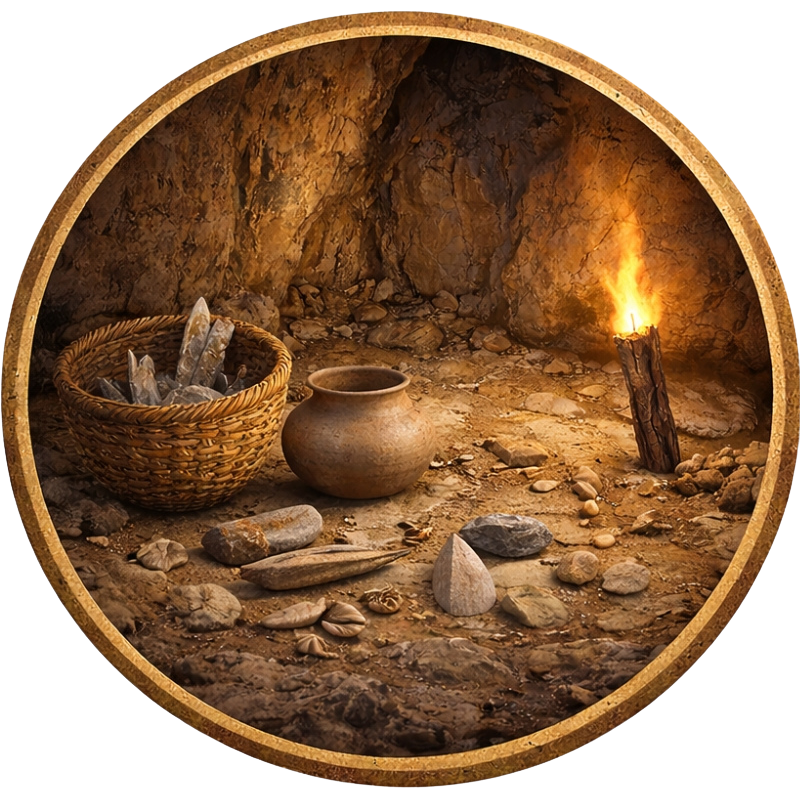
Long before written history, water slowly shaped passages within the limestone beneath Childersburg, forming the cave system that exists today. This ancient landscape became a natural shelter for both wildlife and early peoples.
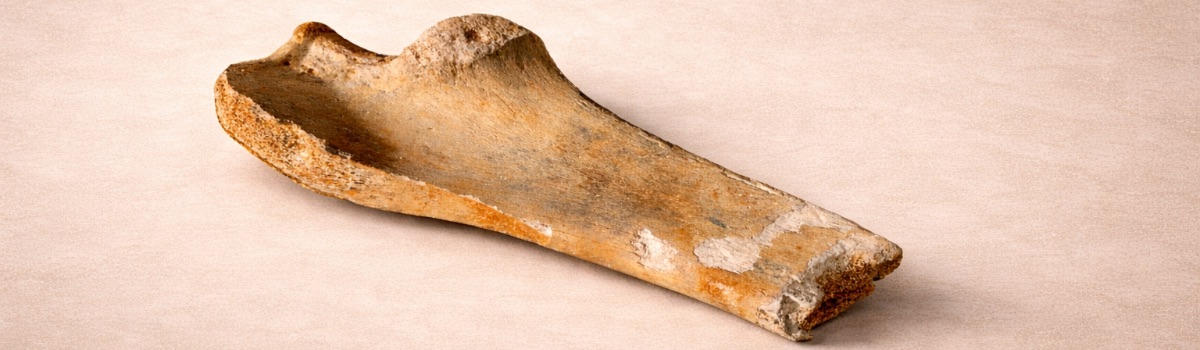
A mastodon femur discovered inside the cave provides evidence of Ice Age animal life in the region, showing that this valley supported large wildlife eons before recorded human history.
Indigenous Heritage and Sacred Use
Woodland Period (c. 200 BCE–900 CE)
Archaeologically documented and state-recognized research confirms Indigenous use of the cave during the Woodland period. Copena burial traditions and cultural artifacts establish the cave as a place of ceremonial and ancestral significance long before European contact.
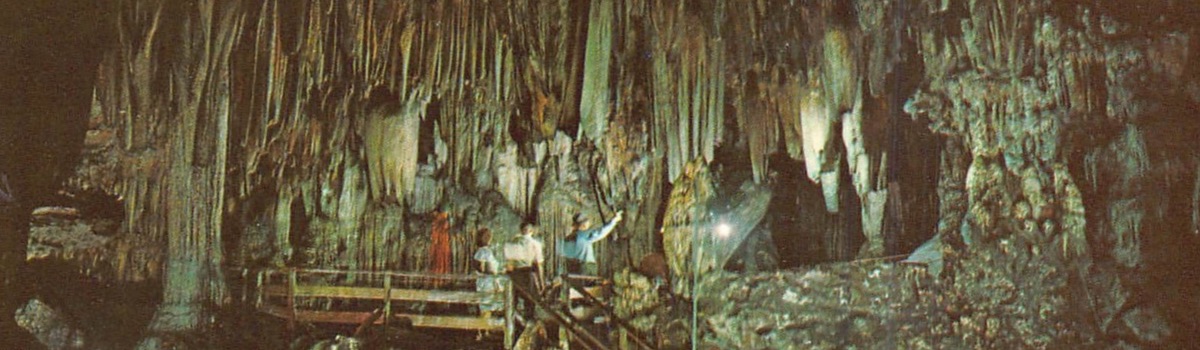
In 1965, archaeologists from the University of Alabama uncovered burial remains that were later carbon dated to more than 2,000 years old. The findings contributed to the cave’s listing on the Alabama Register of Landmarks and Heritage for archaeological significance.
An Early Mark on the Landscape
1723
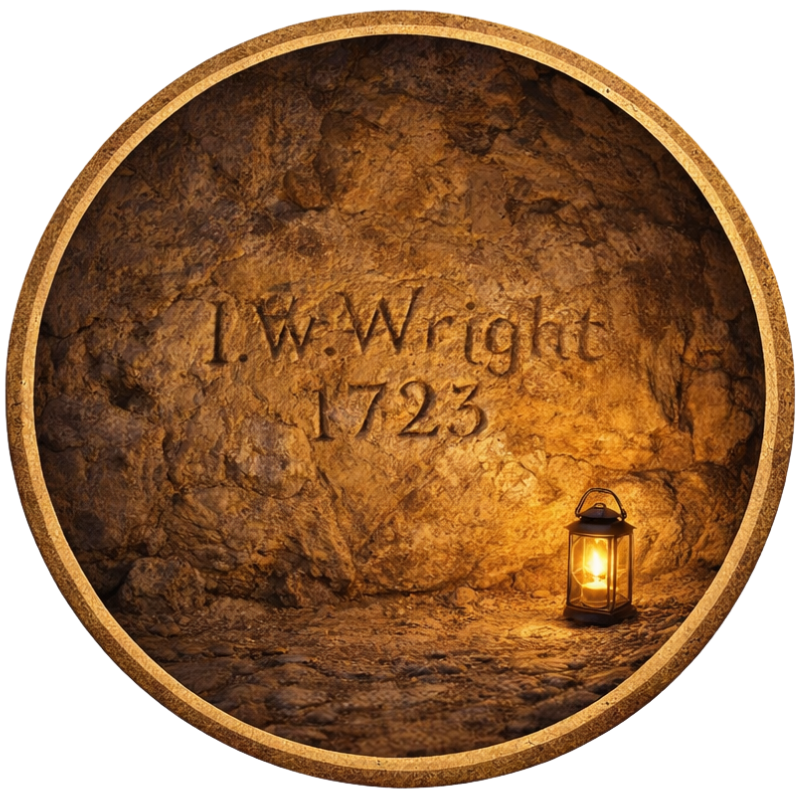
Trader I. W. Wright carved his name into the cave rock while traveling regional trade routes that linked Indigenous nations, European settlers, and emerging colonial markets. His inscription reflects how Native land, frontier commerce, and early American economies intersected decades before independence.
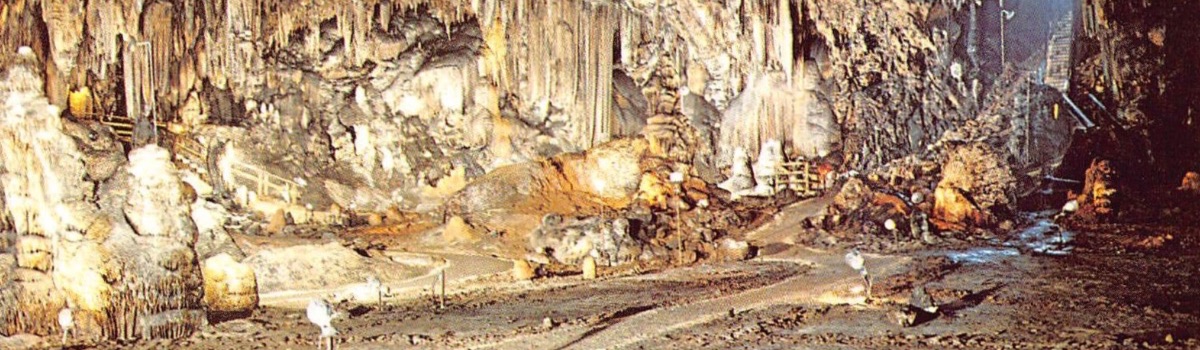
The carved rock remains visible today and is widely regarded as the oldest known cave signature in the United States—a rare physical record of early colonial movement through the wilderness.

Entered into the Federal Record
1796 — Founding-Era Documentation
Benjamin Hawkins, U.S. Superintendent of Indian Affairs during the administration of George Washington, personally visited and documented the cave in 1796. His written description places Majestic Caverns as the first cave formally recorded in United States government records.
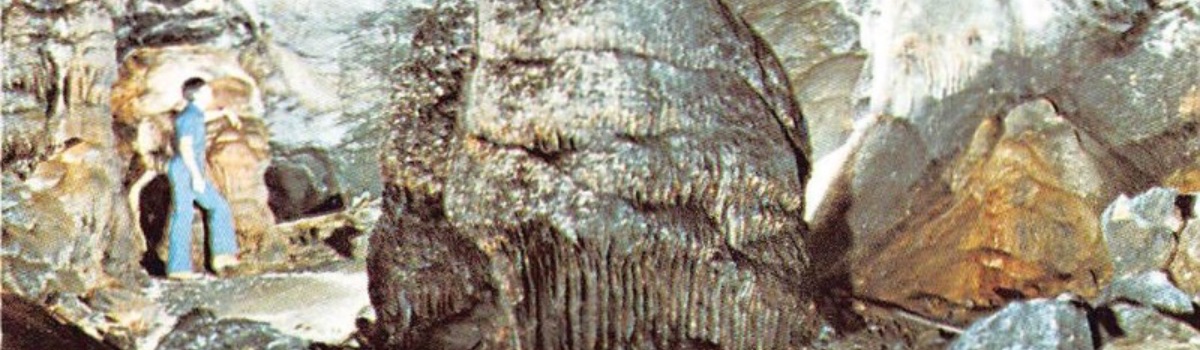
Hawkins noted the cave’s immense chambers and the presence of saltpeter crystals. His observations later appeared in Letters of Benjamin Hawkins, 1796–1806, now preserved in public archives. His account provides one of the earliest federal references to a natural landmark in Alabama.
From Observation to National Necessity
Early 1800s–Civil War (1861–1865)
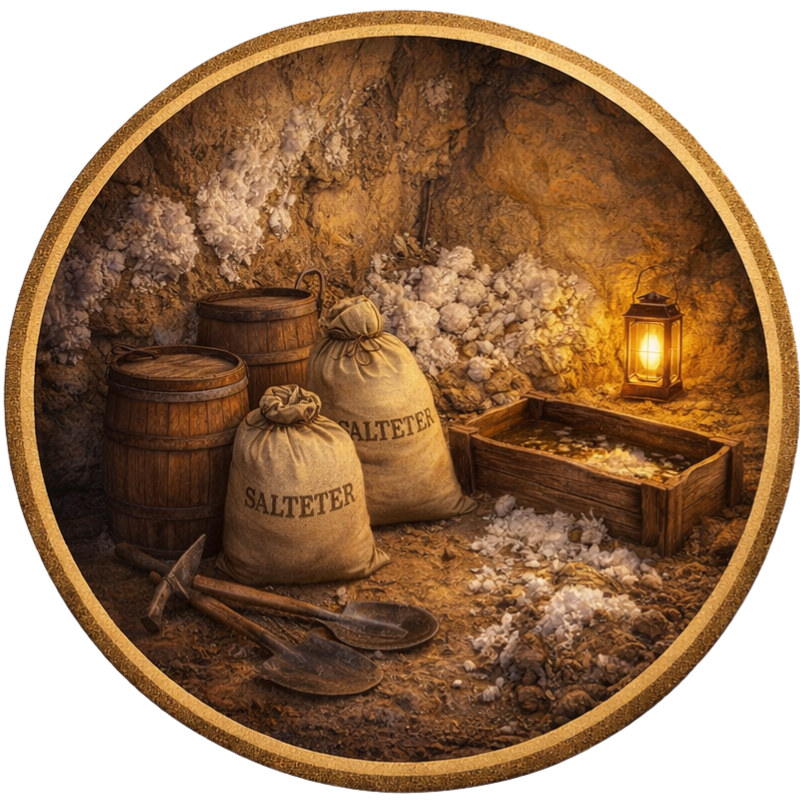
During the Civil War, the cave became part of the Confederate supply chain. Mined for saltpeter, with physical mining trenches and wells still visible today, saltpeter was extracted from cave soil and was processed into gunpowder, connecting this natural space directly to national wartime industry.
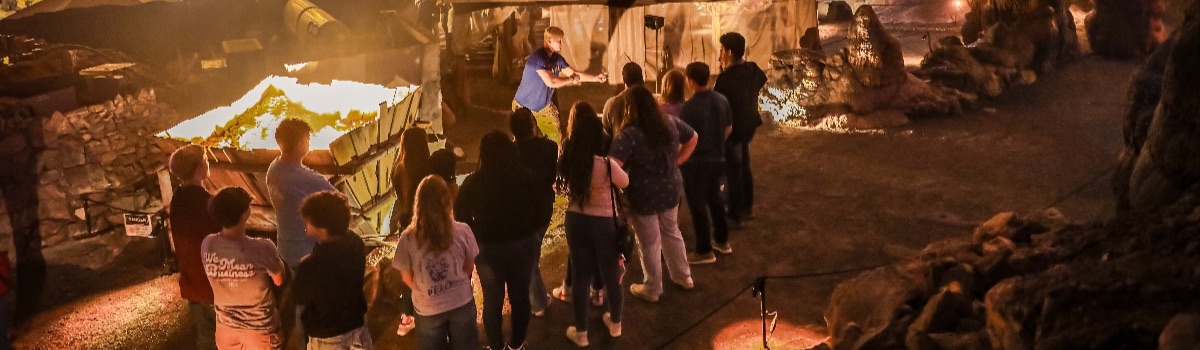
Visitors can still see the leaching vats, trenches, and the Confederate well used to draw water for mineral processing—rare physical evidence of nineteenth-century mining operations preserved inside the cave.
Ida Mathis and a Vision for Stewardship
1912
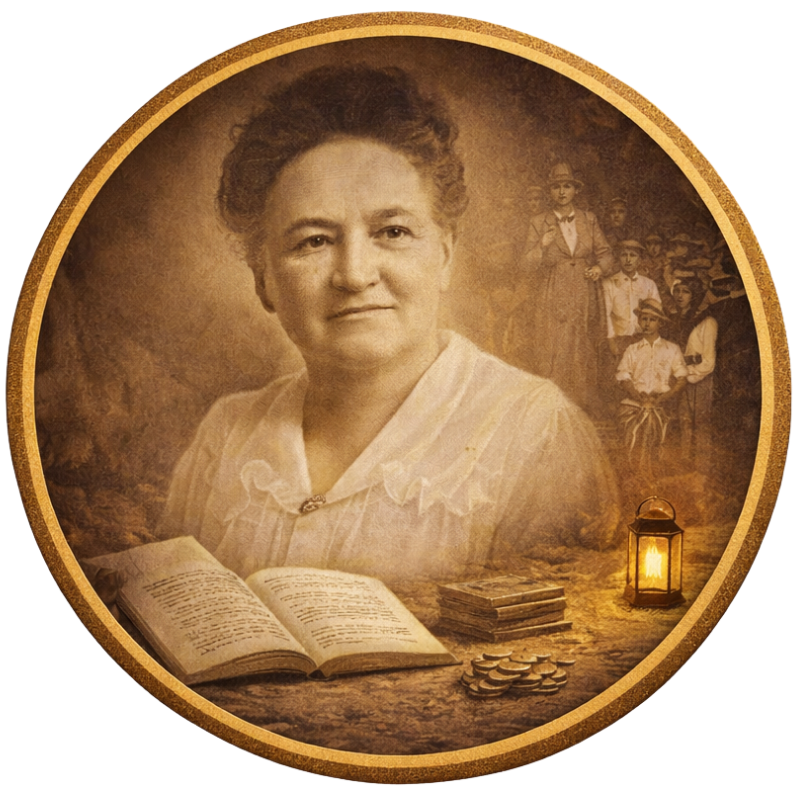
In 1912, Ida E. Brandon Mathis purchased the cave and ultimately chose preservation over continued extraction. Known nationally as the “Economic Moses of the South,” she was a respected agricultural reformer, lecturer, and financier whose work helped stabilize Alabama’s farming economy during wartime and economic hardship.

Mathis spoke across the country on crop diversification, advised bankers and governors, and was inducted into the Alabama Women’s Hall of Fame. Her speeches were shared with President Woodrow Wilson, and national leaders credited her with saving millions of dollars for Southern farmers. Her stewardship preserved the cave for future generations rather than allowing it to be exhausted by mining.
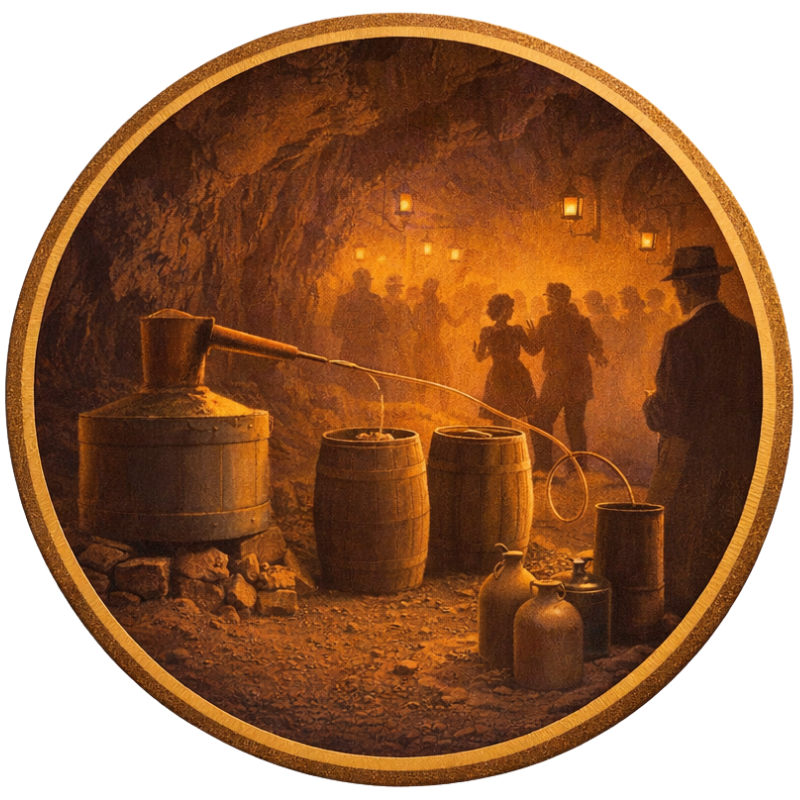
The “Bloody Bucket” Speakeasy
Prohibition Era (1920–1933)
During national Prohibition, the cave briefly operated as an illicit speakeasy and gathering place. Like many hidden locations across the country, it reflected the underground economies and social tensions of the era.
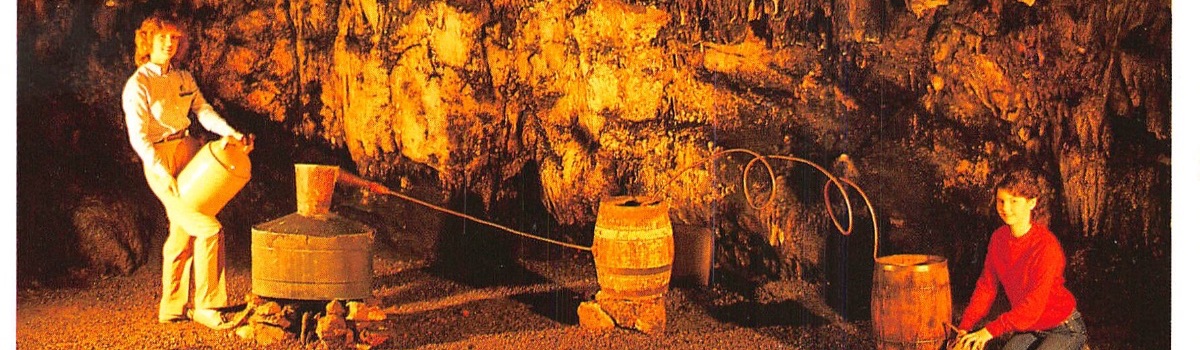
Guests slid down a muddy slope to enter the cavern, where makeshift lighting, dancing, and moonshine production created a lively but short-lived nightlife scene. Frequent fights earned the cave the nickname “The Bloody Bucket.” The operation was eventually shut down by federal authorities. The image shown here is a reconstructed moonshine still, similar to those used during that period.
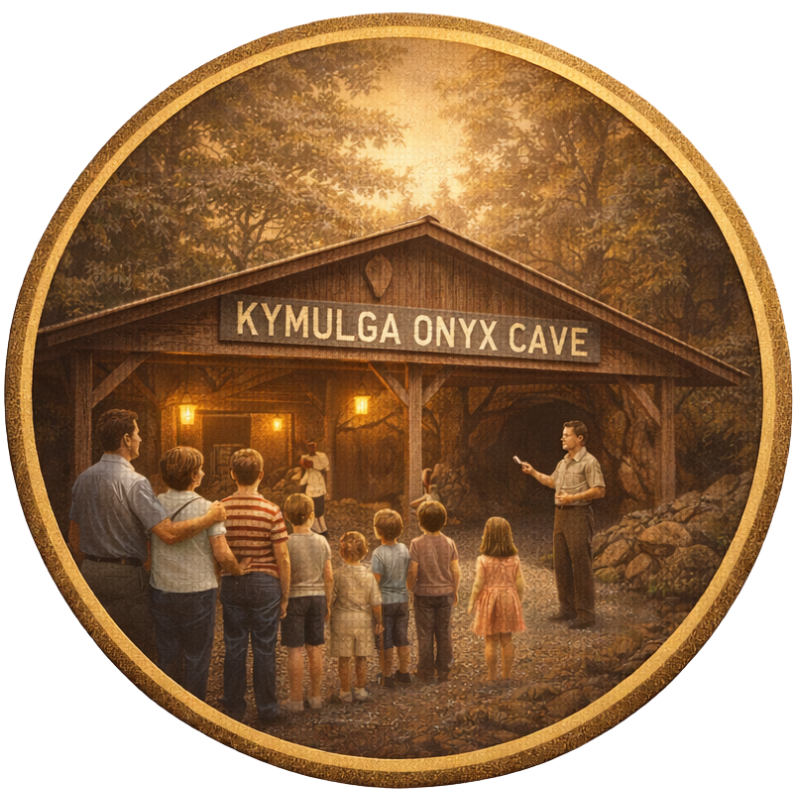
Opening History to the Public
1965 — Public Access Begins
Under the Mathis family’s continued ownership, the cave transitioned from private land to a public educational site, opening guided tours that allowed families and schools to experience its history firsthand.
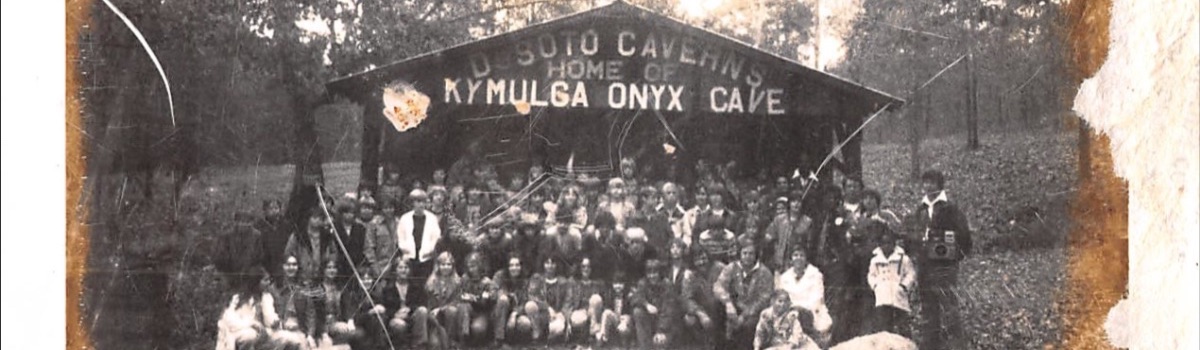
Fred Layton, leasing the cave from Allen Washington Mathis Jr., installed rudimentary walkways, lighting, and safe access routes and formally opened the cavern as a show cave—beginning the modern era of public exploration.

Al Mathis Opens DeSoto Caverns
1975
Ida Mathis’s great-grandson, Allen W. Mathis III, later expanded and developed the site for education and tourism, continuing the family’s commitment to preservation. Today, multiple generations of the Mathis family remain involved in stewarding the cave.
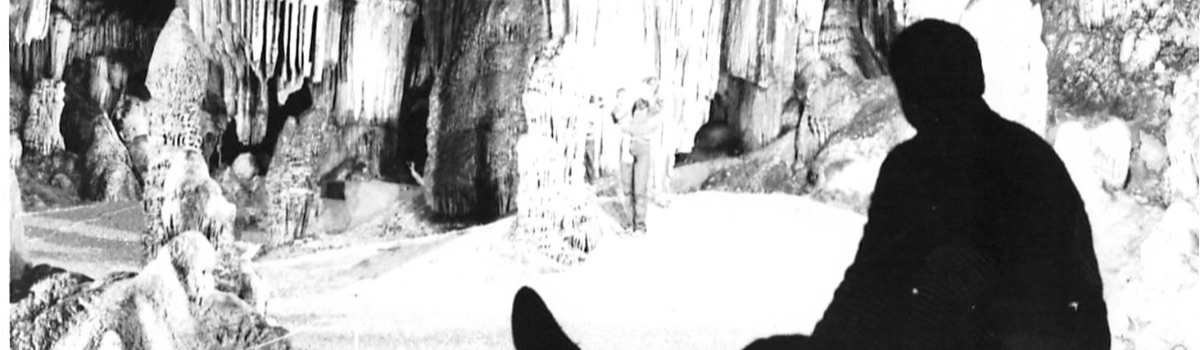
Pictured above, Allen W. Mathis III sits in front of the onyx column room, the same space where Ida Mathis once collected and evaluated onyx samples after purchasing the cave in 1912. The image illustrates a rare continuity of care across four generations of the same family.

Formal Recognition
1976 — State Landmark Status
Majestic Caverns was listed on the Alabama Register of Landmarks and Heritage under Criterion D for archaeology, formally recognizing its prehistoric and cultural importance.
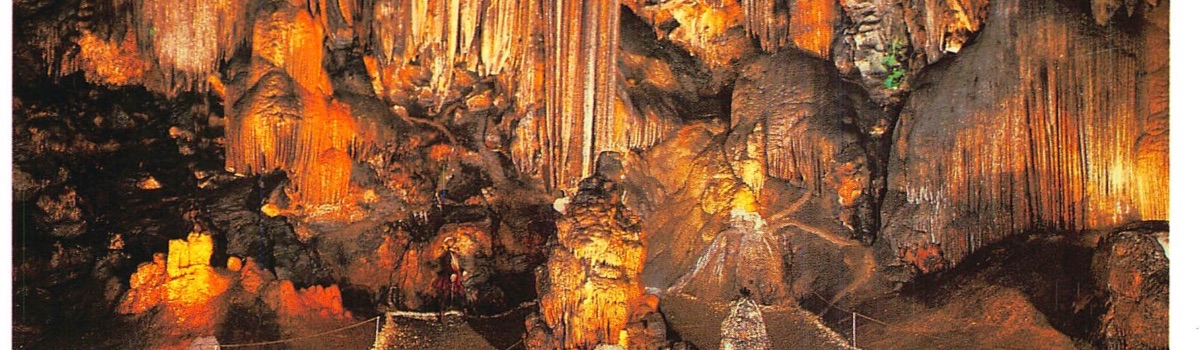
The designation acknowledged the cave’s documented Indigenous heritage and protected it as a significant historic site within Alabama.

A Living Historic Site: Majestic Caverns
Today
More than a century after its purchase by the Mathis family, the cave remains family-owned, preserved, and open to the public—an increasingly rare continuity among American historic places. Renamed Majestic Caverns in 2022 in order to remove continual confusion with DeSoto State Park in northern Alabama. The cave remains family-owned, preserved, and open as a living historic site.
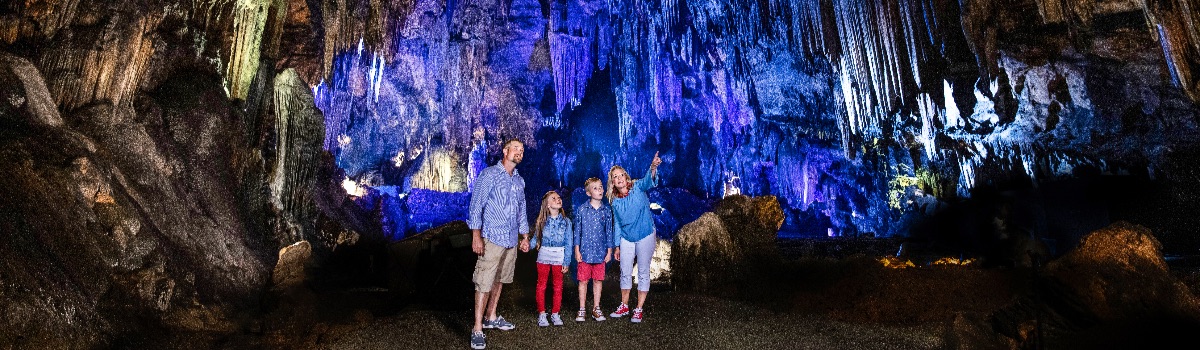
Guests still walk the same chambers described in early accounts, where formations continue to grow and history remains visible rather than confined to exhibits. It is not a frozen monument but a living historic landscape—one where natural processes continue and American history remains accessible.
INTERPRETIVE EXPANSIONS
Moments that shaped the story beneath our feet
Each era left its mark on Majestic Caverns.
These stories connect the cave not only to natural history, but to the people, struggles, and decisions that shaped America itself.
Below are short features that explore the science, archaeology, and family stewardship behind the caverns’ history.
Indigenous Heritage and Archaeological Recognition
Long before European settlement, Indigenous peoples recognized this cave as a place of significance. Archaeological findings confirm Woodland-period use and Copena burial traditions dating back more than two thousand years.
These discoveries led to formal recognition on the Alabama Register of Landmarks and Heritage and ground the cave’s story not in legend, but in documented history.
Majestic Caverns is not simply old — it is part of the lived history of the region’s first peoples.
Documented During the Founding Era
In 1796, U.S. Superintendent of Indian Affairs Benjamin Hawkins personally visited and described the cave while serving under President George Washington. His written correspondence recorded the size of the chambers and the presence of saltpeter crystals.
These records place Majestic Caverns among the earliest — and often cited as the first — cave formally entered into United States government documentation.
This moment connects the site directly to the nation’s founding generation.
Industry Beneath the Surface
During the Civil War, the cave’s mineral resources became part of the Confederate supply chain. Saltpeter extracted from cave soil was processed into gunpowder.
Today, trenches, leaching areas, and a well remain visible inside the cavern — physical reminders that even natural landscapes were drawn into the realities of war.
History here is not abstract. It is etched into the stone.
Preservation Through One Family
A Legacy That Chose Stewardship Over Extraction
In 1912, Ida E. Brandon Mathis purchased the cave at a time when many natural sites were valued primarily for what could be removed from them.
Instead, her stewardship marked a turning point.
Known nationally as the “Economic Moses of the South,” Ida Mathis was an agricultural reformer, educator, and advisor whose work helped stabilize Alabama’s farming economy during times of hardship. She was later inducted into the Alabama Women’s Hall of Fame and recognized by leaders across the country for her contributions.
Under her care, the cave shifted from extraction toward preservation.
Decades later, her descendants continued that commitment. Her great-grandson, Allen W. Mathis III, helped guide the site into the modern era, ensuring that the caverns would remain protected and open to the public.
Few historic places in America can claim such continuous family stewardship across generations.
This continuity is not incidental — it is the reason the cave still exists as it does today.
A Living Historic Landscape
Majestic Caverns is not a frozen monument or a museum behind glass. It is a living cave.
Formations are still growing. Water still moves through the stone. Footsteps still echo through chambers first described centuries ago. Guests don’t just learn the story here. They walk through it.
This is not a place remembered. It is a place still experienced.
A Land Older Than the Nation It Helped Shape
Long before borders were drawn or governments formed, these limestone walls were already standing. For thousands of years, the caverns offered warmth, shelter, refuge, and sacred space.
Mastodons once rested here. Native peoples honored their dead here. Explorers passed through. Soldiers mined its minerals. Families later gathered beneath its ceilings in wonder.
Few places in America have served humanity so continuously — and so quietly — across time. Here, the American story wasn’t written on paper. It was written in stone.
Why Majestic Caverns Matters Here
America’s 250th anniversary is not only about documents and dates.
It is about places that carried people through every chapter of the nation’s story.
Majestic Caverns reminds us that some of the most meaningful history isn’t written on paper.
It is written in the land itself.
Here, Indigenous heritage, early federal documentation, wartime industry, and family stewardship converge in one enduring place.
Not preserved as a relic.
But shared, explored, and experienced.
As America turns 250, many historic places exist only in books.
Majestic Caverns still stands beneath your feet.
Still open.
Still alive.
Still welcoming families underground.
Historic References
Information on this page is supported by published research and public records, including materials from the Encyclopedia of Alabama, University of Alabama archaeological studies, the Alabama Register of Landmarks and Heritage, the Georgia Historical Society, and University of Georgia Libraries.
A Story Still Being Preserved
Firsthand accounts from the family who has cared for Majestic Caverns for more than fifty years — sharing the history, legacy, and personal stories behind one of America’s most continuously stewarded historic sites.
America 250: Historical Context & Clarifications
Was George Washington ever present at Majestic Caverns?
No. George Washington did not personally visit the cave. However, the caverns were documented in 1796 by Benjamin Hawkins, the United States Superintendent of Indian Affairs under Washington’s administration, placing the site on official federal record during his presidency.
Why is Majestic Caverns relevant to America’s 250th anniversary?
Majestic Caverns was known, visited, and federally documented during the Founding Era of the United States, prior to Alabama’s statehood. Its continuous historical record connects Indigenous history, early federal exploration, wartime industry, and modern preservation.
What makes this cave historically significant compared to others?
Majestic Caverns is among the earliest federally documented caves in the United States, with written records dating to 1796. The site also contains documented Indigenous archaeological evidence, Civil War-era saltpeter mining features, and remains under continuous family stewardship.
Is Majestic Caverns an officially recognized historic site?
Yes. The site is listed on the Alabama Register of Landmarks and Heritage under Criterion D for Archaeology, with a prehistoric period of significance.
What primary sources support the cave’s early documentation?
Documentation comes from the Letters of Benjamin Hawkins (1796–1806), published by the Georgia Historical Society and held by the University of Georgia Libraries. These letters include firsthand observations of the cave’s structure and mineral deposits.
Is Majestic Caverns still open to the public today?
Yes. The caverns have been open to the public since 1965 and remain privately owned and preserved by the same family, offering guided educational tours year-round.
Historical Articles
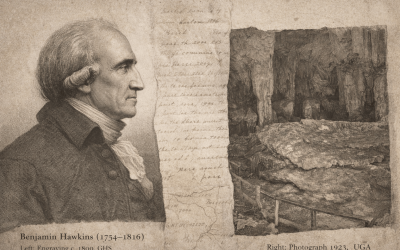
Benjamin Hawkins and the First Federal Documentation of an American Cave (1796)
In December 1796, a federal official appointed by President George Washington entered a sacred cave in what is now Childersburg, Alabama. His name was Benjamin Hawkins. He wrote about what he saw. And because he recorded it in his official capacity as a United States...
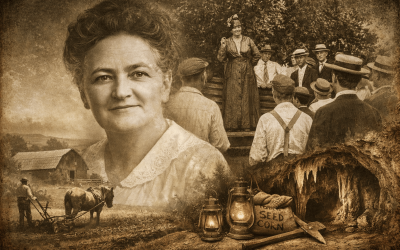
Ida Mathis and the Stewardship of Majestic Caverns
A case study in family preservation, agricultural reform, and the rare continuity of place Why Preservation Stories Matter Across the United States, historic landscapes often follow a familiar arc. Land is extracted, subdivided, redeveloped, or transferred through...

Benjamin Hawkins and the First Federal Documentation of Majestic Caverns (1796)
Intro: Why this Moment Matters In December 1796, a federal official traveling through the Upper Creek Nation recorded the existence of a large limestone cave in what is now Childersburg, Alabama. His description was not casual travel writing. It appeared in official...