A Century of Stewardship
Five Generations. One Cave. Continuous Care Since 1912.
For more than a century, Majestic Caverns has remained under one family’s leadership. That rare continuity has shaped how the cave is protected, interpreted, and shared with the public, generation after generation.
What exists today is not accidental.
It is the result of intentional stewardship.
Public Hours
Fri, Sat & Mon: 10 AM–5:30 PM
Sun: 12–5:30 PM
Groups of 20+ may schedule visits any day, including Tuesdays–Thursdays and outside public hours.
Check events calendar for future hours, as park hours vary.
AMERICA 250 RELEVANCE
Founding-era documentation • Indigenous archaeology • Civil War industry • Continuous preservation
Formerly DeSoto Caverns
HISTORIC RECOGNITION
Listed on the Alabama Register of Landmarks and Heritage (1976)
STATUS
Family-owned historic site, open to the public
Why Stewardship Matters
A preservation ethic that outlasts individual lifetimes.
Landmarks change hands.
Caves are especially vulnerable because access can damage what time created. Historic caves in particular have been frequently mined, altered, or closed. Few remain both preserved and publicly accessible under the same guiding philosophy for decades, much less for a century.
Majestic Caverns remained intact for one reason: long-term stewardship.
Since 1912, continuous family leadership has provided consistent decisions about conservation, public access, and interpretation. That continuity is increasingly rare among American historic places.
Majestic Caverns endures because one family chose preservation over extraction and education over exploitation.
That decision, made in the early twentieth century, continues to shape the site today. This page documents that continuity.

As America turns 250, Majestic Caverns shows how history endures when each generation accepts the responsibility to protect what it inherits.
GENERATIONAL TIMELINE
1912 — Ida Elizabeth Brandon Mathis purchases the cave property
1965 — The caverns open to the public for guided tours
1976 — Listed on the Alabama Register of Landmarks and Heritage
1970s–present — Continuous family stewardship and site operations
Today — Still family owned and preserved as a living historic site
This continuity includes five generations of leadership and six generations of family participation.
Generational Continuity
Each Individual Grew and Developed a New Facet of This Underground Gem
Stewardship at Majestic Caverns has never belonged to one era alone, but has been carried forward, generation by generation, for more than a century.
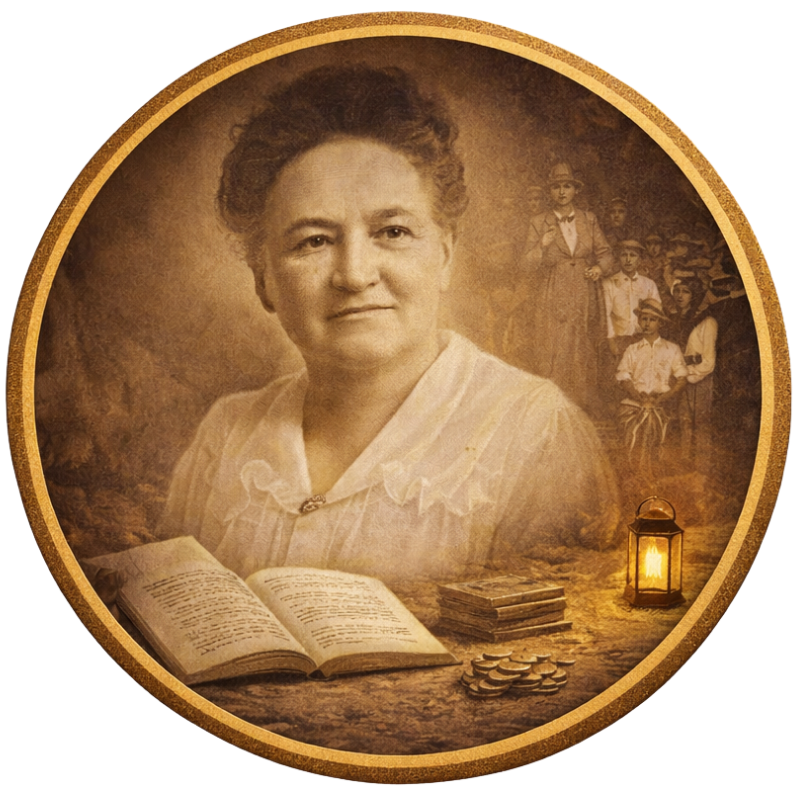
Ida Elizabeth Brandon Mathis
Foundation and Preservation
Ida Elizabeth Brandon Mathis
Role Purchaser and foundational steward (1912)
Contribution Shifted the site away from extraction and preserved the cave property as a long-term resource.
Context National agricultural leader recognized for statewide reform and public service.
Link CTA Read Ida’s full historical profile
The modern story of Majestic Caverns begins with Ida Elizabeth Brandon Mathis.
In 1912, Mathis purchased the cave property with the intention of mining onyx. As she came to understand the cave’s scientific and historical value, her priorities shifted. Extraction gave way to preservation.
This decision mirrored her broader life’s work.
Known nationally for her leadership in agricultural reform, Mathis advocated for soil restoration, crop diversification, and farmer education during a period of economic crisis in the South. Her influence earned her the titles “Economic Moses of the South” and “Joan of Arc of Agriculture.” She later became one of the first women to lead a statewide farmers’ organization and was inducted into the Alabama Women’s Hall of Fame.
Her approach to the cave reflected the same philosophy she applied to farmland: protect what is valuable, restore what is fragile, and steward resources for future generations.
The property remained intact because she chose care over short-term profit.
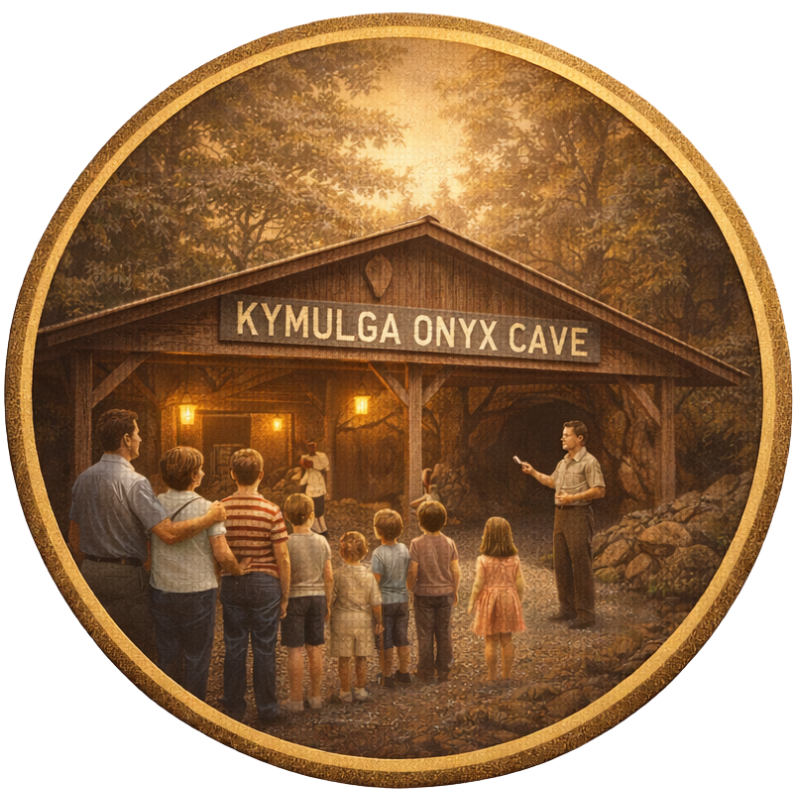
Opening the Caverns to the Public
Role Public access and interpretation milestone (1965)
Contribution Under family leadership, the site transitioned to guided public tours through the work of Fred Layton under lease.
Significance Marked the beginning of structured interpretation and safe visitor access.
Access and Interpretation
Mid-century stewardship expanded from protection to public education.
Under the leadership of Allen Mathis Jr., the cave was leased for development as a show cave. In 1965, Fred Layton opened the caverns to guided tours, creating safe access and structured interpretation for visitors.
Paths were stabilized. Lighting was added. Tours were organized.
For the first time, the public could experience the site not as a remote natural feature, but as an educational landmark.
This transition marked an important shift: from private landholding to shared heritage.
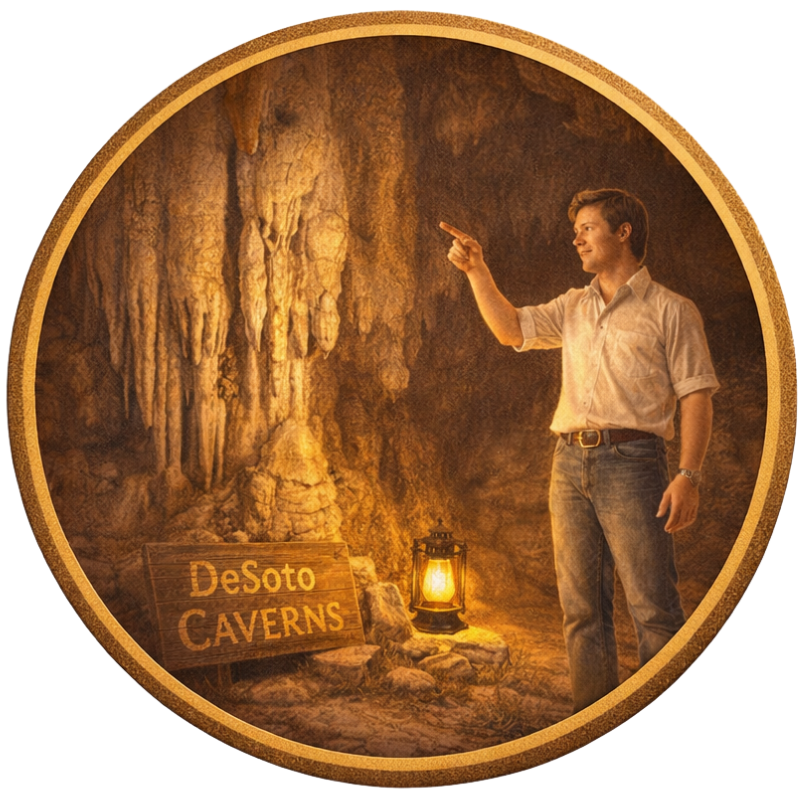
Allen Mathis III
Role Modern stewardship and operations (1970s–present)
Contribution Led long-term improvements that expanded safe access while protecting the cave’s integrity, including infrastructure modernization and visitor systems.
Continuity Built a sustainable model that supports preservation and public education.
Long-Term Care and Modern Stewardship
In the 1970s, Allen Mathis III returned to the property shortly after graduating from college, intending to help continue the family’s responsibility for the cave.
He began simply.
Early years meant repairing infrastructure by hand, guiding tours personally, and living on site while improving facilities. Gradually, the work expanded from maintenance to long-term planning.
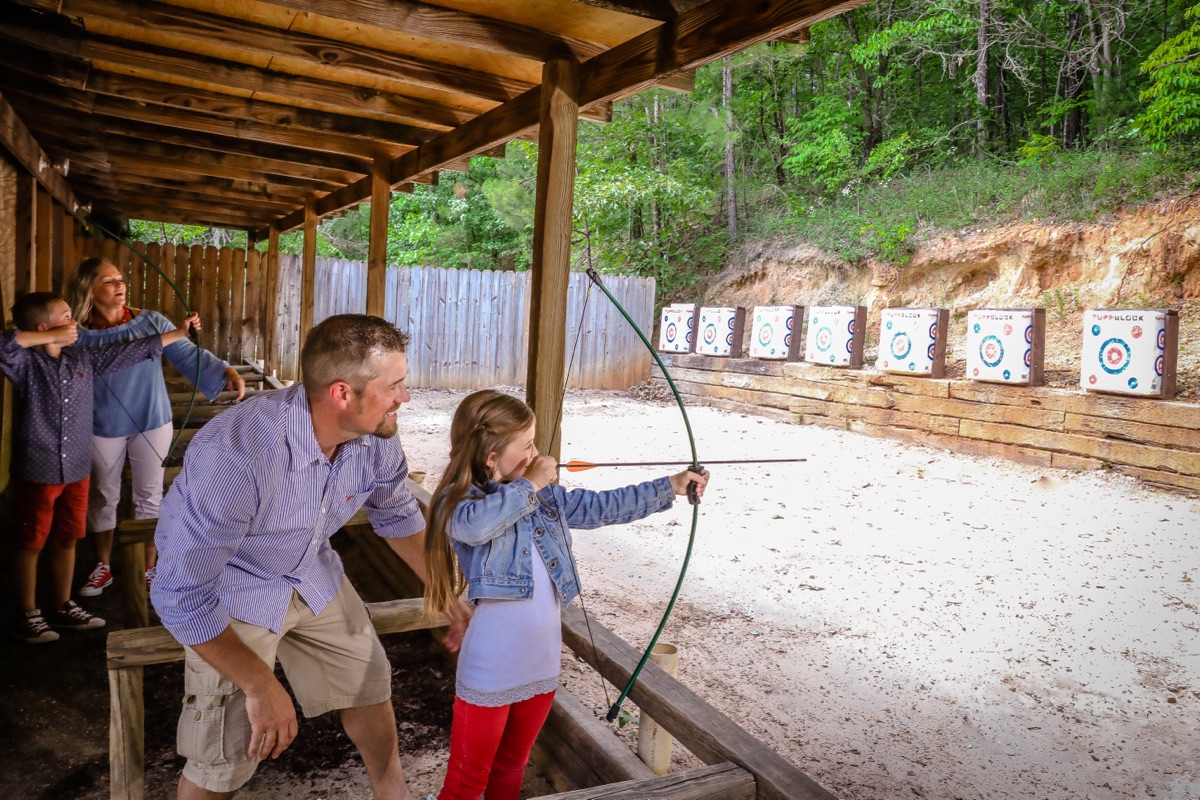
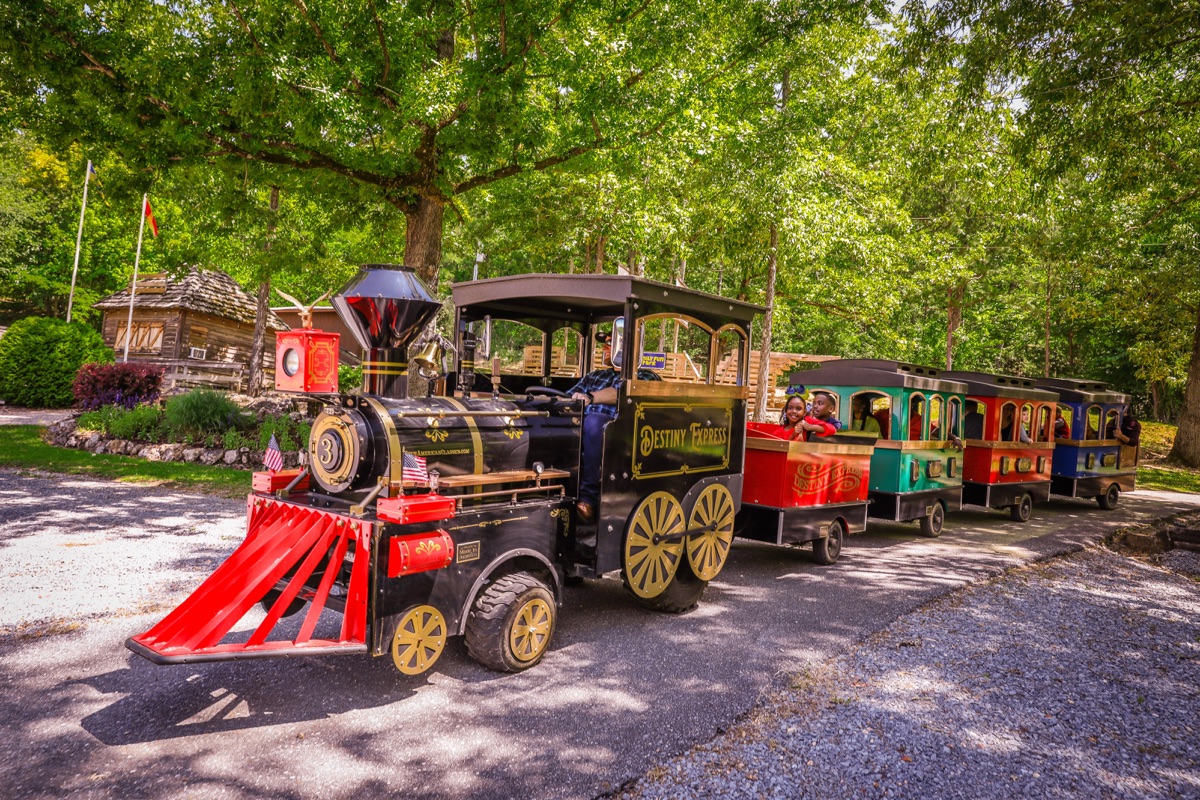
Under his leadership, access was modernized while protecting the cave’s integrity. Steep stairways were replaced with safer pathways. A tunnel entrance improved accessibility. Systems were installed to protect formations, manage water flow, and preserve the cave’s natural health. Above ground, educational and family-oriented attractions were added to support sustainable operations without disturbing the cave itself.
The focus remained consistent:
protect the cave and to improve its infrastructure so that families would come to and enjoy this historic property.
For Mathis, stewardship was practical and daily. It meant fixing what broke, improving what could be safer, and ensuring the next generation would inherit the site in better condition than it was received.

A Living Family Enterprise
Role Multi-generational participation
Contribution Children and grandchildren contributed across operations, maintenance, interpretation, marketing, and public programs, building institutional memory that is rarely preserved at privately held historic sites.
Over time, stewardship became multigenerational participation.
Children grew up learning the work firsthand. They stuffed envelopes, guided tours, maintained grounds, studied cave science, and traveled to other caves to understand geology and conservation. The property was not simply a workplace, but an ongoing classroom in history, ecology, and responsibility.
Today, Ida Mathis’s great-grandson serves as CEO.
His daughter, Joy Sorensen, serves as president.
Grandchildren and extended family members continue contributing across operations, maintenance, interpretation, marketing, and education.
This continuity is not ceremonial. It is active.
Knowledge is passed down directly: how to care for formations, how to interpret history accurately, how to balance access with preservation.
Few American historic sites retain this kind of lived, generational memory.

Today and Tomorrow
Role Current leadership
Contribution Ida Mathis’ great-grandson serves as CEO, with his daughter Joy Sorensen serving as president, continuing preservation responsibilities while expanding historical interpretation and public resources.
More than a century after its purchase, Majestic Caverns remains:
• family owned
• carefully preserved
• historically documented
• and open to the public
It is not a restored replica or a frozen museum piece.
It is a living cave system—still forming, still studied, still experienced.
The commitment remains the same as it was in 1912: protect the resource, share it responsibly, and ensure it endures.
A Place That Outlasts Us
Stewardship is not a family story alone. It is a preservation practice. The cave remains, because care remained consistent.
Families change.
Generations pass.
Stewards come and go.
The cave remains.
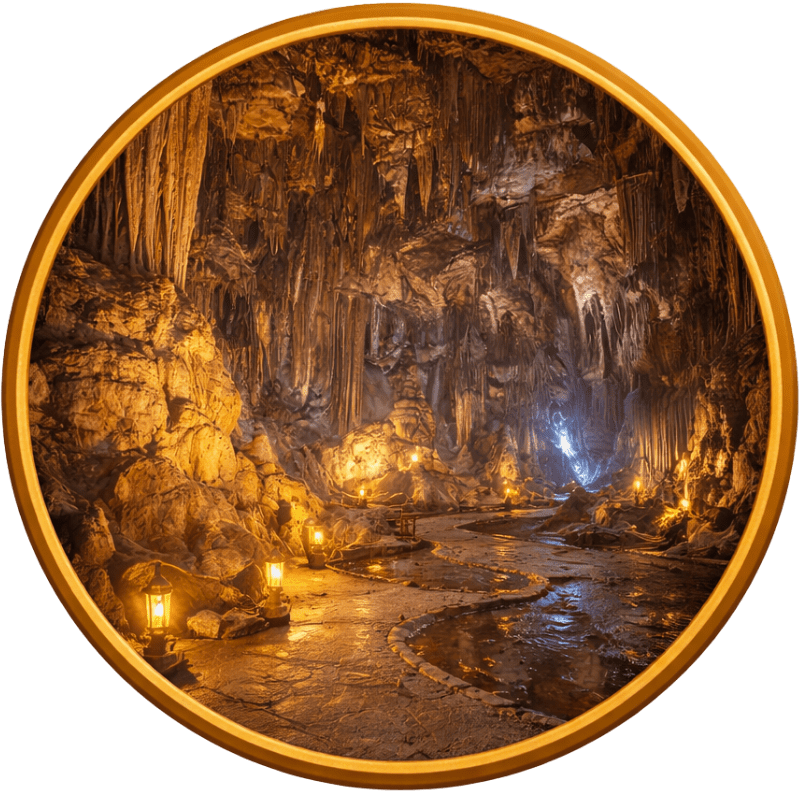
Because of continuous care, Majestic Caverns is not simply remembered history. It is a place where history is still physically present—where the same chambers, formations, and pathways experienced by earlier generations can still be walked today.
Stewardship made that possible.
And with continued care, it will remain possible for generations yet to come.
A Living Historic Landscape
Majestic Caverns is a living historic landscape: a natural site shaped by geology, protected by stewardship, and interpreted for the public.
For more than a century, continuous family care has supported preservation decisions that keep the cave intact while remaining accessible for education, research interest, and public experience.
Why Family Stewardship At Majestic Caverns Matters
Majestic Caverns matters because it combines three rare qualities in one place:
A documented historic record
A preserved natural system
Continuous stewardship across generations
Many places can claim significance. Fewer can show continuity. This site’s history is not only told, it is preserved through the decisions that kept it intact and publicly accessible.
Sources & Documentation
Information on this page is supported by published research and public records, including materials from the Encyclopedia of Alabama, University of Alabama archaeological studies, the Alabama Register of Landmarks and Heritage, the Georgia Historical Society, and the University of Georgia Libraries.
Details regarding modern operations and family stewardship are further informed by primary-source oral histories and recorded testimony from Allen Mathis III and Joy Sorensen, representing first-hand accounts of the site’s continuous care and management.
Majestic Caverns stands as a reminder that preservation is not only about remembering history — it is about caring for the places that carry it forward.
A Story Still Being Preserved
Firsthand accounts from the family who has cared for Majestic Caverns for more than fifty years — sharing the history, legacy, and personal stories behind one of America’s most continuously stewarded historic sites.
Stewardship Questions

Is Majestic Caverns still family owned?
Yes. Majestic Caverns has remained under continuous family ownership and leadership since its purchase in 1912, with five generations of stewardship and six generations of family participation.
Why does continuous family stewardship matter historically?
Long-term continuity is rare among American historic sites. Continuous stewardship allows for consistent preservation philosophy, accumulated institutional knowledge, and decisions guided by long-term care rather than short-term commercial interests.
How is stewardship different from ownership?
Stewardship emphasizes responsibility and care rather than control. At Majestic Caverns, stewardship has meant protecting geological features, managing public access responsibly, and preserving the site’s historical integrity across generations.
How has the cave been protected while remaining open to the public?
Preservation decisions have prioritized safe access, controlled lighting, protected pathways, and the use of above-ground attractions to reduce pressure on the cave itself.
What makes Majestic Caverns’ history unusual among historic sites?
Few historic caves in the United States have remained under continuous care by a single family for more than a century while remaining publicly accessible and geologically active.
Are the historical claims on this page documented?
Yes. Information on this page is supported by published research and public records, including materials from the Encyclopedia of Alabama, University of Alabama archaeological studies, the Alabama Register of Landmarks and Heritage, the Georgia Historical Society, University of Georgia Libraries, and primary-source oral histories.
Are the historical claims on this page documented?
Yes. Information on this page is supported by published research and public records, including materials from the Encyclopedia of Alabama, University of Alabama archaeological studies, the Alabama Register of Landmarks and Heritage, the Georgia Historical Society, University of Georgia Libraries, and primary-source oral histories.
Historical Articles
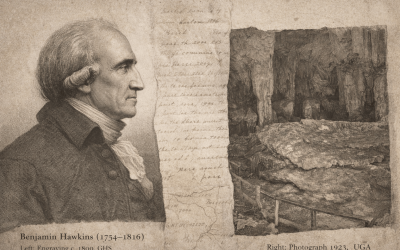
Benjamin Hawkins and the First Federal Documentation of an American Cave (1796)
In December 1796, a federal official appointed by President George Washington entered a sacred cave in what is now Childersburg, Alabama. His name was Benjamin Hawkins. He wrote about what he saw. And because he recorded it in his official capacity as a United States...
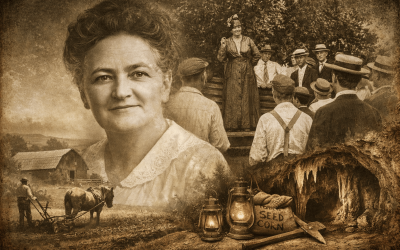
Ida Mathis and the Stewardship of Majestic Caverns
A case study in family preservation, agricultural reform, and the rare continuity of place Why Preservation Stories Matter Across the United States, historic landscapes often follow a familiar arc. Land is extracted, subdivided, redeveloped, or transferred through...

Benjamin Hawkins and the First Federal Documentation of Majestic Caverns (1796)
Intro: Why this Moment Matters In December 1796, a federal official traveling through the Upper Creek Nation recorded the existence of a large limestone cave in what is now Childersburg, Alabama. His description was not casual travel writing. It appeared in official...