Where History, Science, and Story Come to Life
A Place That Watched America Before a Nation — Documented Since 1796
Alabama’s most historic caverns serve as a living classroom where geology, archaeology, ecology, and American history meet state education standards.
Hours
Schedule tailored to you. Bookings beyond business h
ours. Connect for details.
STATUS
Family-owned historic site, open to the public
HISTORICAL RELEVANCE
Founding-era documentation • Indigenous archaeology • Civil War industry • Continuous preservation
HISTORIC RECOGNITION
Listed on the Alabama Register of Landmarks and Heritage (1976)
ADDRESS
5181 DeSoto Caverns Parkway
Childersburg, AL 35044
PHONE
256.378.7252
Take Your Classroom Experience To New Depths
A Living Classroom, Not a Worksheet
Learning changes when students stand where history happened.
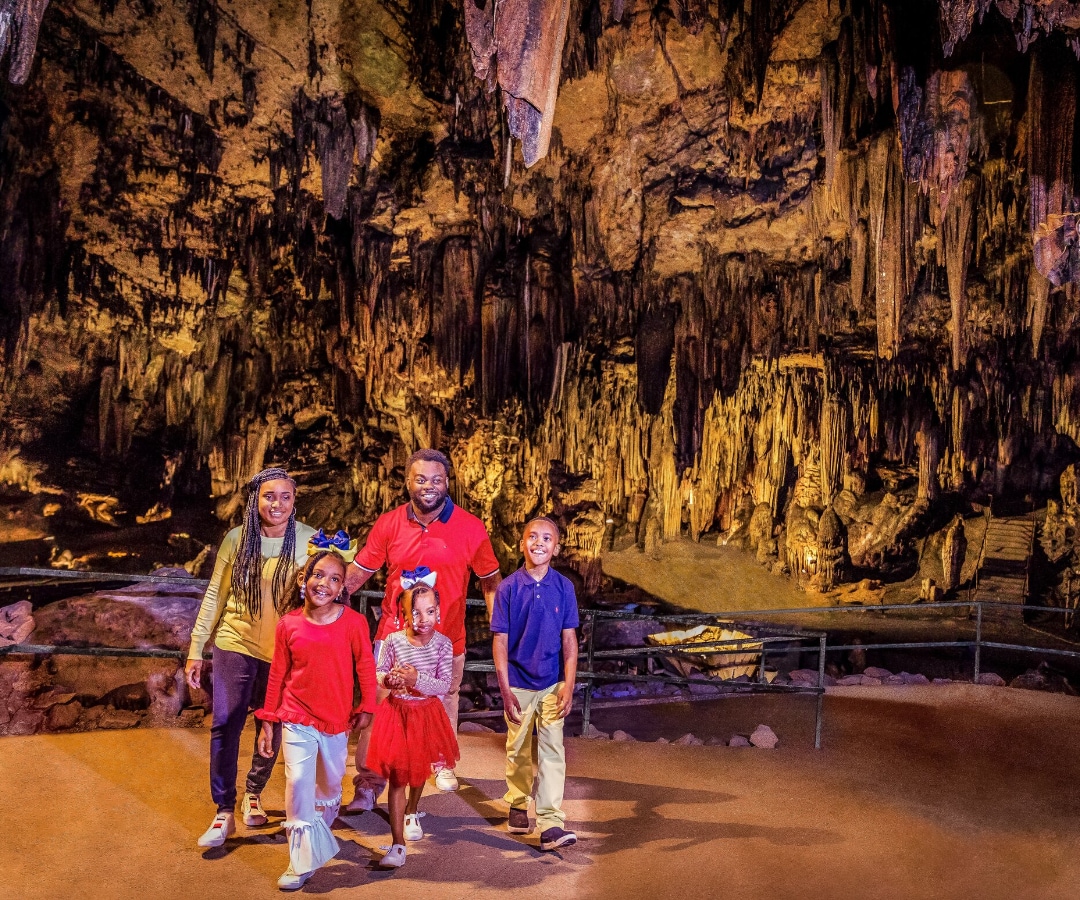
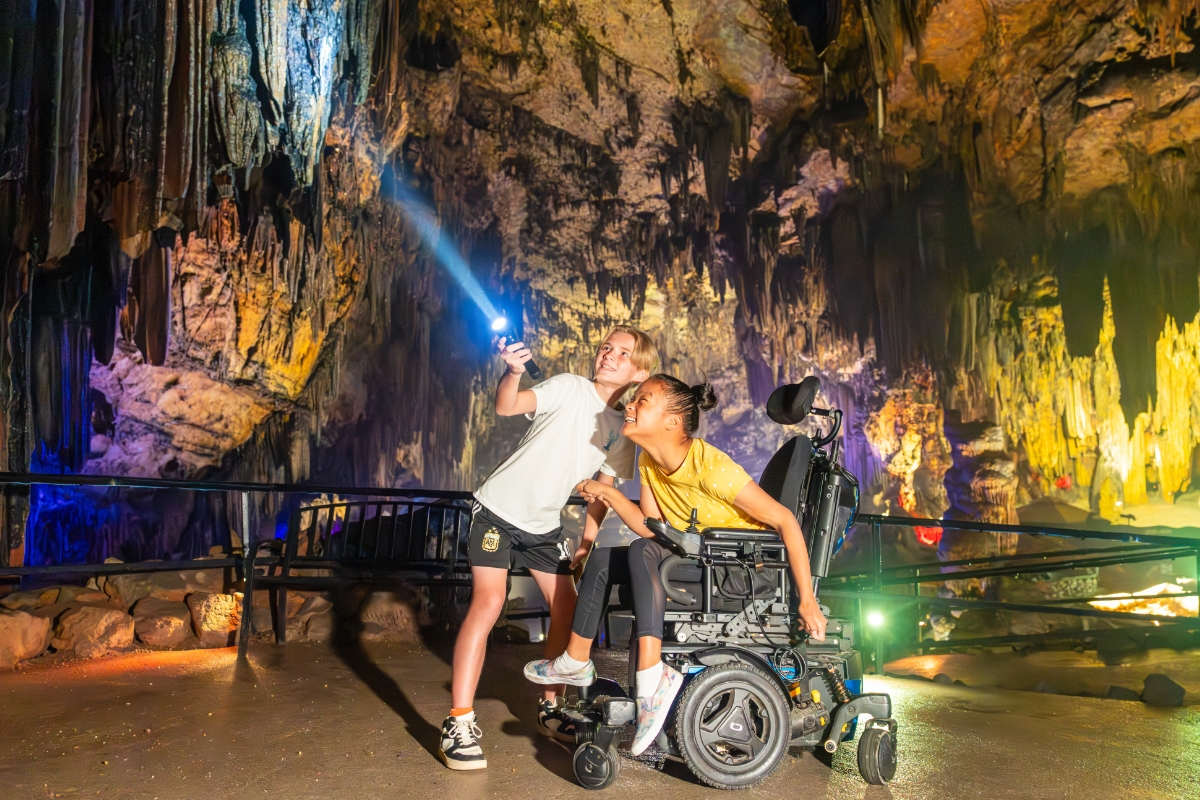
Inside Majestic Caverns, students don’t just read about geology.
They walk through formations still growing.
They don’t just study early America.
They explore a site documented by Benjamin Hawkins in 1796.
They don’t just hear about Indigenous cultures.
They encounter real archaeological history preserved in place.
For over a century, one family has protected this landmark so the next generation could learn from it.
That’s why teachers return year after year.
Because this isn’t a lesson.
It’s an experience students remember for life.
Learning here supports required instructional objectives through real-world observation and guided interpretation.
“Majestic Caverns is one of the few field trips where I can clearly connect what students experience to multiple state standards. The geology, history, and science are real, not simulated, and my students remember the learning long after we return to the classroom.”
— Elementary Educator, Alabama
Quick Facts
1796
First federally documented cave site in the U.S.
Science + History + Ecology
Multi-disciplinary standards alignment
Historic Designation: Alabama Register of Landmarks and Heritage (1976)
60 Years
Open to school groups
Thousands of Students Annually
Trusted by schools across the Southeast
Majestic Caverns Historical Timeline
A Chronology of Human Presence, National History, and Preservation
This timeline reflects documented archaeological findings, historical records, and preservation milestones associated with Majestic Caverns.
Before the Nation: Deep Time and an Ancient Presence
Prehistoric Era
Long before written history, water slowly shaped passages within the limestone beneath Childersburg, forming the cave system that exists today. This ancient landscape became a natural shelter for both wildlife and early peoples.
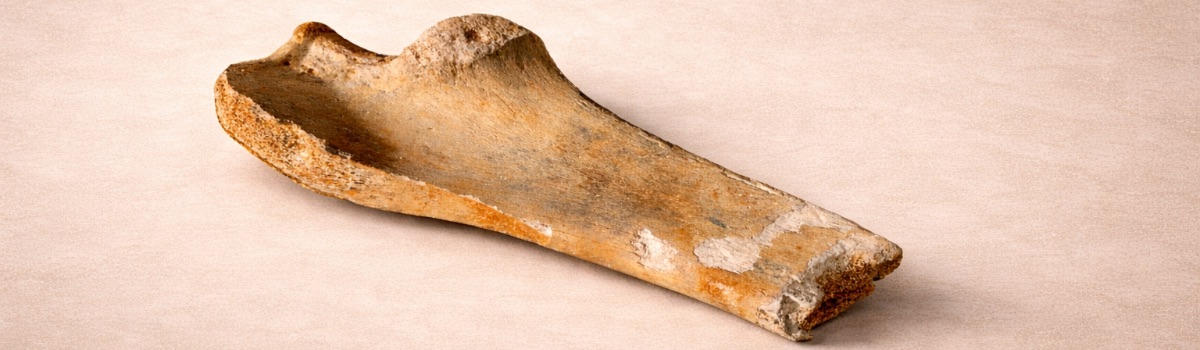
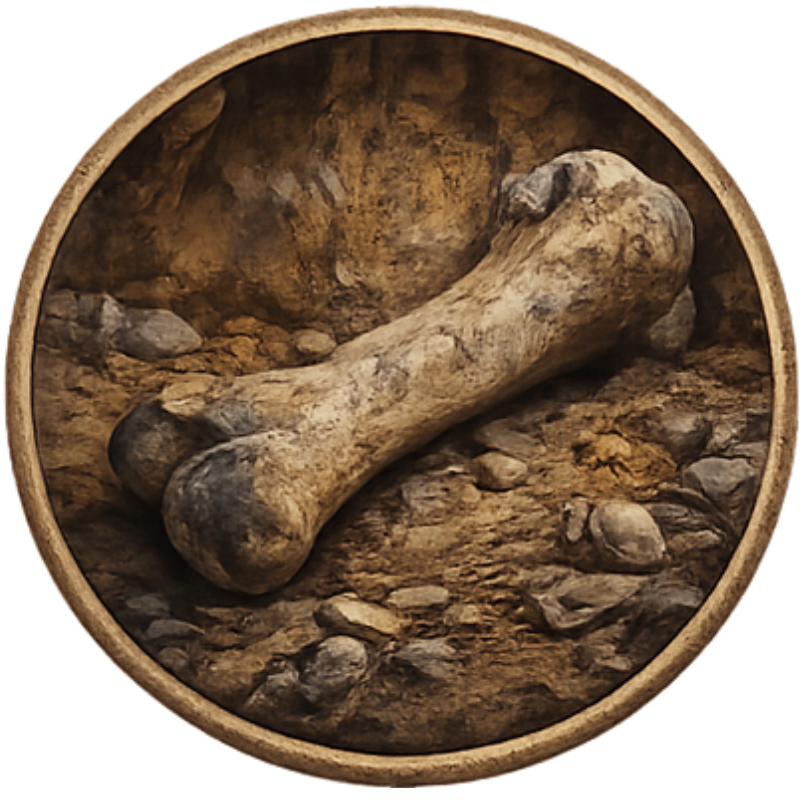
A mastodon femur discovered inside the cave provides evidence of Ice Age animal life in the region, showing that this valley supported large wildlife eons before recorded human history.
Indigenous Heritage and Sacred Use
Woodland Period (c. 200 BCE–900 CE)
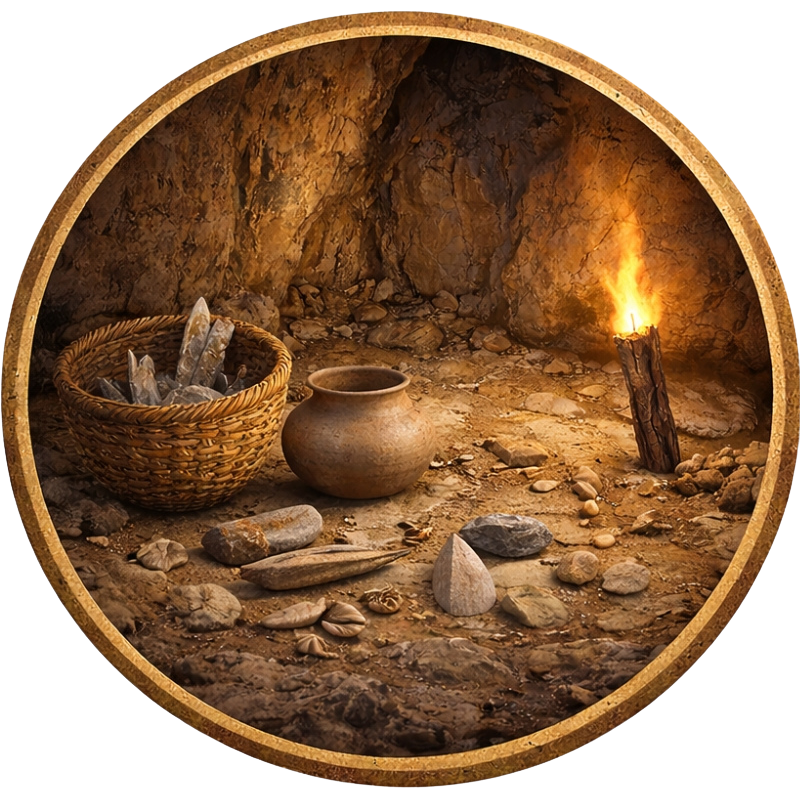
Archaeologically documented and state-recognized research confirms Indigenous use of the cave during the Woodland period. Copena burial traditions and cultural artifacts establish the cave as a place of ceremonial and ancestral significance long before European contact.
In 1965, archaeologists from the University of Alabama uncovered burial remains that were later carbon dated to more than 2,000 years old. The findings contributed to the cave’s listing on the Alabama Register of Landmarks and Heritage for archaeological significance.
An Early Mark on the Landscape
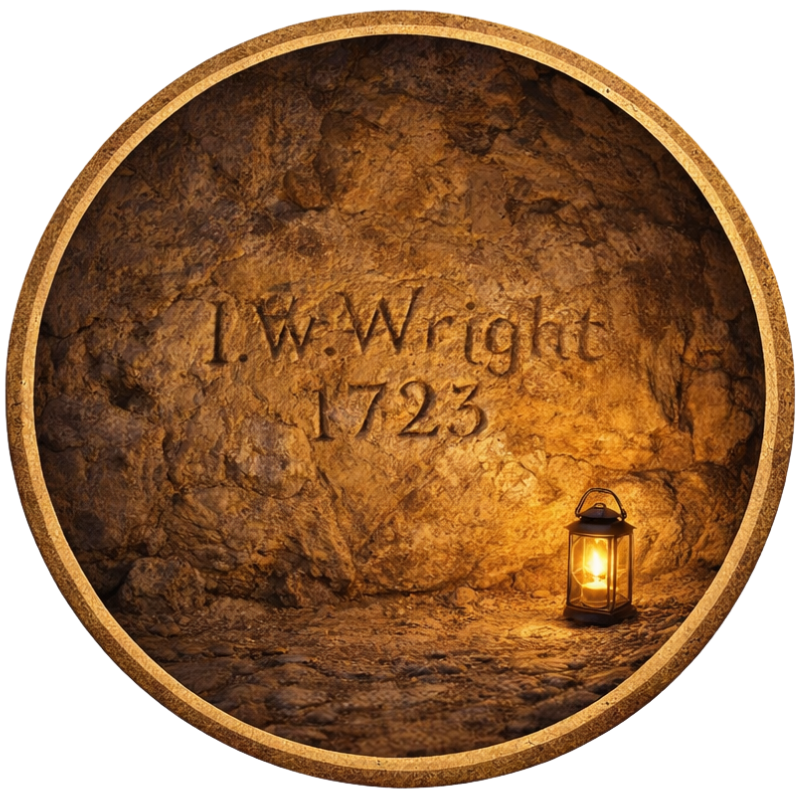
1723
Trader I. W. Wright carved his name into the cave rock while traveling regional trade routes that linked Indigenous nations, European settlers, and emerging colonial markets. His inscription reflects how Native land, frontier commerce, and early American economies intersected decades before independence.
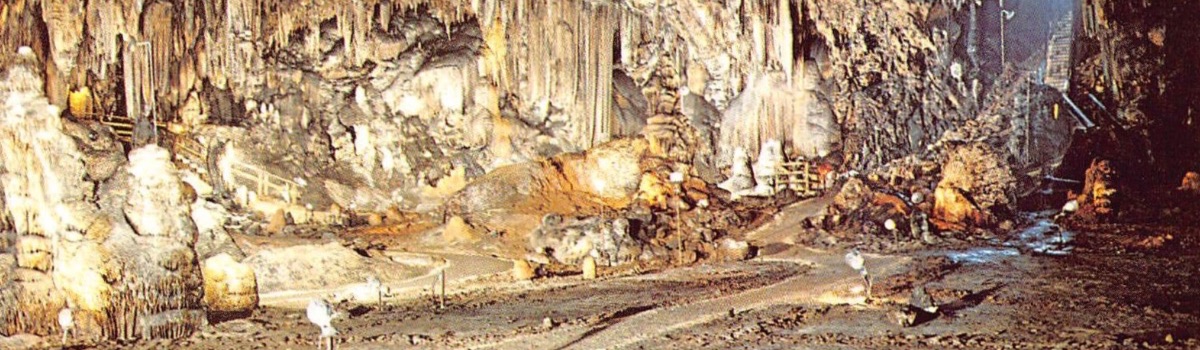
The carved rock remains visible today and is widely regarded as the oldest known cave signature in the United States—a rare physical record of early colonial movement through the wilderness.

Entered into the Federal Record
1796 — Founding-Era Documentation
Benjamin Hawkins, U.S. Superintendent of Indian Affairs during the administration of George Washington, personally visited and documented the cave in 1796. His written description places Majestic Caverns as the first cave formally recorded in United States government records.
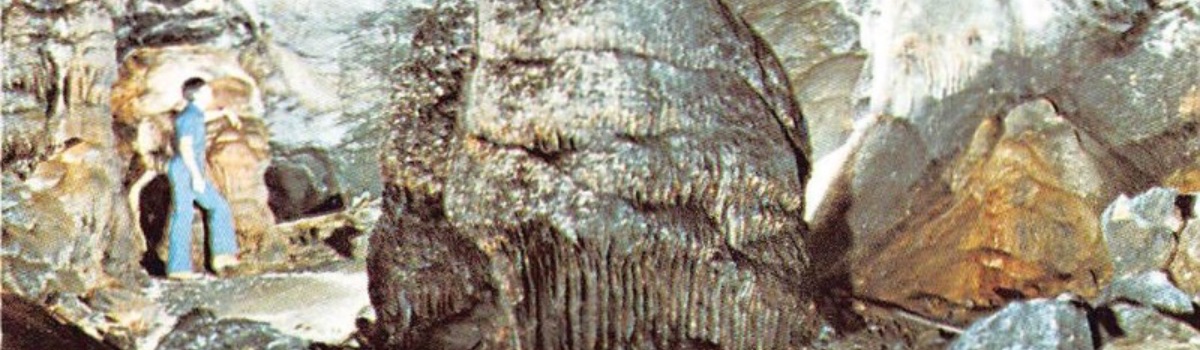
Hawkins noted the cave’s immense chambers and the presence of saltpeter crystals. His observations later appeared in Letters of Benjamin Hawkins, 1796–1806, now preserved in public archives. His account provides one of the earliest federal references to a natural landmark in Alabama.

From Observation to National Necessity
Early 1800s–Civil War (1861–1865)
During the Civil War, the cave became part of the Confederate supply chain. Mined for saltpeter, with physical mining trenches and wells still visible today, saltpeter was extracted from cave soil and was processed into gunpowder, connecting this natural space directly to national wartime industry.
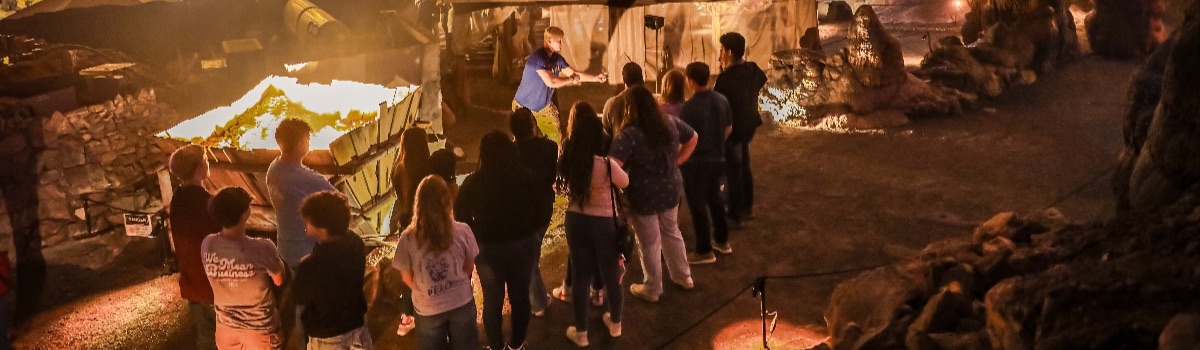
Visitors can still see the leaching vats, trenches, and the Confederate well used to draw water for mineral processing—rare physical evidence of nineteenth-century mining operations preserved inside the cave.

Ida Mathis and a Vision for Stewardship
1912
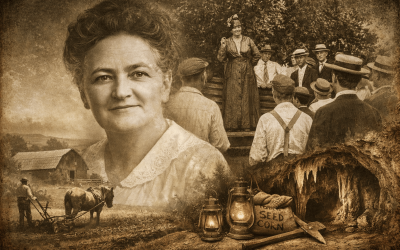
In 1912, Ida E. Brandon Mathis purchased the cave and ultimately chose preservation over continued extraction. Known nationally as the “Economic Moses of the South,” she was a respected agricultural reformer, lecturer, and financier whose work helped stabilize Alabama’s farming economy during wartime and economic hardship.

Mathis spoke across the country on crop diversification, advised bankers and governors, and was inducted into the Alabama Women’s Hall of Fame. Her speeches were shared with President Woodrow Wilson, and national leaders credited her with saving millions of dollars for Southern farmers. Her stewardship preserved the cave for future generations rather than allowing it to be exhausted by mining.
The “Bloody Bucket” Speakeasy
Prohibition Era (1920–1933)
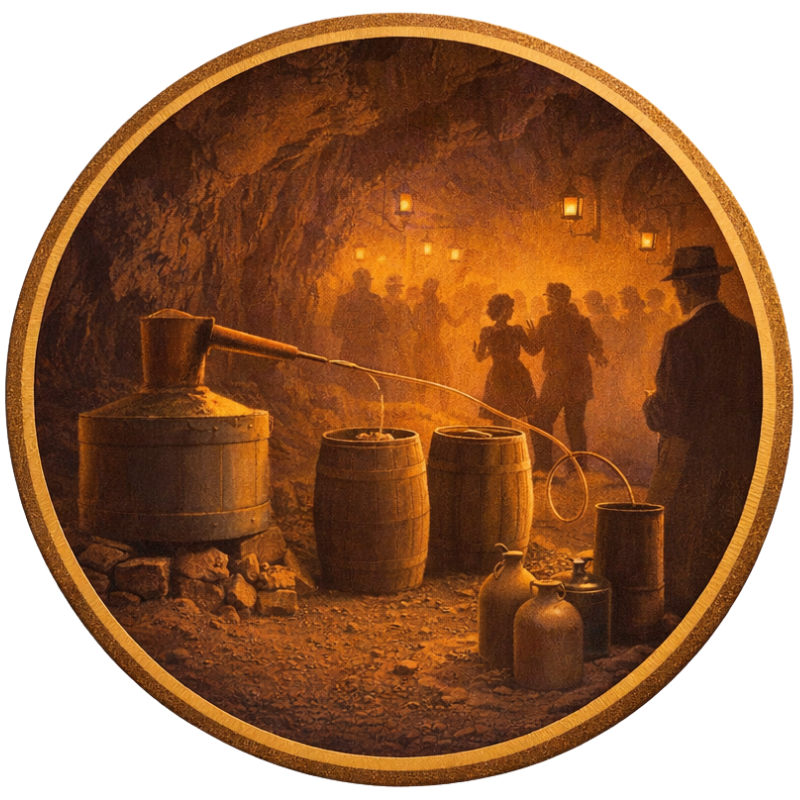
During national Prohibition, the cave briefly operated as an illicit speakeasy and gathering place. Like many hidden locations across the country, it reflected the underground economies and social tensions of the era.
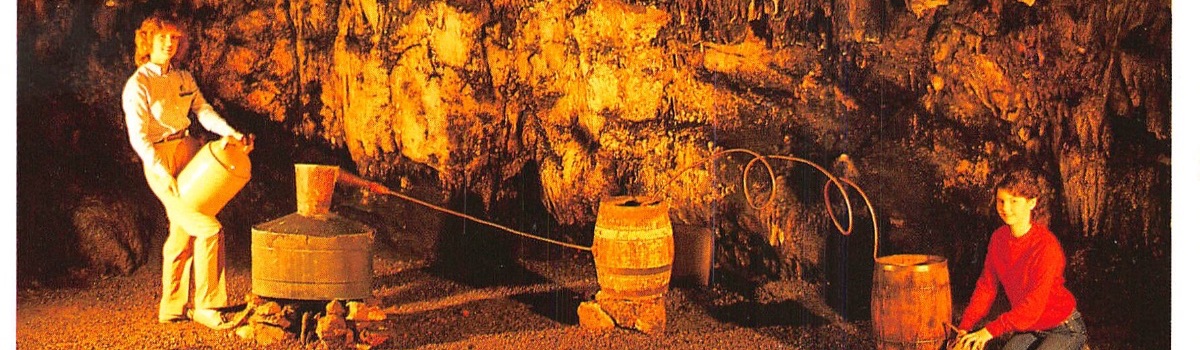
Guests slid down a muddy slope to enter the cavern, where makeshift lighting, dancing, and moonshine production created a lively but short-lived nightlife scene. Frequent fights earned the cave the nickname “The Bloody Bucket.” The operation was eventually shut down by federal authorities. The image shown here is a reconstructed moonshine still, similar to those used during that period.
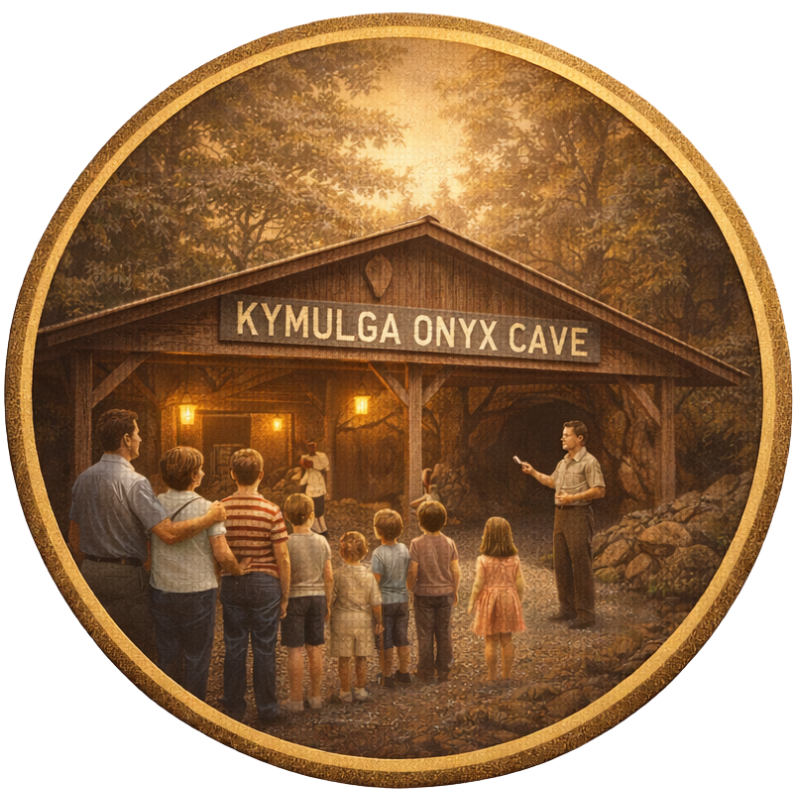
Opening History to the Public
1965 — Public Access Begins
Under the Mathis family’s continued ownership, the cave transitioned from private land to a public educational site, opening guided tours that allowed families and schools to experience its history firsthand.
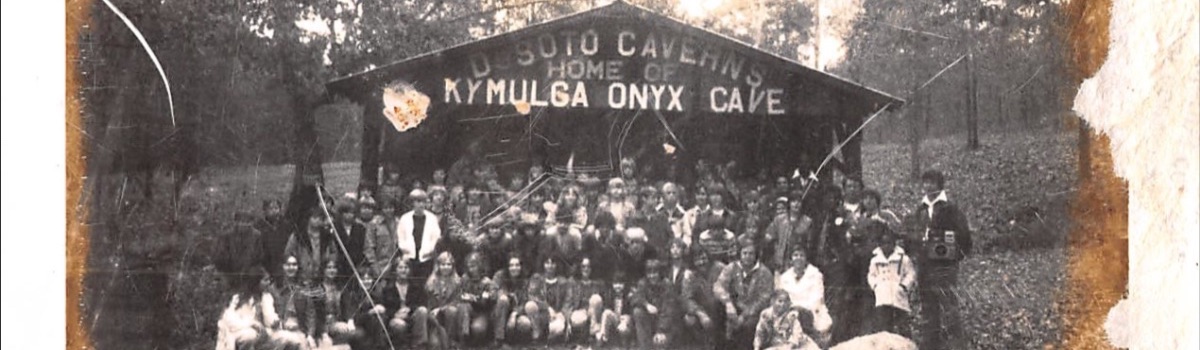
Fred Layton, leasing the cave from Allen Washington Mathis Jr., installed rudimentary walkways, lighting, and safe access routes and formally opened the cavern as a show cave—beginning the modern era of public exploration.

Al Mathis Opens DeSoto Caverns
1975
Ida Mathis’s great-grandson, Allen W. Mathis III, later expanded and developed the site for education and tourism, continuing the family’s commitment to preservation. Today, multiple generations of the Mathis family remain involved in stewarding the cave.
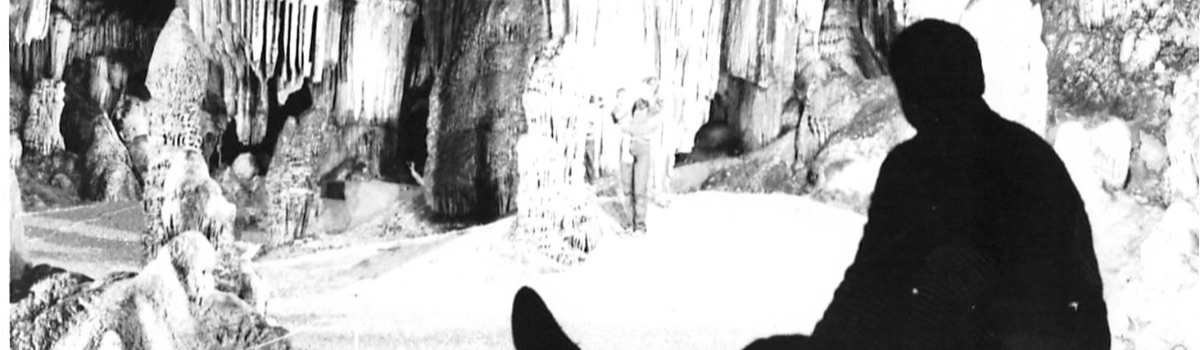
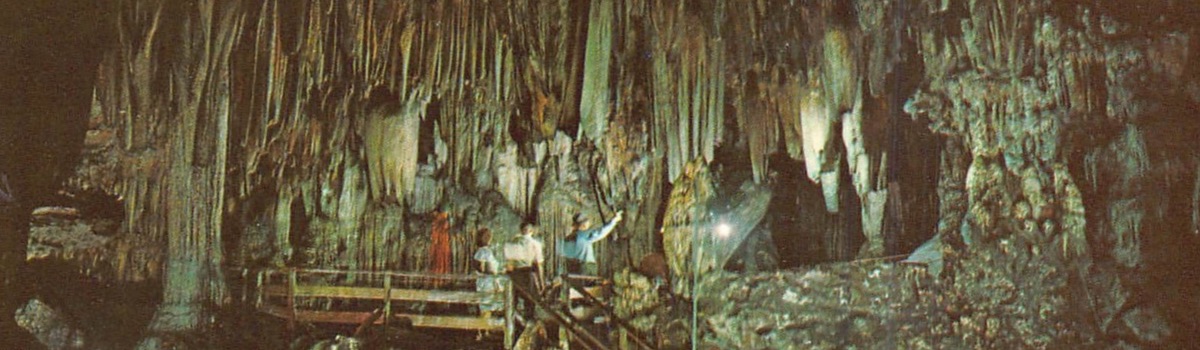
Pictured above, Allen W. Mathis III sits in front of the onyx column room, the same space where Ida Mathis once collected and evaluated onyx samples after purchasing the cave in 1912. The image illustrates a rare continuity of care across four generations of the same family.

Formal Recognition
1976 — State Landmark Status
Majestic Caverns was listed on the Alabama Register of Landmarks and Heritage under Criterion D for archaeology, formally recognizing its prehistoric and cultural importance.
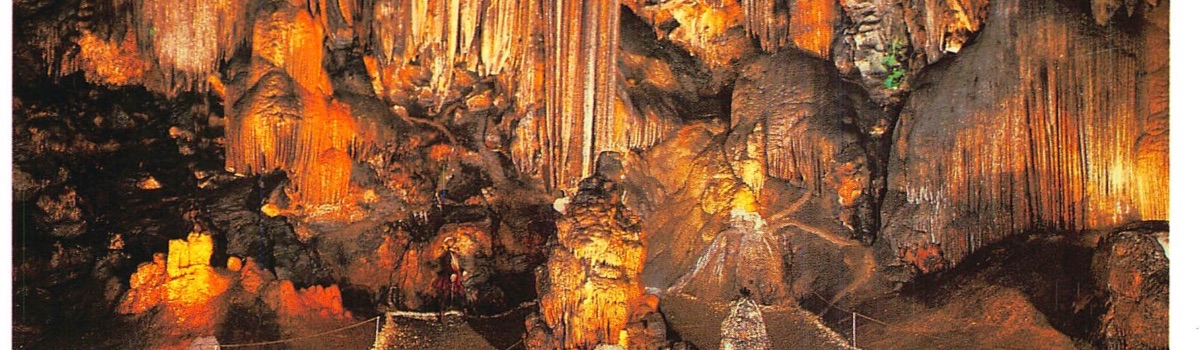
The designation acknowledged the cave’s documented Indigenous heritage and protected it as a significant historic site within Alabama.

A Living Historic Site: Majestic Caverns
Today
More than a century after its purchase by the Mathis family, the cave remains family-owned, preserved, and open to the public—an increasingly rare continuity among American historic places. Renamed Majestic Caverns in 2022 in order to remove continual confusion with DeSoto State Park in northern Alabama. The cave remains family-owned, preserved, and open as a living historic site.
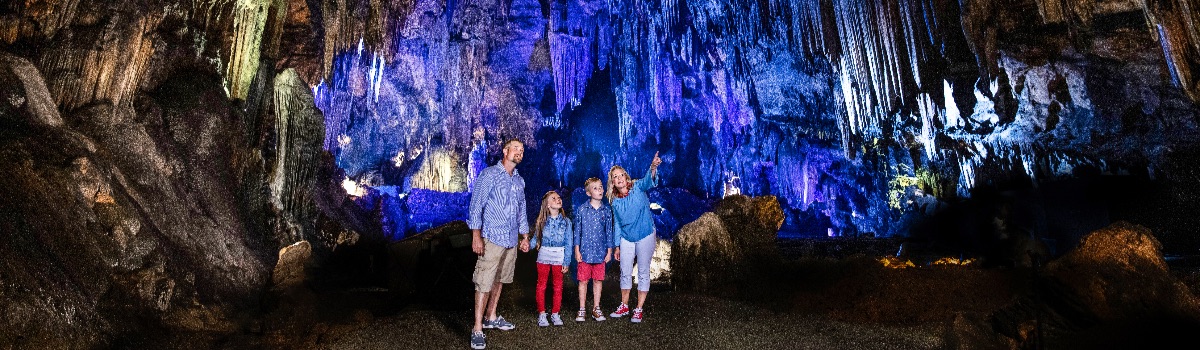
Guests still walk the same chambers described in early accounts, where formations continue to grow and history remains visible rather than confined to exhibits. It is not a frozen monument but a living historic landscape—one where natural processes continue and American history remains accessible.
Historic References
Information on this page is supported by published research and public records, including materials from the Encyclopedia of Alabama, University of Alabama archaeological studies, the Alabama Register of Landmarks and Heritage, the Georgia Historical Society, and University of Georgia Libraries.
“My students didn’t just learn the material — they felt it. Being inside a place where history and science actually happened made the lessons meaningful in a way textbooks can’t replicate.”
— Classroom Teacher
Designed for Educators
We know planning a field trip takes work.
So we built resources that make it easy.
• Standards-aligned lessons by grade
• Pre and post visit materials
• Short educational videos
• Downloadable handouts
• Built-in quizzes
• Flexible group scheduling
• Indoor and outdoor learning spaces
• Year-round 60° environment inside the cave
Everything is created to help you teach with confidence.
Looking for deeper subject matter context?
Explore our Science & Geology resources used across multiple grade levels.
Explore By Grade Level
To see how a field trip to Majestic Caverns applies to state curriculum standards, click the buttons to the right.
We are dedicated to crafting a purposeful learning experience. To ensure every student, across all grades, enjoys educational enrichment aligned with their classroom studies, we’ve developed videos, downloadable handouts, quizzes, and additional resources.
“Everything at Majestic Caverns is thoughtfully designed for teachers. The standards alignment, resources, and on-site interpretation made planning easy and learning authentic. I would absolutely bring another class.”
— School Field Trip Coordinator
A Living Historic Landscape
Majestic Caverns is not a frozen monument or a museum behind glass. It is a living cave.
Formations are still growing. Water still moves through the stone. Footsteps still echo through chambers first described centuries ago. Guests don’t just learn the story here. They walk through it.
This is not a place remembered. It is a place still experienced.
A Land Older Than the Nation It Helped Shape
Long before borders were drawn or governments formed, these limestone walls were already standing. For thousands of years, the caverns offered warmth, shelter, refuge, and sacred space.
Mastodons once rested here. Native peoples honored their dead here. Explorers passed through. Soldiers mined its minerals. Families later gathered beneath its ceilings in wonder.
Few places in America have served humanity so continuously — and so quietly — across time. Here, the American story wasn’t written on paper. It was written in stone.
Why Teachers Choose Majestic Caverns
Teachers choose Majestic Caverns because it allows students to learn where history and science intersect in the real world.
Lessons are no longer abstract.
Curiosity replaces memorization.
And learning becomes something students remember.
Field Trip Planning & Academic Assurance
Majestic Caverns supports standards-aligned instruction through place-based learning recognized as an effective educational practice.

Does a visit to Majestic Caverns meet state education standards?
Yes. All educational content is intentionally aligned with state curriculum standards and organized by grade level. Lessons integrate science, history, geography, and environmental studies in ways that support classroom instruction before and after the visit.
Can this field trip count as instructional time?
Yes. Majestic Caverns functions as an outdoor classroom where students engage in structured, standards-based learning guided by educators and trained interpreters.
What subjects does the program support?
Programs support science, social studies, history, earth systems, ecology, and critical thinking. Many grade levels benefit from cross-curricular learning in a single visit.
Is the content appropriate for required learning objectives?
Yes. Content is age-appropriate, educationally grounded, and designed to reinforce concepts already introduced in the classroom.
Do you provide materials to support teachers?
Yes. Teachers have access to videos, discussion prompts, handouts, and quizzes to support learning before and after the visit. This can be found in our grade level information above.
Is this suitable for homeschool groups?
Absolutely. Many homeschool families use Majestic Caverns as a structured learning experience that supports multiple grade levels simultaneously.
Historical Articles
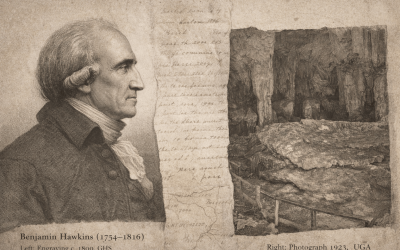
Benjamin Hawkins and the First Federal Documentation of an American Cave (1796)
In December 1796, a federal official appointed by President George Washington entered a sacred cave in what is now Childersburg, Alabama. His name was Benjamin Hawkins. He wrote about what he saw. And because he recorded it in his official capacity as a United States...
Ida Mathis and the Stewardship of Majestic Caverns
A case study in family preservation, agricultural reform, and the rare continuity of place Why Preservation Stories Matter Across the United States, historic landscapes often follow a familiar arc. Land is extracted, subdivided, redeveloped, or transferred through...

Benjamin Hawkins and the First Federal Documentation of Majestic Caverns (1796)
Intro: Why this Moment Matters In December 1796, a federal official traveling through the Upper Creek Nation recorded the existence of a large limestone cave in what is now Childersburg, Alabama. His description was not casual travel writing. It appeared in official...