Curriculum-Aligned Learning Experience
Aligned to Alabama Course of Study Standards
3rd Grade
Hours
Schedule tailored to you.
Bookings beyond business hours.
Connect for details.
ADDRESS
5181 DeSoto Caverns Parkway
Childersburg, AL 35044
PHONE
256.378.7252
sales@majesticcaverns.com
Designed for Third Grade Learners
The Third Grade educational experience at Majestic Caverns is intentionally designed to support students as they transition from basic observation to structured reasoning and evidence-based explanation. At this stage, students are developing the ability to analyze patterns, interpret data, construct explanations using evidence, and evaluate how environments influence both natural systems and human activity.
During their visit, students engage in guided exploration that connects grade-level science and social studies standards to real-world examples within the caverns. Rather than simply identifying what they see, students are encouraged to analyze formations, interpret historical evidence, and compare past and present systems.
At this stage, students are learning to:
-
Analyze patterns in data and natural systems
-
Construct explanations supported by evidence
-
Compare environments and historical periods
-
Interpret primary sources
-
Evaluate cause-and-effect relationships
This experience reinforces classroom instruction by providing a real-world setting where students can:
-
Observe geological and environmental systems in action
-
Analyze fossil and historical evidence
-
Connect scientific reasoning to physical examples
-
Examine how people and environments influence one another over time
Through structured discussion and guided interpretation, students strengthen the analytical and explanatory skills that define upper elementary learning.
What Students Will Experience
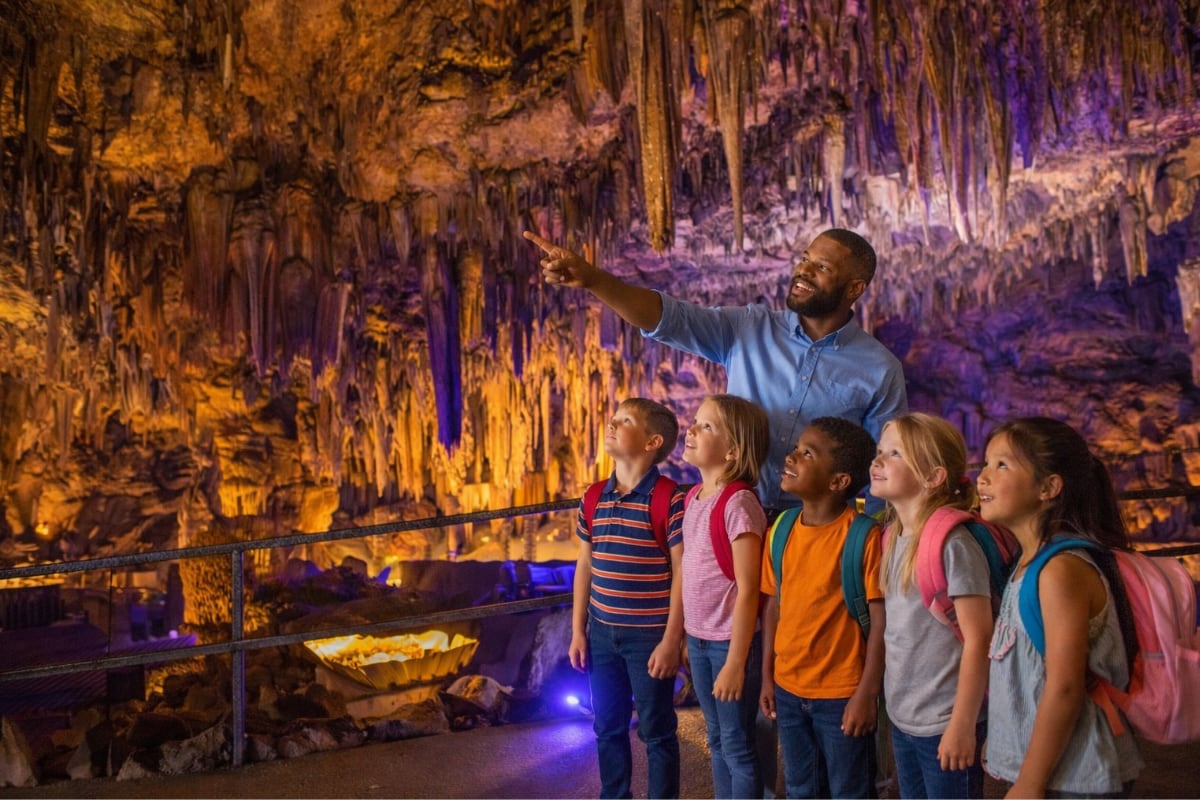
During their visit, third grade students engage in guided exploration that strengthens analytical thinking and structured explanation.
Rather than simply identifying what they see, students are encouraged to:
-
Identify patterns in rock formations and fossils
-
Construct explanations for how formations developed over time
-
Compare environments (past and present)
-
Analyze how humans have interacted with the cave across centuries
-
Interpret historical evidence including carvings, documented accounts, and artifacts
Through guided discussion inside the caverns, students practice:
-
Using evidence to support claims
-
Connecting cause and effect relationships
-
Distinguishing between observation and inference
-
Comparing natural systems and human systems
This experience supports third graders as they transition into more formal academic reasoning and structured explanation.
Third Grade
Our purpose is to support teachers by creating an intentional learning experience that strengthens classroom instruction. For each grade level, we provide curriculum-aligned videos, downloadable classroom resources, and guided activities that extend learning in meaningful, real-world ways.
Science
THIRD GRADE SCIENCE CONTENT STANDARDS
Third grade science emphasizes pattern recognition, systems thinking, and evidence-based explanation. During their visit, students apply grade-level science standards to observable phenomena within the caverns, using real-world examples to analyze motion, environmental systems, and fossil evidence. Each standard below is reinforced through site-specific discussion and guided interpretation.
MOTION AND STABILITY: FORCES AND INTERACTIONS
3.2
“Investigate, measure, and communicate in a graphical format how an observed pattern of motion (e.g., a child swinging in a swing, a ball rolling back and forth in a bowl, two children teetering on a see-saw, a model vehicle rolling down a ramp of varying heights, a pendulum swinging) can be used to predict the future motion of an object.”
SUPPORTING CURRICULUM
Students analyze observable patterns of motion and investigate how forces influence stability and change. While exploring the caverns, students observe examples of natural balance within rock formations and consider how gravity, water movement, and time contribute to structural stability. Through guided discussion, they connect physical examples within the cave environment to scientific principles of force, motion, and interaction.
This reinforces structured observation and real-world application of motion concepts.
Standards Review
UNITY AND DIVERSITY
3.9
“Analyze and interpret data from fossils (e.g., type, size, distribution) to provide evidence of organisms and the environments in which they lived long ago (e.g., marine fossils on dry land, tropical plant fossils in arctic areas, fossils of extinct organisms in any environment).”
SUPPORTING CURRICULUM
Students analyze fossil evidence to interpret characteristics of organisms and the environments in which they once lived. By examining fossil type, size, and distribution, students construct explanations about past ecosystems and environmental conditions. Discussion within the caverns allows students to evaluate how geological processes contribute to preservation and how physical evidence supports scientific conclusions.
Through guided observation, students practice distinguishing between observation and inference while developing evidence-based explanations about ancient life and environmental change.
Standards Review
3.11
“Construct an argument from evidence to explain the likelihood of an organism’s ability to survive when compared to the resources in a certain habitat (e.g., freshwater organisms survive well, less well, or not at all in saltwater; desert organisms survive well, less well, or not at all in woodlands). a. Construct explanations that forming groups helps some organisms survive. b. Create models that illustrate how organisms and their habitats make up a system in which the parts depend on each other. c. Categorize resources in various habitats as basic materials (e.g., sunlight, air, freshwater, soil), produced materials (e.g., food, fuel, shelter), or as nonmaterial (e.g., safety, instinct, nature-learned behaviors).”
SUPPORTING CURRICULUM
Students compare organism survival based on resource availability and environmental conditions. Within the cave ecosystem, students consider how limited light, stable temperatures, and moisture levels influence which organisms can survive underground. By examining how habitats differ from surface environments, students analyze how organisms adapt to available resources and environmental constraints.
This strengthens cause-and-effect reasoning tied directly to the cave environment.
Standards Review
EARTH’S SYSTEMS
3.13
“Display data graphically and in tables to describe typical weather conditions expected during a particular season (e.g., average temperature, precipitation, wind direction).”
SUPPORTING CURRICULUM
Students interpret weather data and identify patterns that describe typical seasonal conditions. During their visit, students compare surface weather variability with the consistent underground temperature of the caverns. This contrast provides a real-world example of environmental stability and helps students analyze how environmental conditions influence living systems.
This reinforces systems thinking using a tangible comparison unique to the site.
Standards Review
THIRD GRADE SOCIAL STUDIES CONTENT STANDARDS
Third grade social studies focuses on how people, places, and environments influence one another over time. At Majestic Caverns, students examine human-environment interaction, early trade patterns, primary sources, and cultural development within the context of Alabama history. Each standard below is reinforced through real historical examples connected to the site.
3.2
“Describe ways the environment is affected by humans in Alabama and the world
-
Examples : crop rotation, oil spills, landfills, clearing of forests, replacement of cleared lands, restocking of fish in waterways
-
Using vocabulary associated with human influence on the environment, including irrigation, aeration, urbanization, reforestation, erosion, and migration”
SUPPORTING CURRICULUM
We can make a better world or we can harm our planet through many different ways. Some of the ways people harm the planet are not intentional, but simply take place because they don’t know what you are learning. For example, many people will tour living caverns and want to touch the different formations. They don’t realize that the oils on their hands leave behind deposits that stunt the growth of the formation. The minerals that used to get deposited on the formations now slide right off because the oils that were left from the hands of visitors. This is why on every tour of Majestic Caverns, you’ll hear the guide request that all visitors respect the beauty and not touch the formations. Other ways that humans can affect their environment for the better are crop rotation, oil spills, landfills, restocking fish in waterways and more! The environment can also be affected by reforestation, erosion and migration, these are other topics that will be covered in your quiz to test your knowledge below!
Standards Review
3.3
“Compare trading patterns between countries and regions.”
SUPPORTING CURRICULUM
Students compare trade patterns between regions and examine how geographic features influence economic systems. The location of Majestic Caverns near early travel routes, including regional trails and trade paths, provides an opportunity to analyze how geography shaped movement and resource exchange. Students consider how natural landmarks influenced settlement patterns and regional development in Alabama.
This maintains site specificity while reinforcing economic reasoning.
Standards Review
3.4
“Interpret various primary sources for reconstructing the past, including documents, letters, diaries, maps, and photographs.”
SUPPORTING CURRICULUM
Students interpret primary sources to reconstruct historical events and understand past experiences. At Majestic Caverns, examples such as early carvings, documented reports, and historical accounts provide opportunities to analyze firsthand evidence. Students examine how historians use primary sources connected to the caverns to draw conclusions about exploration, settlement, and cultural significance.
This elevates rigor while maintaining your America 250 credibility.
Standards Review
3.5
“Describe prehistoric and historic American Indian cultures, governments, and economics in Alabama.
-
Examples
-
Prehistoric —Paleo-Indian, Archaic, Woodland, Mississippian”
-
SUPPORTING CURRICULUM
Students examine characteristics of prehistoric and historic American Indian cultures in Alabama, including governance, economic practices, and environmental adaptation. Discussion of Woodland Indian presence and burial practices associated with the caverns allows students to analyze how environment and culture are interconnected. Students consider how natural features influenced settlement and cultural development.
Standards Review
3.6
“Identifying roles of archaeologists and paleontologists”
SUPPORTING CURRICULUM
Students distinguish between the roles of archaeologists and paleontologists. Archaeologists study artifacts and material remains to understand human culture and history, while paleontologists analyze fossils to investigate ancient plant and animal life. At Majestic Caverns, both perspectives contribute to understanding the site’s geological and cultural history, reinforcing disciplinary literacy and scientific differentiation.
Standards Review
Teacher Preparation and Classroom Support
To support Third Grade teachers before and after their visit, Majestic Caverns provides curriculum-aligned printable classroom resources designed to extend learning beyond the tour. These materials include academic vocabulary development, structured evidence-based organizers, inquiry prompts, and analytical reflection tools that reinforce Alabama Course of Study standards while keeping teacher preparation clear and manageable.
Educational Group Experience Packages
Be an inspirational educator while saving money.
Tickets
Chaperones attend at a special discounted rate — only $2 more than the student price!
Adventure School Experience
$27
Guided Caverns Tour
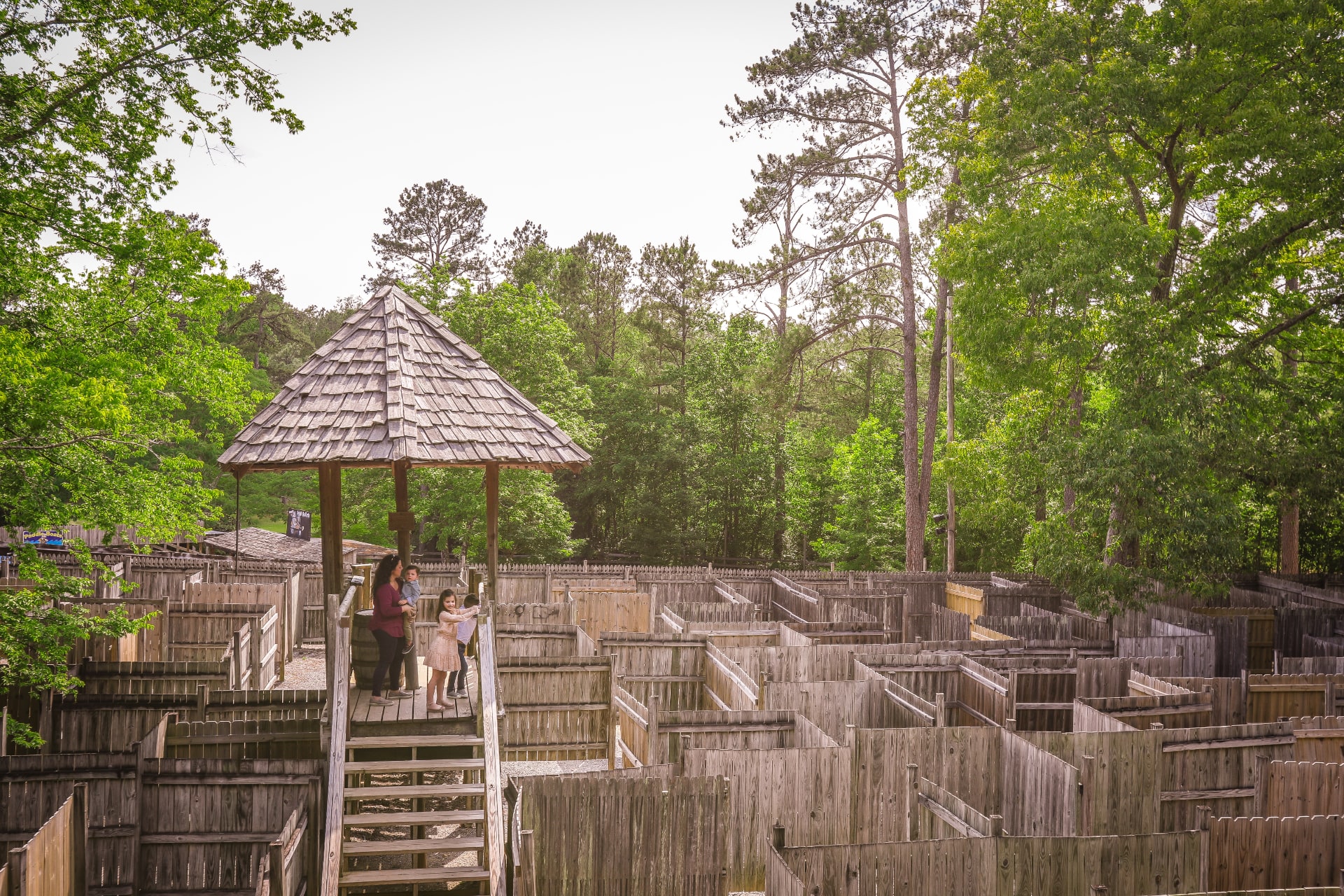
Maze
Panning for Gemstones
$36/person with meal
Most Popular
Express School
Experience
$29
Guided Caverns Tour
Maze
Panning for Gemstones
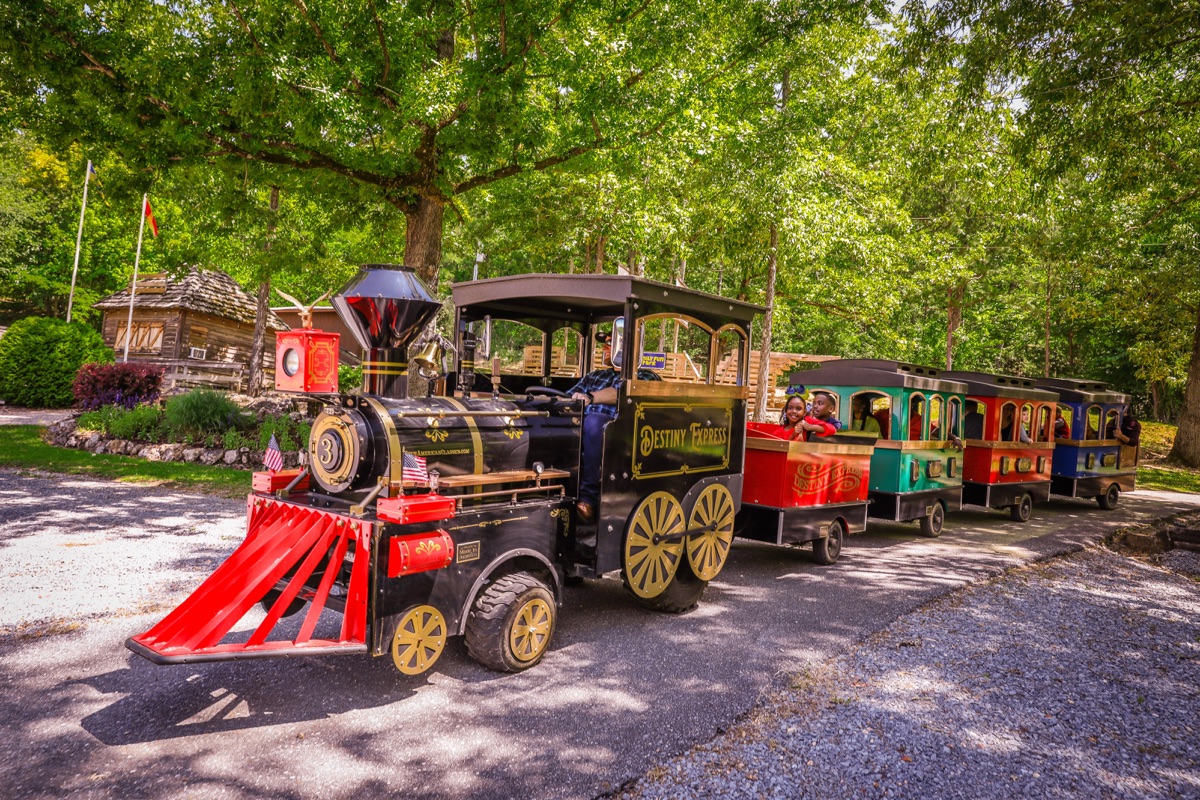
Destiny Express Train
$38/person with meal
Best Value
Legendary School
Experience
$35
Guided Caverns Tour
Maze
Panning for Gemstones
Destiny Express Train
+2 Additional Attractions
$44/person with meal
Underground Classroom
$36
Guided Caverns Tour
Maze
Panning for Gemstones
Destiny Express Train
$45/person with meal
Third Grade Teacher Assurance Q&A
How does this experience align with 3rd Grade standards?
The experience directly supports Alabama Course of Study standards in Science and Social Studies by reinforcing:
-
Constructing explanations from evidence
-
Analyzing fossils and past environments
-
Understanding human-environment interaction
-
Interpreting primary sources
-
Comparing systems and resources
All content is intentionally aligned to current grade-level standards.
Is this designed to replace classroom instruction?
No. This experience reinforces and enriches classroom instruction by providing real-world examples of concepts students are already learning.
Teachers remain the primary instructional leaders. Majestic Caverns serves as a living laboratory and historical site to strengthen understanding.
What academic skills do students practice during the visit?
Students practice:
-
Evidence-based reasoning
-
Structured explanation
-
Comparing systems
-
Cause and effect analysis
-
Primary source interpretation
-
Scientific observation with academic vocabulary
Are the classroom resources required?
No. All printable materials are optional supports designed to simplify teacher preparation and extend learning before and after the visit.
How long is the instructional portion?
The guided cave experience lasts just under one hour and integrates science and social studies instruction throughout.
Is this appropriate for different learning styles?
Yes. The experience includes:
-
Visual learning (formations, fossils, artifacts)
-
Auditory instruction (guided explanations)
-
Discussion-based reasoning
-
Structured written reflection opportunities
Optional Reading for Teachers
These articles provide additional historical and scientific context for teachers who would like extended background information. They are optional resources designed to deepen understanding and support classroom integration.
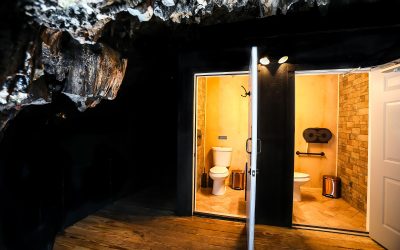
A Bathroom Inside the Cave: Why Comfort Changes Everything for Families
The most memorable historic places in Alabama do more than display an old object. They let visitors stand inside a continuing story. Majestic Caverns in Childersburg belongs beyond the usual lists because natural history, Indigenous presence, the early United States,...
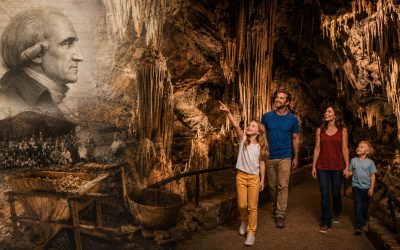
Top Unique Historic Places in Alabama: Why Majestic Caverns Belongs Beyond the Usual Lists
Majestic Caverns combines a documented 1796 national connection, layered Alabama history and a living family stewardship story underground.
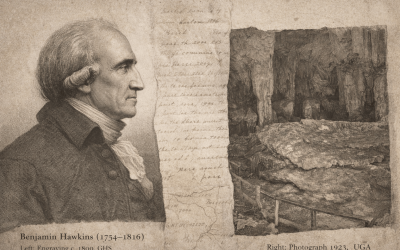
America 250 Travel Planning: Why Majestic Caverns Belongs on the National List
A 1796 federal record, Indigenous history, Civil War-era activity and continuous family stewardship make Majestic Caverns a compelling America 250 stop.




Social Studies