A Case Study in Living Heritage at Majestic Caverns
Historic preservation in the United States often follows one of two models.
A site is either:
-
Frozen in time under government management, or
-
Preserved as a static monument with limited adaptive use.
Both models serve important purposes. Yet there is a third — rarer — form of preservation that receives less attention: continuous family stewardship across generations.
Majestic Caverns in Childersburg, Alabama offers a compelling example of this model. Its story demonstrates why generational ownership can produce a uniquely durable and evolving form of American preservation.
The Typical Model: Static Preservation
Most nationally recognized historic sites eventually transition into public or nonprofit oversight. Once designated as historic, they are often stabilized and interpreted within a narrow historical window.
This approach:
-
Protects physical integrity
-
Ensures regulatory compliance
-
Limits structural alteration
-
Prioritizes conservation over evolution
While effective, the result can be institutional stillness. The site becomes primarily interpretive rather than adaptive. It preserves a moment, but rarely a continuum.
A Different Model: Continuous Stewardship
Majestic Caverns presents a different trajectory.
The cave has experienced layered historical phases:
-
Woodland Indigenous burial use
-
1540 Spanish expedition contact
-
1796 federal documentation by Benjamin Hawkins
-
Civil War saltpeter mining
-
Prohibition-era speakeasy use
-
20th century show cave development
-
21st century educational expansion
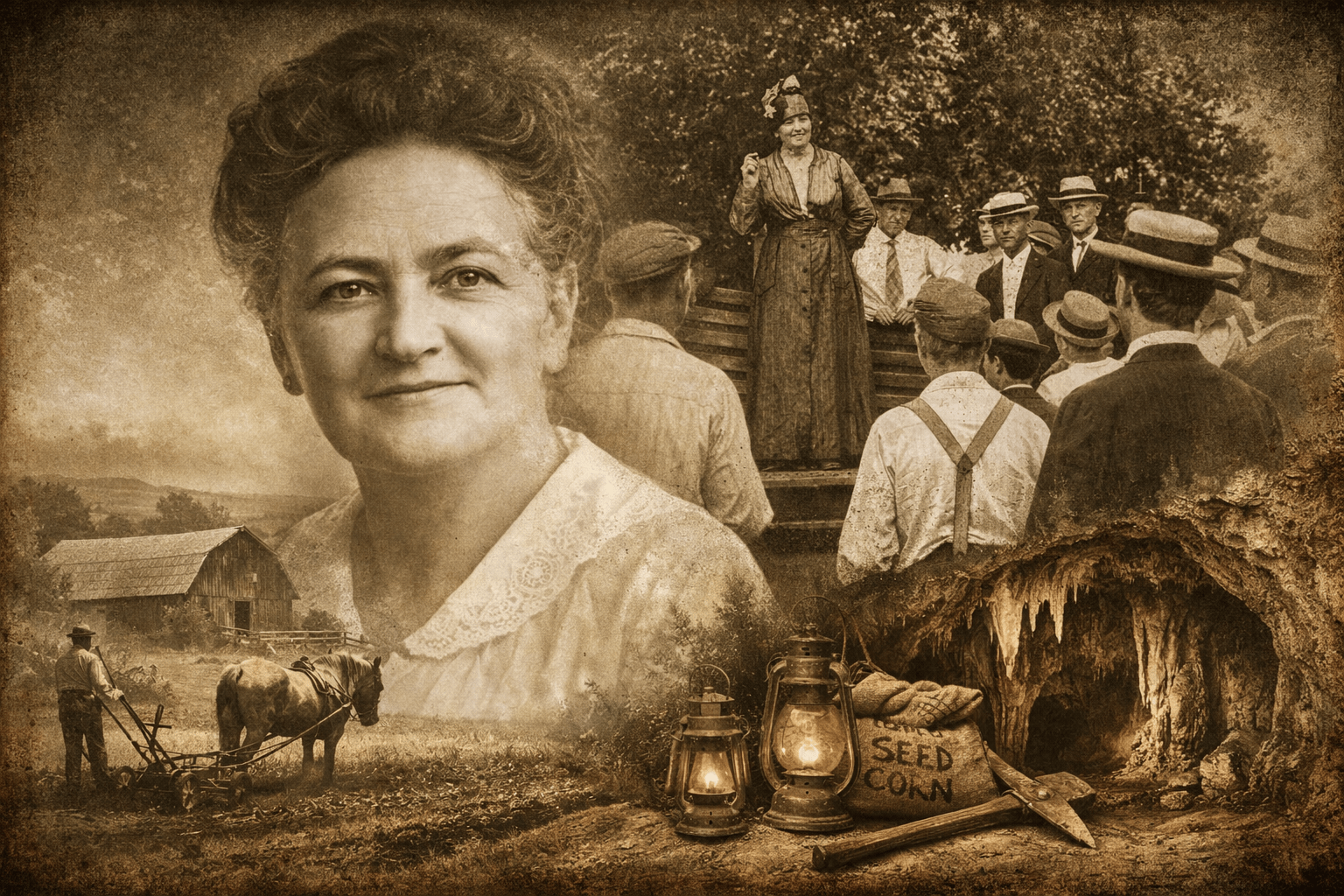
In 1912, Ida Elizabeth Brandon Mathis purchased the cave with the intention of mining onyx. Though the mining venture did not succeed, her family retained ownership. By the mid-20th century, the cave was developed as a public show cave, and in 1975 it was formally renamed DeSoto Caverns under continued Mathis family leadership. In June 2022, the historic name was restored to Majestic Caverns.
The site has remained under the stewardship of the same family line for more than a century.
That continuity is rare.
What Continuous Stewardship Changes
1. Preservation Is Personal
When ownership remains within a family, preservation decisions are not abstract policy debates. They are tied to legacy.
Damage to the site is damage to family history.
Improvements are investments in generational inheritance.
This produces:
-
Long-term thinking rather than short-term revenue optimization
-
Reluctance to over-commercialize sensitive spaces
-
Willingness to reinvest profits into infrastructure and conservation
The preservation ethic becomes internal rather than imposed.
2. The Site Remains Alive, Not Frozen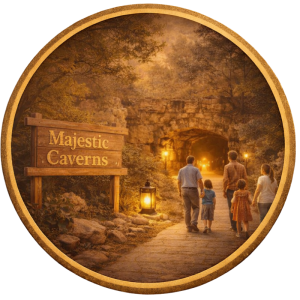
Because Majestic Caverns remains privately stewarded, it has been able to evolve without erasing earlier eras.
For example:
-
Civil War saltpeter mining remnants are preserved and interpreted.
-
Indigenous history is acknowledged and incorporated into educational programming.
-
Founding Era documentation by Benjamin Hawkins is elevated in America 250 narratives.
-
Modern safety standards and lighting systems are upgraded without dismantling historical context.
This is adaptive preservation — not museum isolation.
The cave continues to serve families, educators, and researchers while protecting archaeological and geological integrity.
3. Multigenerational Knowledge Accumulates
Institutional turnover can fragment site knowledge. Staff retire. Administrators rotate. Archives disperse.
In contrast, family stewardship allows interpretive knowledge to compound over time.
Stories are not rediscovered — they are remembered.
Operational decisions are informed by:
-
Decades of site-specific experience
-
Oral history within the family
-
Long-term maintenance patterns
-
Deep familiarity with the cave’s geological behavior
This type of continuity strengthens both conservation and interpretation.
4. Economic Sustainability Supports Physical Sustainability
Historic preservation requires revenue.
Publicly funded sites often rely on grants, fluctuating appropriations, or philanthropy. Private generational stewardship requires operational sustainability.
Because Majestic Caverns functions as an active destination:
-
Admission revenue supports infrastructure maintenance
-
Educational programming funds interpretive expansion
-
Tourism visibility supports historical research
The site’s ability to generate income ensures that preservation is not dependent solely on external funding cycles.
In this sense, heritage tourism becomes preservation strategy.
Why This Matters in the America 250 Era
As the United States approaches its 250th anniversary, heritage conversations are expanding beyond battlefield parks and founding documents.
There is increasing interest in:
-
Living historic landscapes
-
Sites that connect pre-colonial and federal eras
-
Family-owned heritage institutions
-
Intergenerational preservation models
Majestic Caverns embodies all four.
Few American sites can demonstrate:
-
Indigenous sacred use
-
Founding Era federal documentation
-
Civil War industrial activity
-
Prohibition cultural history
-
More than 100 years of continuous family stewardship
The preservation model here is not static — it is relational.
The stone remains ancient.
The stewardship remains active.
A Broader Preservation Insight
Continuous family stewardship does not replace public preservation models. Nor does it eliminate the need for archaeological rigor or ethical oversight.
However, it offers something distinctive:
-
Emotional continuity
-
Economic adaptability
-
Interpretive depth
-
Long-term accountability
In a time when many historic places struggle to balance authenticity with sustainability, generational stewardship provides a compelling alternative framework.
It is preservation not as artifact —
but as inheritance.
Conclusion: Living Heritage
Majestic Caverns is often described as one of America’s most historic caverns because of its layered timeline.
Yet equally significant is how that timeline has been protected.
The cave was not abandoned after mining ended.
It was not absorbed into distant bureaucracy.
It was not stripped of context for single-era storytelling.
It was carried forward — by one family — through shifting cultural, economic, and national landscapes.
That continuity is not incidental.
It is preservation.
And in American historic practice, it is rare.
Sources
Show Caves of the United States of America: Majestic Caverns.
Atlas Obscura: Majestic Caverns, Childersburg, Alabama.
Haley Laurence, “The Story Behind the Iconic DeSoto Caverns,” This Is Alabama, September 27, 2021.
Benjamin Hawkins, Letters to President George Washington, December 1796 (Georgia Historical Society).