Science & Geology
A living limestone cave shaped by water, time, and the forces that still move through Alabama’s underground landscapes.
Public Hours
Fri, Sat & Mon: 10 AM–5:30 PM
Sun: 12–5:30 PM
Groups of 20+ may schedule visits any day, including Tuesdays–Thursdays and outside public hours.
Majestic Caverns, A Living Limestone Cave
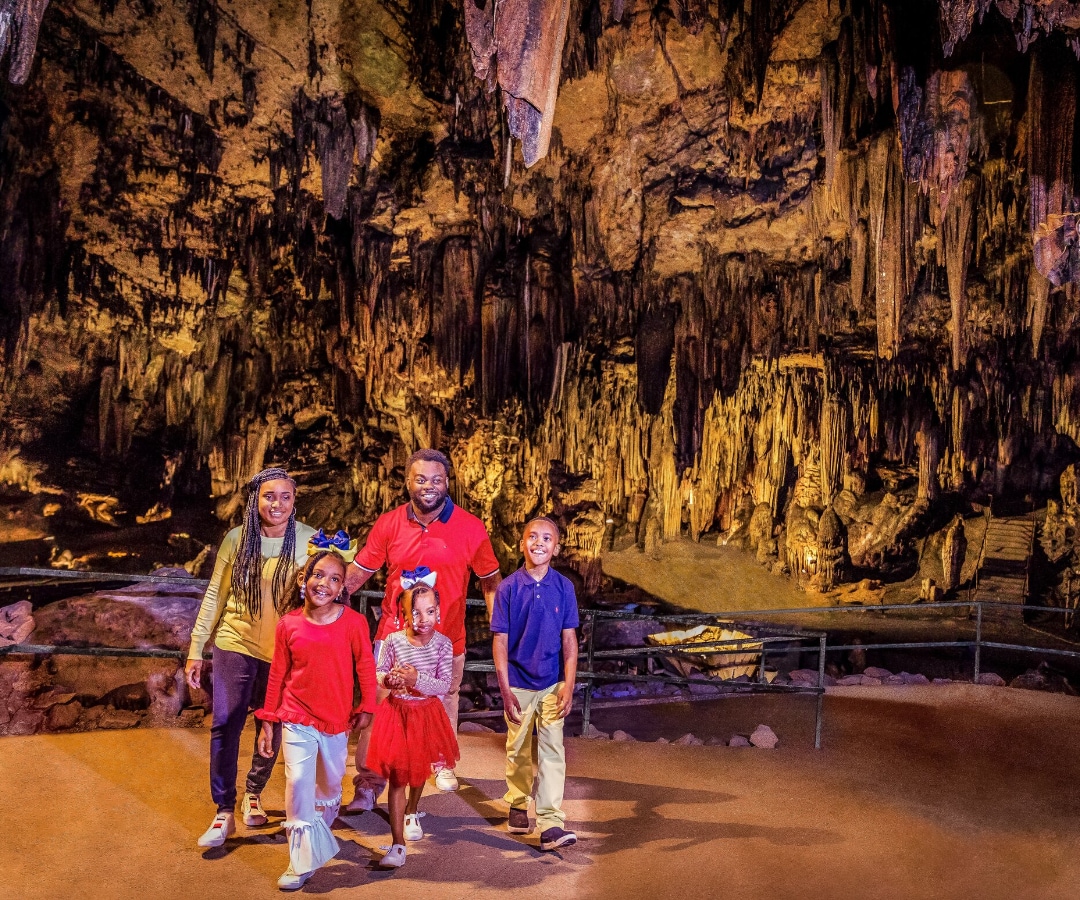
Beneath the hills of Childersburg, Alabama, Majestic Caverns offers one of the most accessible examples of limestone cave geology in the southeastern United States. Shaped by the slow interaction of water and rock across immense spans of time, the caverns reveal the natural processes that shape underground landscapes — from towering stalagmites and delicate draperies to flowing stone and an underground water feature.
Today, the cave remains a living geological environment, where mineral formations continue to develop and change. For visitors, students, and educators, Majestic Caverns provides a rare opportunity to observe earth science in motion.
The caverns are frequently used as a hands-on learning environment for schools, homeschool groups, scouts, and university field studies.
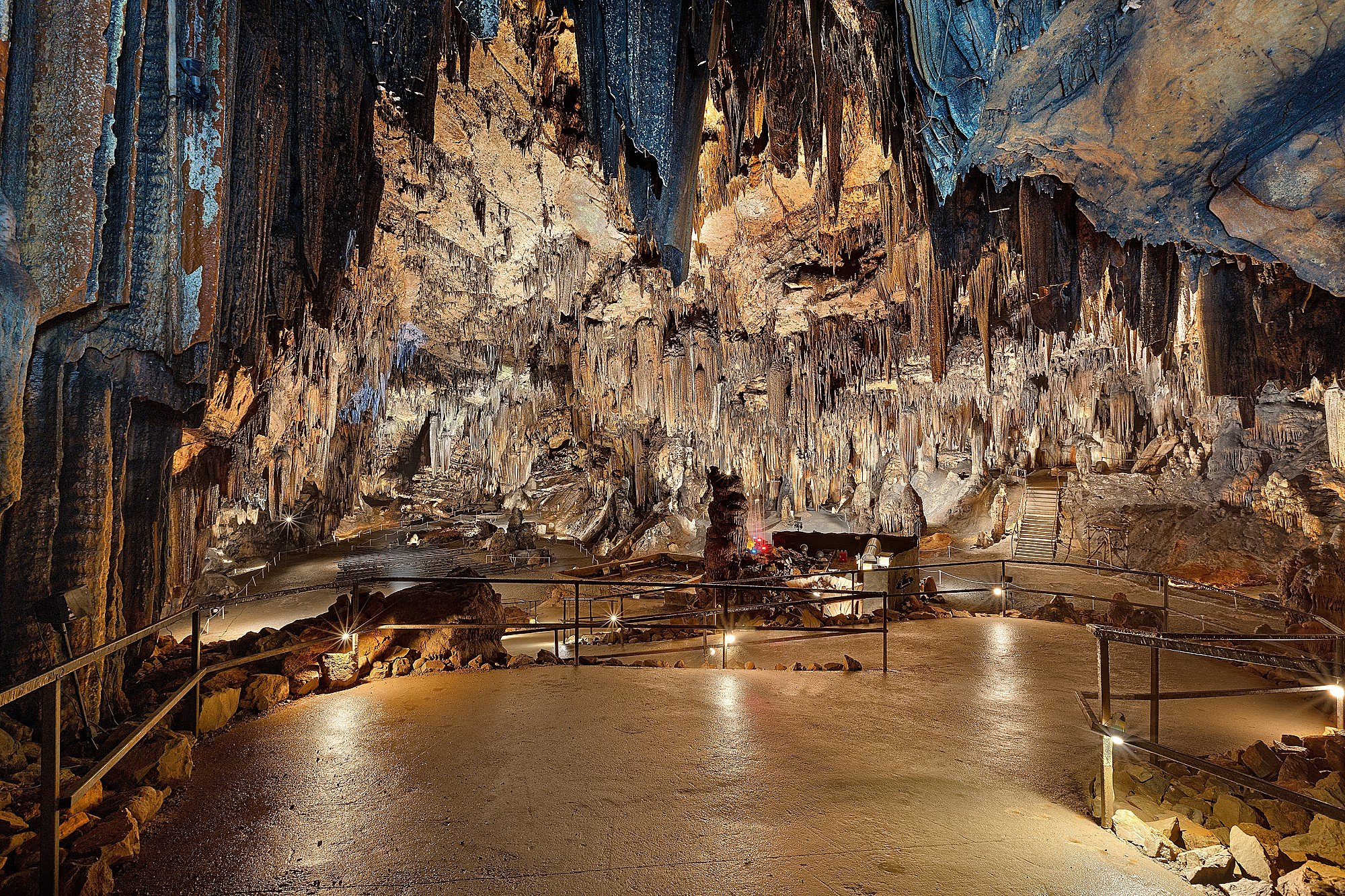
Geological Snapshot
• Rock type: carbonate limestone and dolomite
• Cave type: solution cave formed by karst processes
• Temperature: naturally regulated near 60° year round
• Features: flowstone, draperies, stalactites, stalagmites, columns, onyx formations
• Learning focus: erosion, deposition, groundwater systems, structural geology
How Majestic Caverns Formed
Majestic Caverns is a solution cave, created not by sudden events, but by the patient work of water.
As rainwater moves through soil, it becomes mildly acidic. That water seeps into natural cracks in limestone and slowly dissolves the rock. Over long periods of time, small fractures widen into openings. Openings expand into passageways. Passageways grow into chambers.
Across ages, this steady process shaped the underground rooms visitors walk through today.
This gradual formation created:
• cathedral-like chambers
• narrow corridors
• flowstone walls
• mineral draperies
• stalactites and stalagmites
• and extensive deposits often described as onyx
Unlike dry or fossilized caves, Majestic Caverns remains active, meaning water still moves through the system and mineral formations continue to develop.
Geological Formations You Can Observe
Majestic Caverns provides clear, visible examples of the natural processes that shape limestone caves. Along the tour route, visitors can observe classic karst formations created by mineral-rich groundwater slowly depositing stone over time.
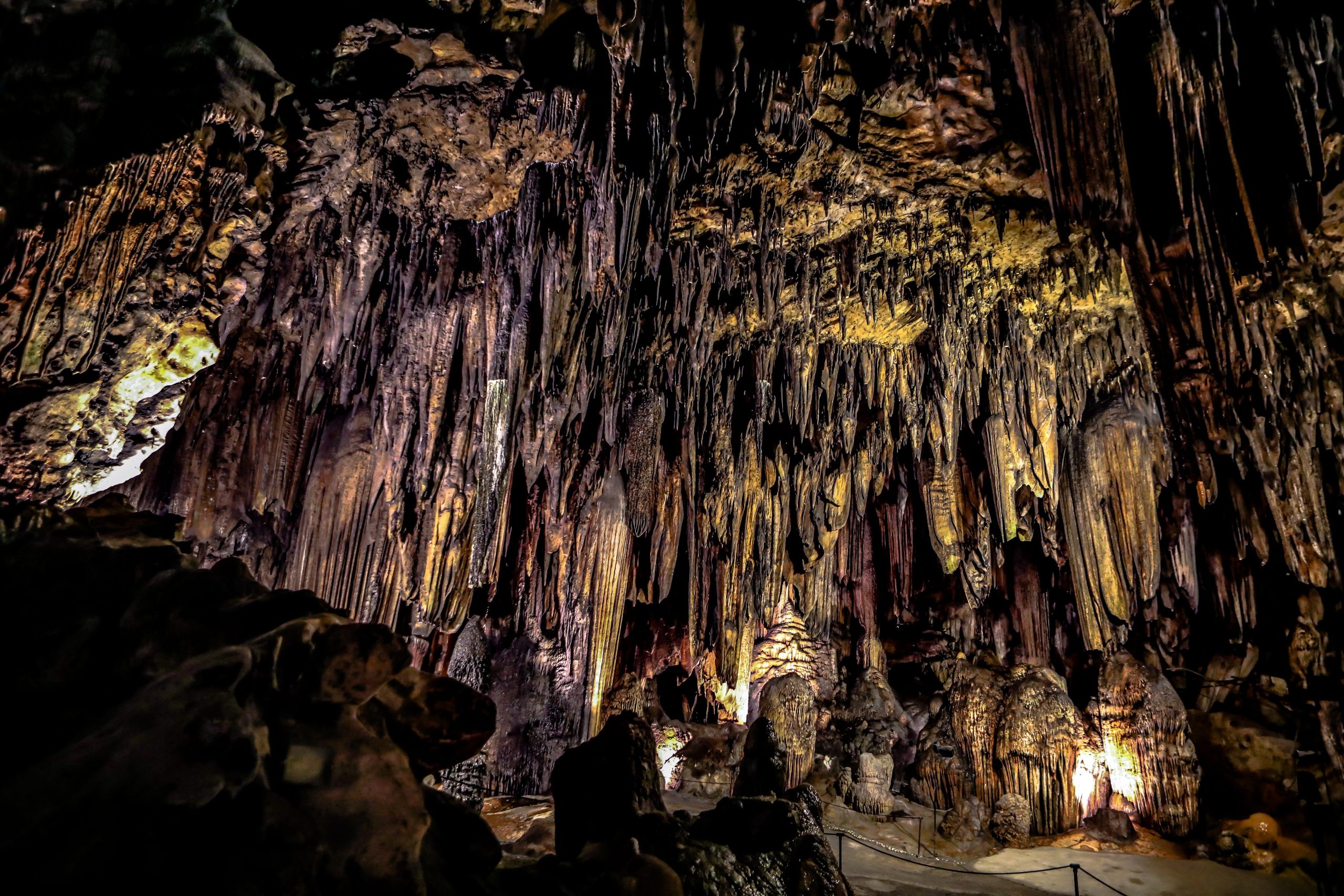
Stalactites
Mineral formations that grow from the ceiling as droplets leave behind thin layers of calcite.
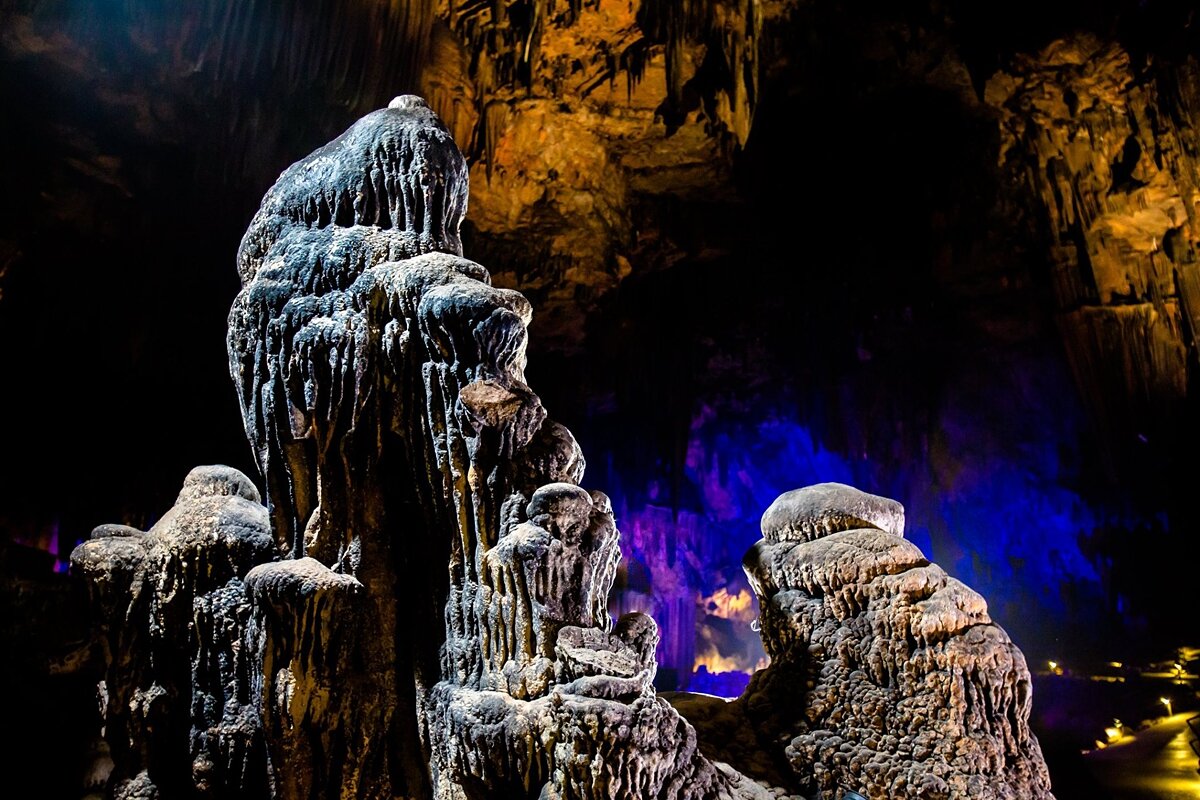
Stalagmites
Upward-growing formations that build from the cave floor where those droplets land and accumulate.
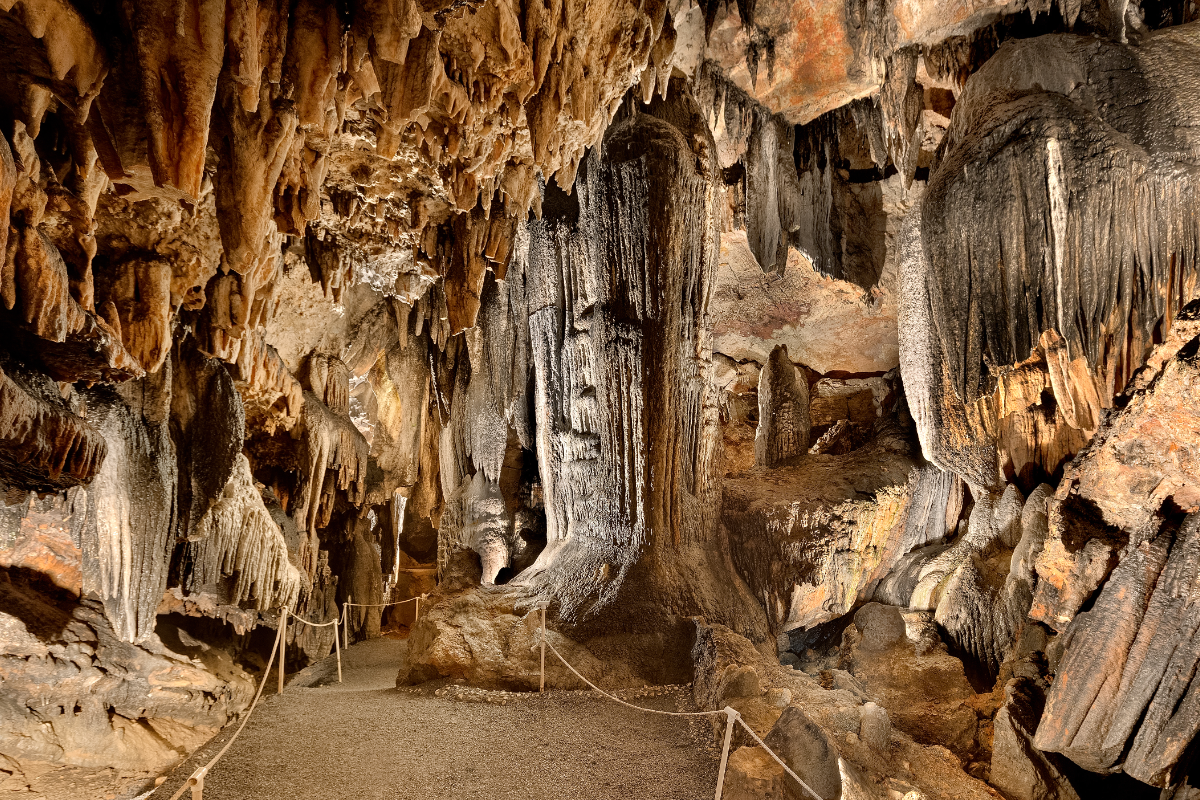
Columns
Floor-to-ceiling pillars formed when stalactites and stalagmites meet, creating continuous stone supports.
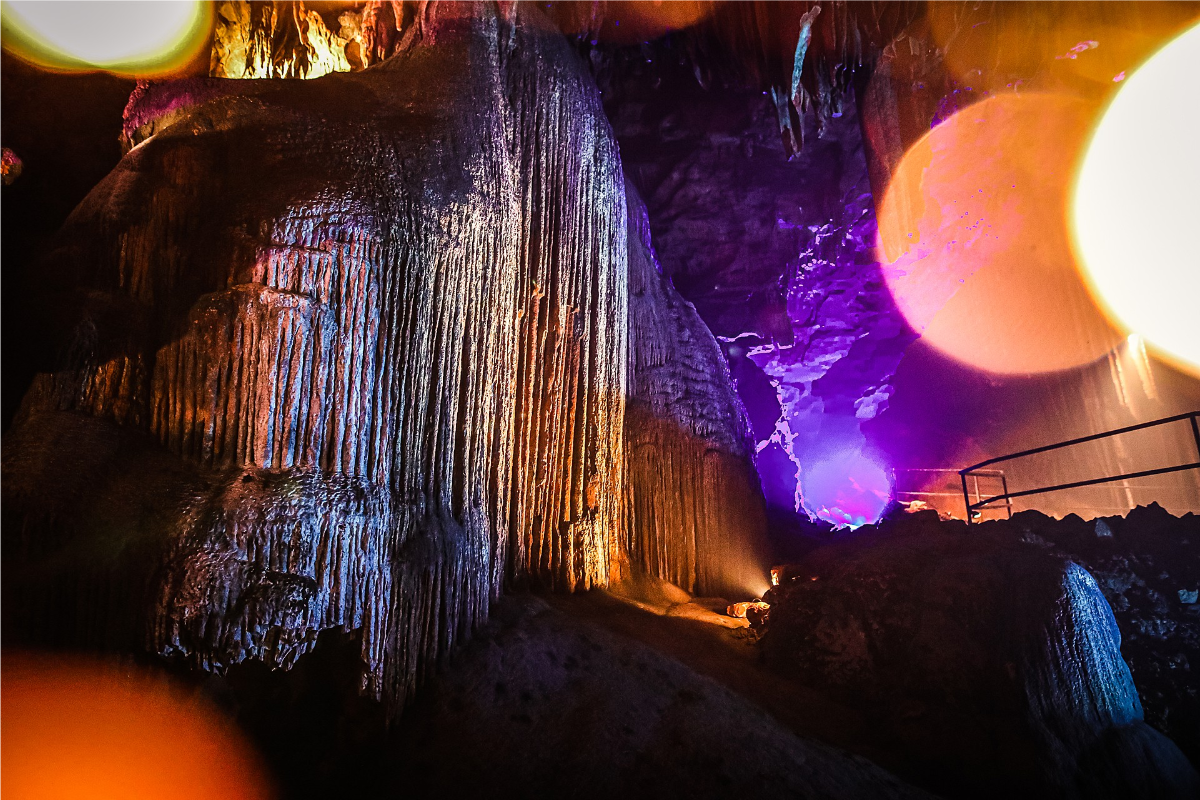
Flowstone
Smooth, layered sheets of mineral deposits formed as water moves across walls and slopes, leaving behind thin coatings that gradually build into broad surfaces.

Draperies (Curtains)
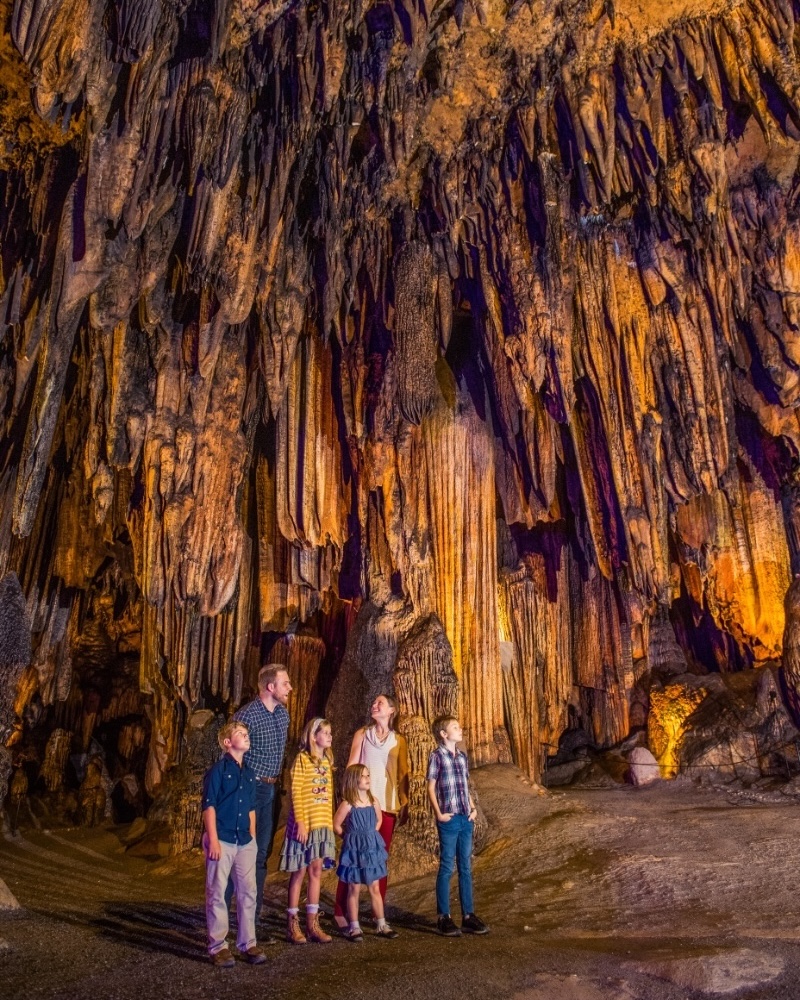
Thin, folded formations that hang like fabric as mineral-rich water travels along angled ceilings.
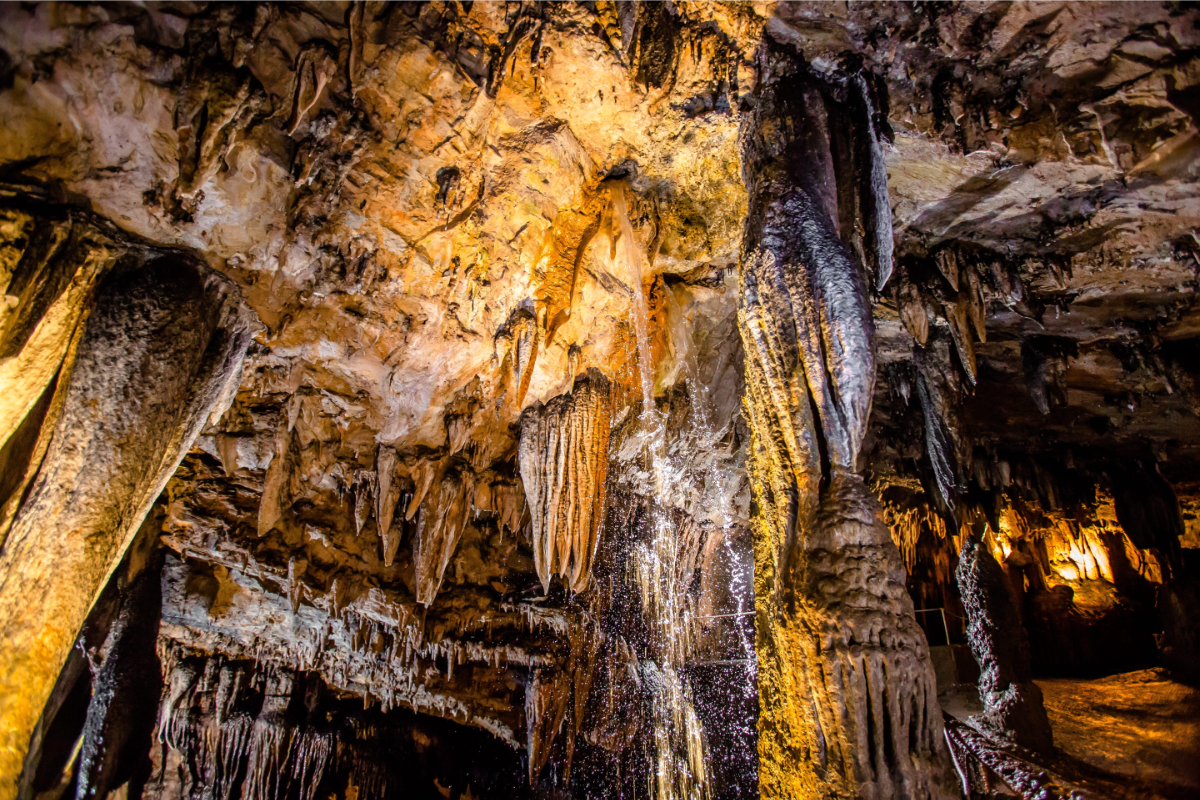
Underground Water Feature
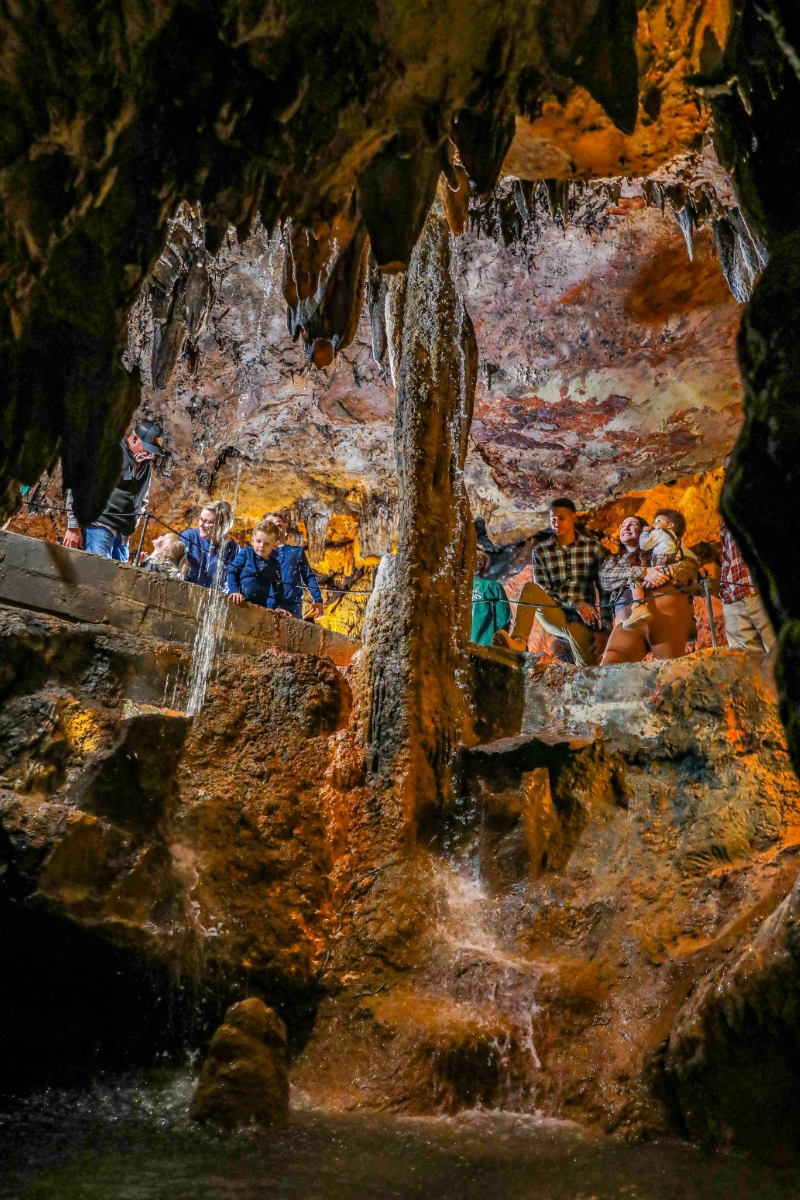
A visible reminder that groundwater still moves through the system, demonstrating the hydrology that continues to shape the cave today.
Notable Geological Characteristics
Beyond individual formations, Majestic Caverns is recognized for several large-scale features that distinguish it among caves in the region and make it especially valuable for public education and interpretation.
Extensive Onyx (Calcite) Deposits
The caverns contain one of the most significant accumulations of gemstone-quality onyx found in a public cave setting, visible throughout the main chambers.
Exceptional Drapery Formations
Visitors encounter unusually long and continuous hanging draperies, illustrating how steady mineral deposition can create delicate, curtain-like stone features at remarkable scale.
Living Cave System
Majestic Caverns is often described as a living or active cave, meaning water still enters the system and mineral formations continue their slow development, allowing guests to observe geology as an ongoing process rather than a finished one.
A Living Geological System
Not all caves continue to change.
Many caves eventually become dry or inactive, preserving only the formations created long ago. Majestic Caverns remains geologically active. Water still travels through the rock. Minerals are still deposited. Formations continue to grow slowly and steadily.
Though these changes may be subtle from year to year, over generations they shape the cave in meaningful ways.
This ongoing activity provides:
• real-time examples of mineral deposition
• visible evidence of groundwater movement
• living demonstrations of karst processes
• opportunities to observe earth science outside the classroom
For students and educators, the caverns function as a natural laboratory where geology can be studied directly.
The Rock Beneath Childersburg
Majestic Caverns formed within ancient carbonate rock that lies beneath the foothills of the Appalachian region.
Over time, groundwater followed natural fractures and fault lines in this limestone and dolomite, gradually enlarging them into the passages and chambers seen today. These structural pathways guided where water flowed and where the cave developed.
Inside the caverns, visitors can observe:
• exposed limestone and dolomite layers
• natural fractures and fault lines
• mineral banding within formations
• evidence of both rock dissolution and mineral deposition
Together, these features illustrate how water, chemistry, and gravity work together to shape underground environments.
An Underground Classroom for Science Education
As a limestone cave in Alabama, Majestic Caverns serves as a hands-on learning environment for:
• school field trips
• homeschool groups
• scouting programs
• church groups
• university classes
• STEM enrichment programs
Field studies commonly explore:
• cave formation processes
• limestone chemistry
• groundwater systems
• regional Alabama geology
• cave ecosystems
• conservation and stewardship
By walking through the formations themselves, students gain a tangible understanding of earth science that cannot be replicated through textbooks alone.

Why It Matters
Majestic Caverns is not simply a place to see geology. It is a place to watch geology happening. Water still moves. Minerals still deposit. Formations still grow. The cave remains a living record of the natural processes that shape our world
Cave Science Questions
What type of cave is Majestic Caverns?
Majestic Caverns is a limestone solution cave formed through karst processes. Slightly acidic groundwater gradually dissolves carbonate rock, enlarging fractures into passages and chambers over long periods of time.
What is the difference between stalactites and stalagmites?
Stalactites form on ceilings as mineral-rich water drips downward and leaves deposits behind.
Stalagmites form on the floor where those same drops accumulate.
When the two meet, they create a column.
Is Majestic Caverns a living cave?
Yes. The cave is considered active or living because groundwater still moves through the system and mineral formations continue to grow slowly through ongoing deposition.
Why is the cave temperature consistent year-round?
Underground environments are naturally insulated by rock and soil. This insulation maintains a stable temperature close to the average annual surface temperature, which keeps the caverns comfortable in both summer and winter.
What is flowstone?
Flowstone forms when mineral-rich water flows across walls or slopes, depositing thin layers of calcite that gradually build into smooth, sheet-like surfaces.
Why are caves important for science education?
Caves provide direct, observable examples of erosion, mineral deposition, hydrology, and geology. Instead of learning these concepts only through diagrams, students can see them happening in real space.
Is Majestic Caverns used for field trips?
Yes. The caverns serve as a hands-on learning environment for schools, homeschool groups, scouts, and educational programs studying earth science, geology, and conservation.
Cave Articles

Grandparents Day in Alabama: The Perfect Place to Take the Grandkids
Share wonder, history and stories with the grandkids on a comfortable Grandparents Day cave adventure in Childersburg, Alabama.

Fall Day Trips in Alabama for Families: Comfortable, Historic and Fun
Looking for a fall day trip in Alabama that works for children, parents and grandparents? Majestic Caverns in Childersburg combines a naturally comfortable 60° cave, a guided experience that lasts just under an hour, centuries of American history and family-friendly...

Cavern vs Cave: What You’re Really Visiting at Majestic Caverns
Is there a difference between a cave and a cavern? Yes, although people often use the words interchangeably. A simple way to understand it is this: a cave is an underground opening, while a cavern usually refers to a larger cave system with multiple rooms or chambers....
info@majesticcaverns.com
Address
5181 DeSoto Caverns Parkway
Childersburg, Alabama 35044
Phone
(256) 378-7252