Intro: Why this Moment Matters
In December 1796, a federal official traveling through the Upper Creek Nation recorded the existence of a large limestone cave in what is now Childersburg, Alabama. His description was not casual travel writing. It appeared in official government correspondence. It was written in the course of federal duties. It was preserved, archived, and later published.
That record places Majestic Caverns among the earliest natural sites in the United States to be formally documented in federal archives.
Few American landscapes have primary-source government documentation this early in the national period. Most caves, waterfalls, and geological features entered the written record decades later through local histories or private journals. In contrast, this cave appears in the papers of a senior federal officer during the administration of George Washington.
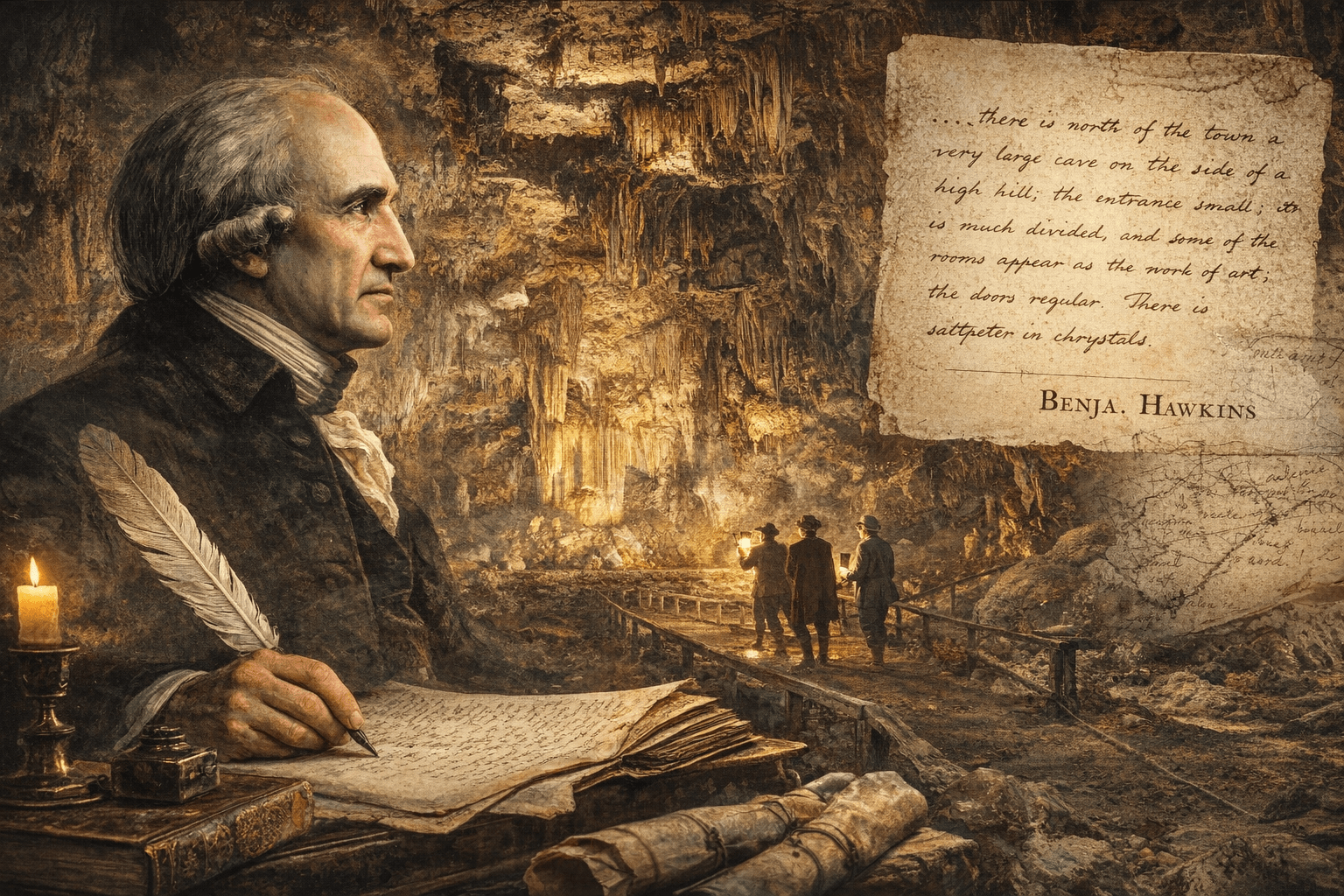
The author was Benjamin Hawkins.
This documentation places Majestic Caverns within the earliest recorded period of the United States, a distinction further explored in the site’s broader America 250 historical research.
Who Benjamin Hawkins was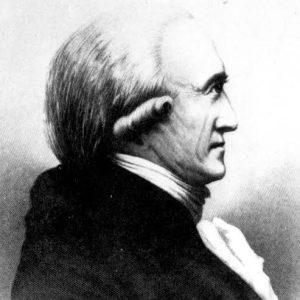
Benjamin Hawkins (1754–1816) served as the United States Superintendent of Indian Affairs for all tribes south of the Ohio River. The post was created during the Washington administration as part of the young nation’s early diplomatic and trade relationships with Native nations.
His responsibilities were administrative and political. He negotiated treaties. He inspected frontier conditions. He maintained correspondence with federal leadership. His reports were practical documents intended for government use.
Hawkins traveled extensively through Creek territory in present-day Georgia and Alabama. During these journeys, he kept detailed notes on towns, geography, agriculture, waterways, and notable natural features.
His letters and journals were preserved as official papers. They were later compiled and published by the Georgia Historical Society. Today, they are held and digitized by the University of Georgia Libraries and the Digital Library of Georgia under the title Letters of Benjamin Hawkins, 1796–1806.
These records are considered primary historical sources. They are contemporaneous government documents rather than later recollections.
What he recorded
While traveling through the region in late 1796, Hawkins described a large cave near Creek settlements situated on limestone terrain. His language was observational and specific.
He noted:
• limestone geology
• a high hill with a small entrance
• multiple interior divisions
• chambers that appeared “much divided”
• rooms that seemed “as the work of art”
• regular openings or “doors”
• deposits of saltpeter in crystals
The reference to saltpeter is significant. Saltpeter (potassium nitrate) was a known strategic material used in gunpowder production. Its presence was routinely noted by surveyors and officials because of military value.
Hawkins’ wording reads like a field report. He did not romanticize the feature. He recorded it as a geographic and material resource within the Creek landscape.
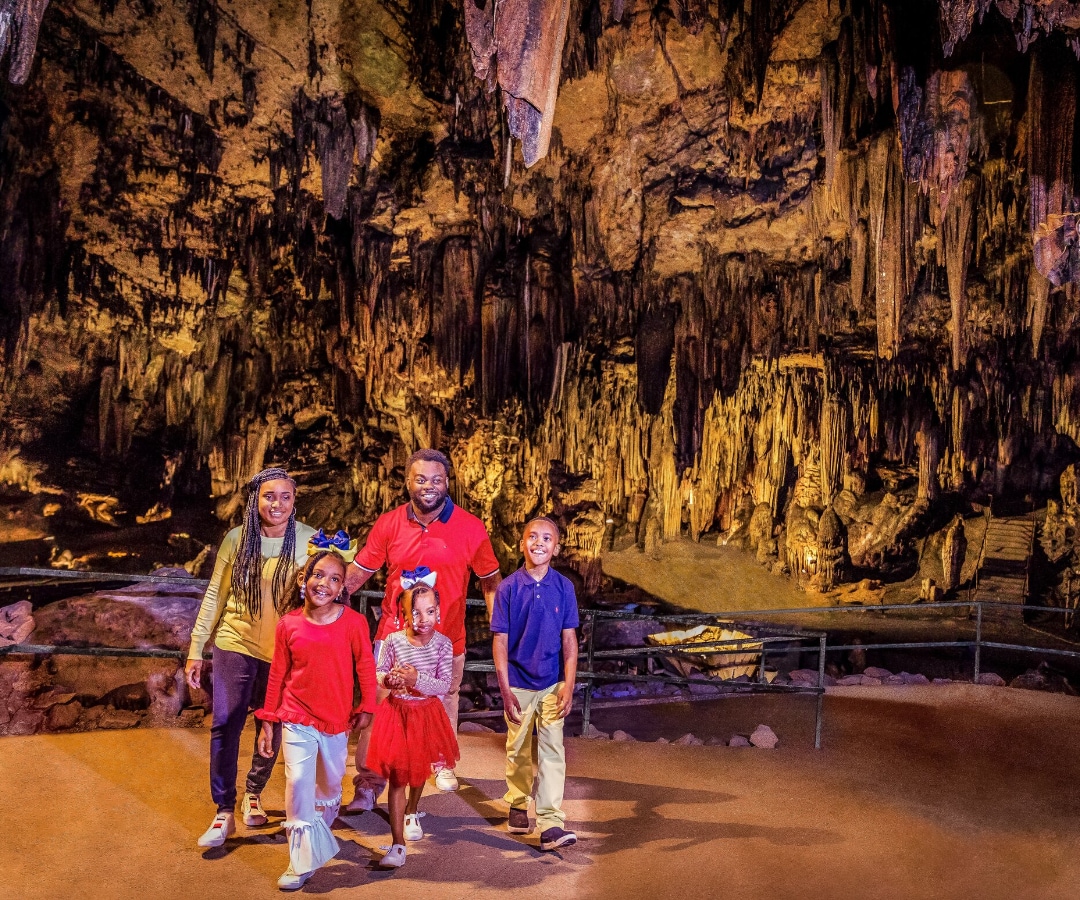
This description aligns closely with the known structure of Majestic Caverns today: a modest natural entrance leading to large interior chambers, limestone formations, and mineral deposits.
Importantly, Hawkins did not describe a tourist site. He documented a natural formation encountered during official travel.
Also important is careful historical phrasing: there is no evidence that George Washington visited the cave. Hawkins reported to the President. The cave itself was not visited by Washington.
What “federal documentation” means historically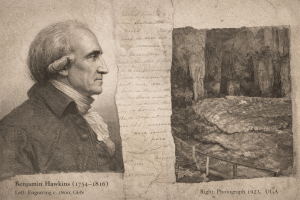
In early American history, “federal documentation” has a precise meaning.
It refers to records created by government officers in the execution of official duties and preserved within government or institutional archives. These are not memoirs or folklore. They are administrative papers.
Hawkins’ letters qualify because:
• he held a federal appointment
• he was reporting as part of his job
• the correspondence was retained as public record
• the documents were archived and later published
This makes the cave’s appearance in his papers an official entry into the national historical record.
Many natural sites in the United States lack this kind of early documentation. Large areas of the country were not systematically surveyed until the 19th century through military expeditions, railroad surveys, or geological studies. Earlier references are rare.
For that reason, an 18th-century federal description of a cave is unusual.
Why this is nationally significant
The year 1796 falls within the first decade of the United States under the Constitution. Federal agencies were still being formed. Much of the interior South remained outside formal American settlement patterns.
Records from this period are limited.
When a natural landmark appears in official correspondence from this era, it places that site within the earliest layer of national documentation.
Majestic Caverns therefore stands among a small group of landscapes that can be traced in writing to the Washington administration.
For scholars, this offers three points of significance:
First, it provides a fixed date for documented recognition of the cave.
Second, it connects the site to early federal Indian affairs policy and Creek diplomacy.
Third, it establishes the cave as part of the documentary history of the early republic rather than solely local tradition.
As the United States approaches the America 250 semiquincentennial, sites with verified 18th-century documentation illustrate how the nation’s early history unfolded not only in cities and battlefields but also in frontier landscapes and natural environments.
Continuity to today
Visitors to the cave today encounter many of the same physical characteristics Hawkins described.
The entrance remains relatively small compared to the size of the interior. The cave opens into large chambers divided by rock formations and passages. Limestone geology dominates the site. Mineral deposits are still visible.
Saltpeter mining later occurred in the cave during the Civil War, a practical use that echoes Hawkins’ early notation of nitrate crystals.
This continuity matters historically. It shows that the natural structure he observed has not disappeared or been entirely altered. The documented feature is still physically present.
Standing inside the main chamber today offers a direct connection to an environment that a federal official described more than two centuries ago.
Few American natural landmarks allow such a clear line between an 18th-century written record and an intact, visitable landscape.
Known historically as DeSoto Caverns, the site now called Majestic Caverns reflects layers of recorded history that extend from Indigenous use through federal documentation and later public preservation.
Sources
Primary sources
Benjamin Hawkins, Letters of Benjamin Hawkins, 1796–1806, Georgia Historical Society; University of Georgia Libraries; Digital Library of Georgia.
Secondary references
Georgia Historical Society archival publications
University of Georgia Libraries digital collections
Regional historical summaries of Majestic Caverns / Kymulga Cave
Alabama historical and archaeological documentation regarding early Creek territory and limestone cave geography
Additional historical documentation, primary sources, and background materials related to Majestic Caverns are available through the site’s Press & Media resources.