Documented Woodland Burials, Copena Culture, and Responsible Stewardship in Alabama
📜 Journalist Summary
Majestic Caverns in Childersburg, Alabama contains documented Woodland-period (Copena culture) burials discovered during archaeological excavations in the 1960s. The remains of five individuals were identified and later respectfully reburied in an undisclosed location within the cave following contact from Native American representatives. No human remains are on display. Interpretation today focuses on preservation, historical documentation, and responsible stewardship rather than sensationalism.
Indigenous Presence Before European Documentation
Long before federal documentation in 1796.
Long before tourism.
Long before electric lights and guided tours.
The cavern now known as Majestic Caverns was part of the lived landscape of Native peoples in the southeastern United States.
Archaeological evidence confirms Indigenous use of the cave centuries before European arrival.
Documented Woodland-Period Burials
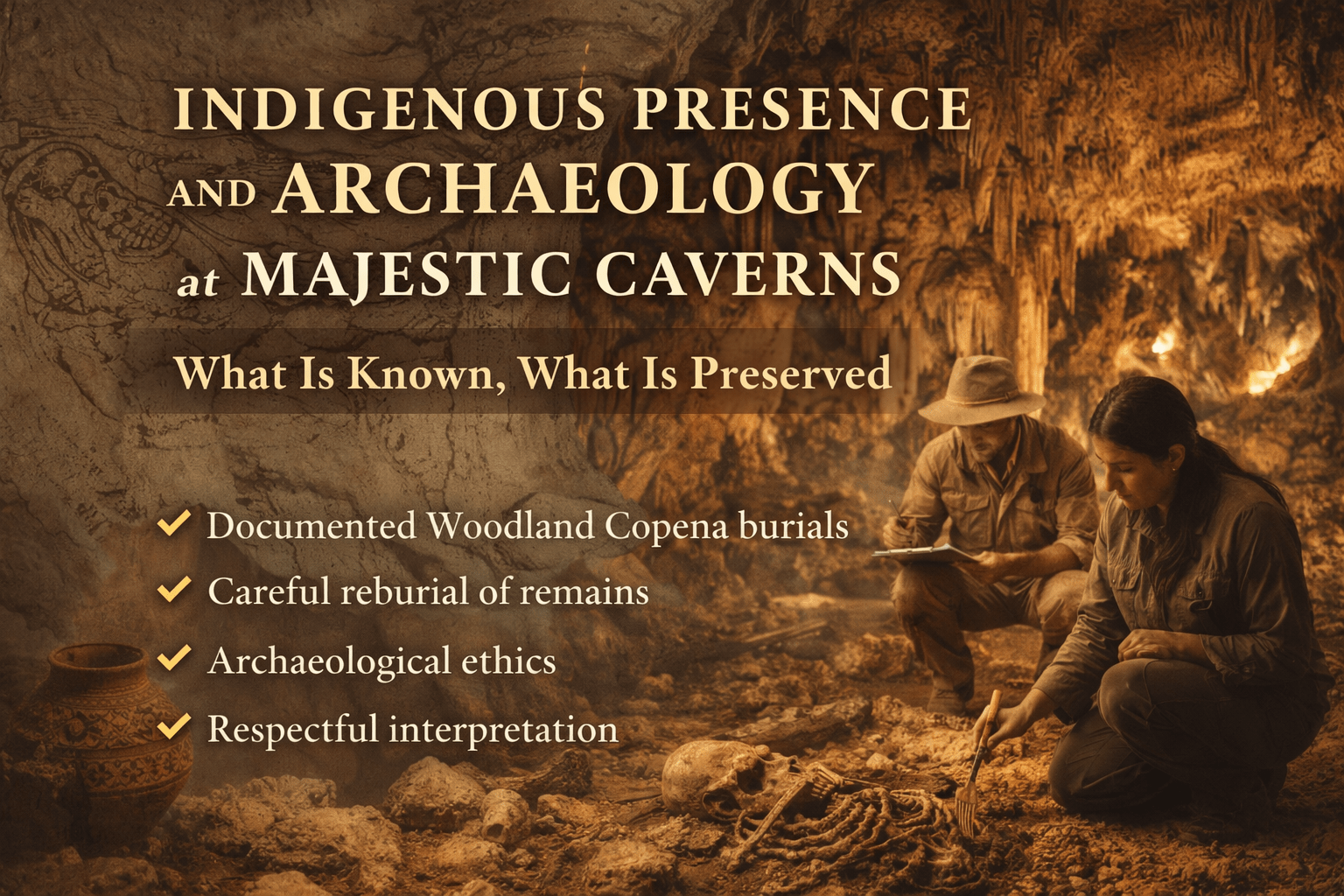
Archaeological research conducted in the 1960s identified Woodland-period burials within the cavern system. These burials have been attributed to the Copena cultural tradition, a Hopewellian-influenced culture present in northern Alabama, Mississippi, and Tennessee approximately 2,000 years ago.
The Copena culture is named for copper and galena artifacts commonly found in associated burial contexts.
Excavations conducted by archaeologists from the University of Alabama documented the remains of five individuals, including one child.
No claims are made beyond what is supported by archaeological documentation.
Reburial and Ethical Responsibility
Following the discovery, representatives of Native American groups contacted cave officials. The remains were respectfully reburied in an undisclosed location within the cave system.
The location is intentionally not public.
Today:
• No human remains are displayed
• No burial locations are identified on tours
• Sensitive areas are not disclosed
This approach aligns with modern archaeological ethics and respect for descendant communities.
Cultural Context of the Region
The area surrounding present-day Childersburg was historically associated with the Coosa people, part of the broader Muscogee (Creek) cultural network.
Caves across the Southeast have historically served many purposes, including shelter, ceremonial use, burial, and resource gathering. However, interpretation at Majestic Caverns remains grounded in documented evidence rather than assumption.
While some historic accounts refer to the cave as “holy” or “sacred,” present-day interpretation avoids assigning ceremonial meaning unless supported by verifiable documentation.
What is historically confirmed:
The cave was part of Indigenous presence long before European exploration.
Archaeology vs. Legend
Historic caves often attract dramatic storytelling. Responsible interpretation requires clear boundaries between:
• Archaeological evidence
• Oral traditions
• Later colonial-era narratives
• Tourism-era folklore
Majestic Caverns distinguishes documented archaeological findings from later storytelling traditions.
This distinction matters for academic credibility, ethical responsibility, and long-term preservation.
Stewardship in the Present
Caves are fragile ecosystems. Archaeological sites are even more vulnerable.
Modern stewardship at Majestic Caverns prioritizes:
• Protection of known burial areas
• Non-disclosure of sensitive archaeological locations
• Educational interpretation grounded in documented history
• Preservation of the cave’s natural environment
• Collaboration with historians and researchers
The goal is not to dramatize the past, but to preserve it.
Why This Matters Today
For Journalists
There is documented archaeological evidence of Woodland/Copena burials. The remains were reburied respectfully. No human remains are on display.
For Educators
The site offers an opportunity to teach Woodland culture, archaeological methodology, and ethical preservation practices in real-world context.
(You can link this sentence to your Education Platform page.)
For America 250 Context
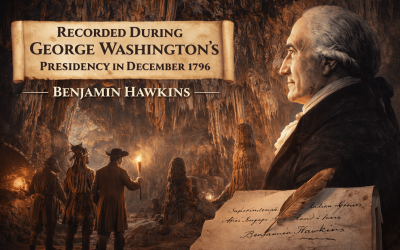
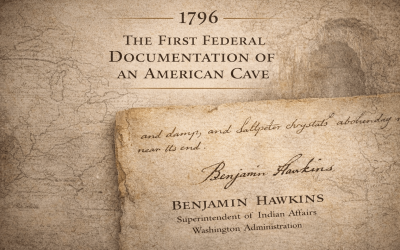
Majestic Caverns represents a layered American story: Indigenous presence, early federal documentation in 1796, Civil War industrial use, and continued family stewardship.
For Visitors
This is not simply a geological site.
It is a place that has witnessed thousands of years of human history.
And that history deserves careful handling.