STORIES THAT RUN DEEP
Where America’s story, Alabama’s heritage, and one Alabama family’s stewardship meet beneath the surface.
Majestic Caverns is a family-owned historic destination in Childersburg, Alabama, where thousands of years of human history, natural wonder, and more than a century of continuous family stewardship can still be experienced firsthand.
From Indigenous heritage and founding-era documentation to Civil War industry, family preservation, and modern public exploration, these limestone chambers hold stories that reach far beyond a single moment in time.
Hours
Mon : 10 AM – 5:30 PM | Fri : 10 AM – 5:30 PM
Sat : 9 AM – 5:30 PM | Sun : 11 AM – 5:30 PM
Check events calendar for future hours, as park hours vary.
Status
Family owned and independently operated
STEWARDSHIP
Cared for by one Alabama family since 1912
Formerly DeSoto Caverns
HISTORIC RECOGNITION
Listed on the Alabama Register of Landmarks and Heritage (1976)
PUBLIC ACCESS
A living historic site still welcoming visitors today
WHY STORIES WITH DEEP ROOTS MATTER
A Cave that Has Served as the Setting for Many of America’s Most Historic Moments
Travelers and journalists are increasingly drawn to authentic places where history, heritage, landscape, and living traditions come together. Majestic Caverns does not recreate that experience. It preserves a place where those stories actually unfolded.
Here, Alabama’s heritage can be explored through documented history, archaeological evidence, natural formations, family records, and chambers that remain open to the public today.

Long before history and heritage became travel themes, they were simply the story of Majestic Caverns.
One Place, Many Stories
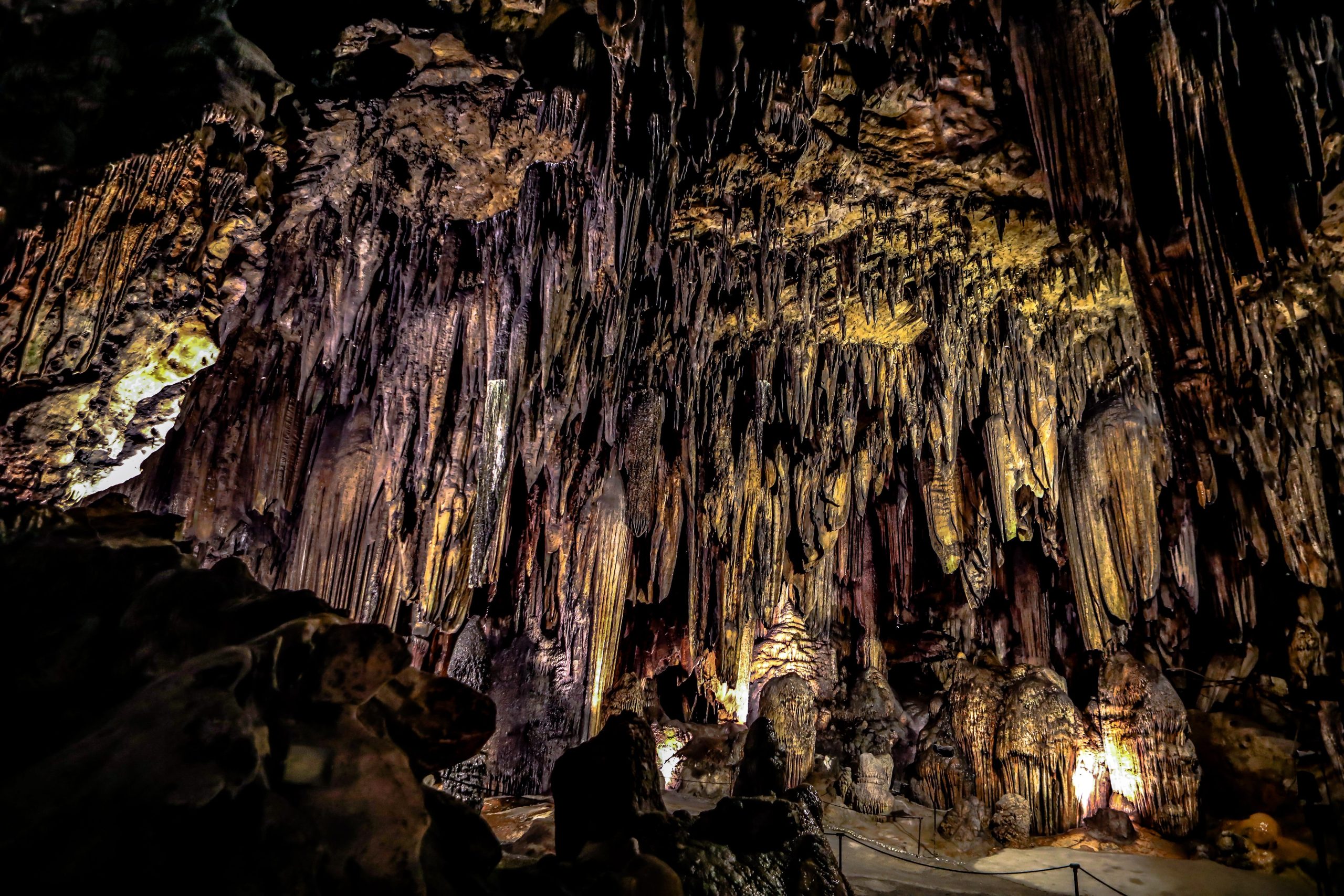
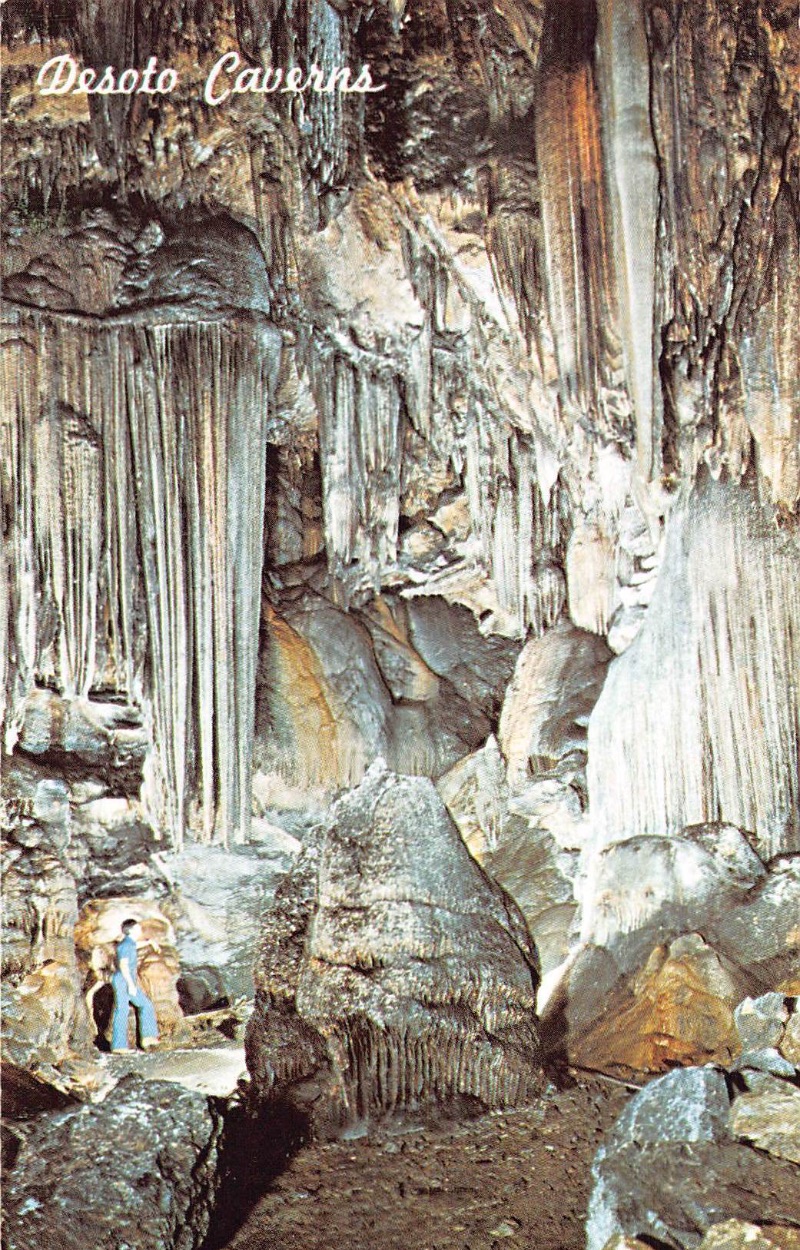
Majestic Caverns provides clear, visible examples of the natural processes that shape limestone caves. Along the tour route, visitors can observe classic karst formations created by mineral-rich groundwater slowly depositing stone over time.
A Landscape Older Than the State
Geology, water, formations, mastodon evidence, and the age of the cave.

Indigenous Heritage
Documented Woodland-period use, archaeology, sacred and cultural significance, and formal state recognition.
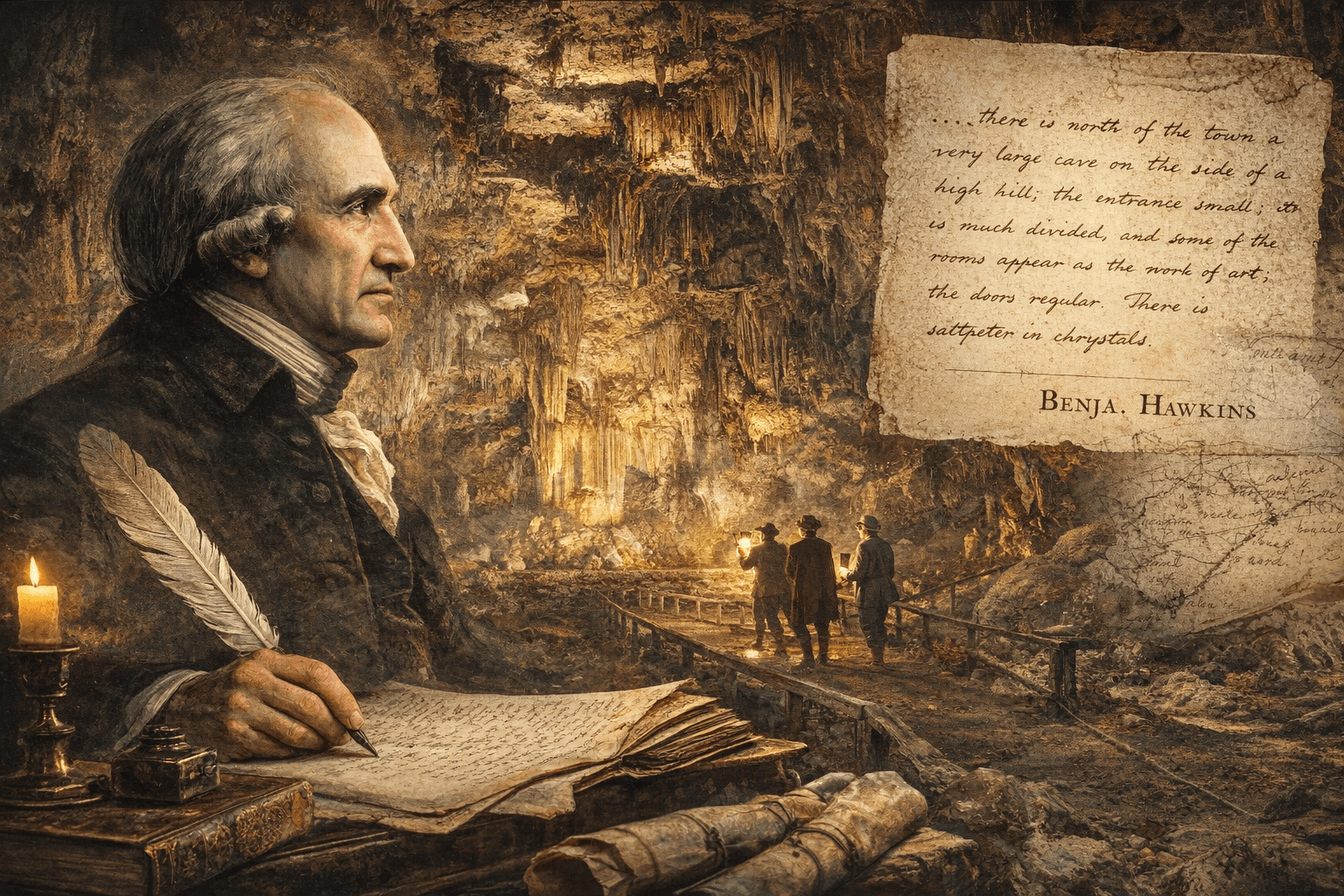
America’s Story Beneath the Surface
Founding-era federal documentation, frontier travel, Civil War saltpeter production, and Prohibition-era history.
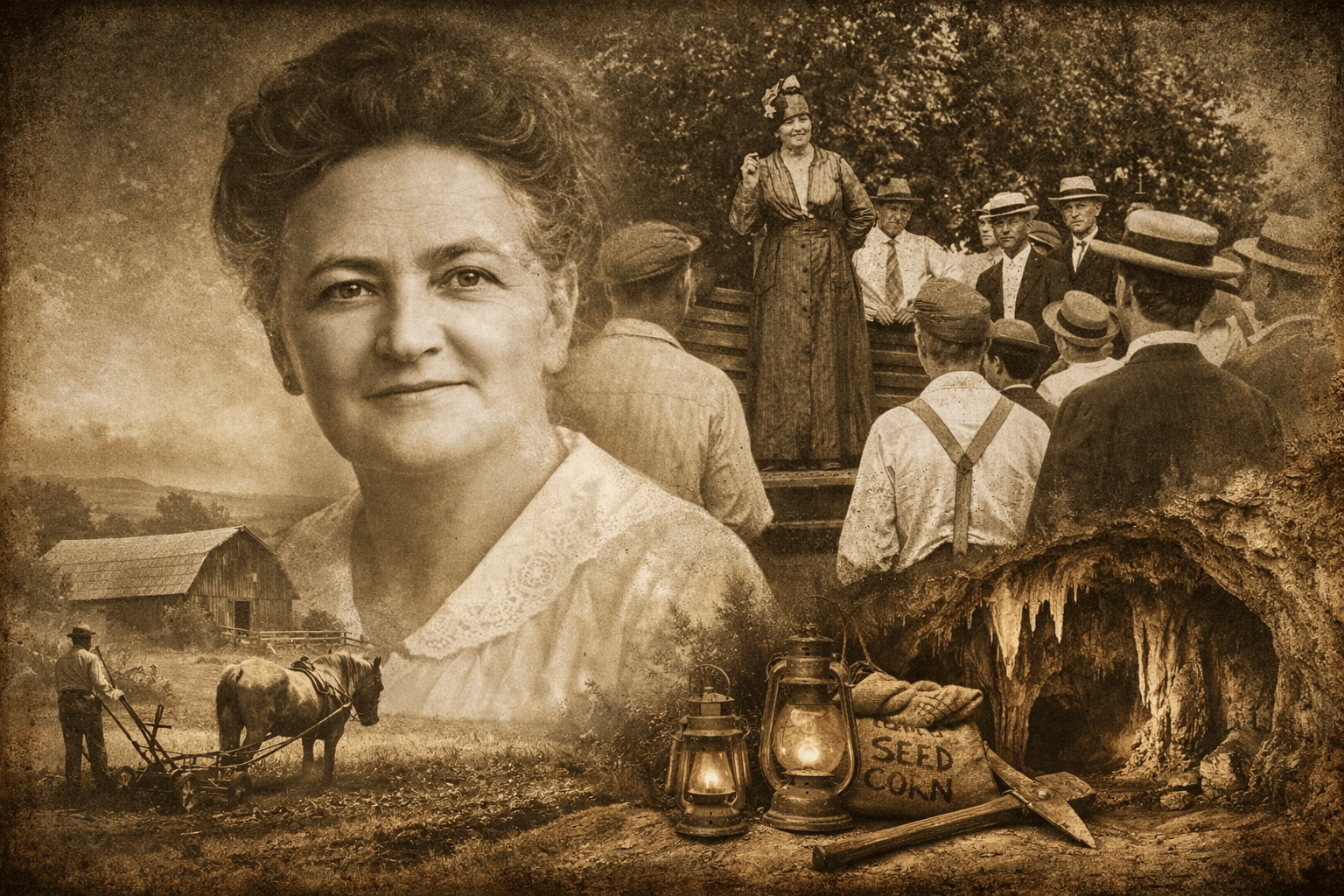
One Alabama Family’s Stewardship
The 1912 purchase, the transition from extraction toward preservation, and more than a century of family care.

A Living Place of Discovery
Families, students, researchers, and travelers still walking through the same chambers today.
A Timeline of Stories That Run Deep
- Deep geological formation
- Ice Age animal evidence
- Indigenous presence and archaeological findings
- 1723 inscription
- 1796 federal documentation
- Civil War saltpeter production
- 1912 Ida Mathis purchase
- Prohibition-era “Bloody Bucket”
- 1965 public access
- 1975 development by Allen W. Mathis III
- 1976 Alabama historic recognition
- Present-day family operation
ROOTS RUN DEEP
More than a century of stewardship by one Alabama family.
Alabama’s Heritage, Still Experienced
Majestic Caverns is not a collection removed from its original setting. It is the setting.
The formations continue to grow. Water still moves through the limestone. Visitors still enter the chambers described in historic accounts. The landscape is preserved not behind glass, but around the people experiencing it.
Here, Alabama’s heritage is not only remembered. It is entered, explored, and passed to a new generation.
Story Angles for Journalists
Where Alabama’s Heritage Runs Deep
A destination connecting Indigenous, founding-era, Civil War, and family history.
The Family That Chose Preservation
How one Alabama family has cared for a natural and historic landmark since 1912.
A Historic Site That Is Still Alive
Why a working cave offers a different encounter with history than a traditional museum.
History Beneath the Road Trip
An accessible Central Alabama destination combining heritage, nature, education, and family travel.
Before Alabama Was a State
The human and natural history preserved beneath present-day Childersburg.
The Stories Written in Stone
How geology, archaeology, documentation, and family memory work together to tell one site’s history.
Historic References
Information on this page is supported by published research and public records, including materials from the Encyclopedia of Alabama, University of Alabama archaeological studies, the Alabama Register of Landmarks and Heritage, the Georgia Historical Society, and University of Georgia Libraries.
A Story Still Being Preserved
Firsthand accounts from the family who has cared for Majestic Caverns for more than fifty years — sharing the history, legacy, and personal stories behind one of America’s most continuously stewarded historic sites.
HISTORICAL CONTEXT & EDITORIAL FAQs
Is Majestic Caverns owned by the State of Alabama?
No. Majestic Caverns is privately owned, family owned, and independently operated. The Mathis family has cared for the property since Ida E. Brandon Mathis purchased it in 1912. Its listing on the Alabama Register of Landmarks and Heritage recognizes its historic significance but does not indicate state ownership.
Who owns and operates Majestic Caverns?
Majestic Caverns is still owned and operated by descendants of Ida E. Brandon Mathis, who purchased the property in 1912. More than a century later, her family continues to preserve the caverns, share their history, and welcome visitors to the site.
How long has the same family cared for Majestic Caverns?
The Mathis family has cared for Majestic Caverns since Ida E. Brandon Mathis purchased the property in 1912. The caverns have remained within her family through multiple generations of ownership, preservation, and public operation.
Why is Majestic Caverns historically significant?
Majestic Caverns preserves thousands of years of natural and human history within one living landscape. Its documented story includes Indigenous use, early American exploration, federal documentation during George Washington’s presidency, Civil War saltpeter mining, Prohibition-era gatherings, and more than a century of continuous family stewardship.
Is Majestic Caverns an officially recognized historic site?
Yes. Majestic Caverns was listed on the Alabama Register of Landmarks and Heritage in 1976 in recognition of its archaeological, historical, and cultural significance. The designation recognizes the importance of the site while the property remains privately and family owned.
What primary sources support the caverns’ historical claims?
The history of Majestic Caverns is supported by archaeological studies, government records, historical correspondence, published research, family archives, and materials held by universities and historical institutions. Sources include documentation connected to Benjamin Hawkins, archaeological work associated with the University of Alabama, and records supporting the cave’s inclusion on the Alabama Register of Landmarks and Heritage.
Is Majestic Caverns still open to the public?
Yes. Majestic Caverns remains a living historic site that is open to visitors. Guests can walk through the same limestone chambers connected to the site’s documented history while experiencing guided interpretation, natural formations, and modern family programming.
Can journalists arrange interviews, photography, or filming?
Yes. Majestic Caverns welcomes media inquiries and can assist with interviews, photography, filming, historical research, and access to available media assets. Advance coordination is required so the team can help identify the most relevant locations, sources, family representatives, or subject-matter experts for each story.
Historical Articles
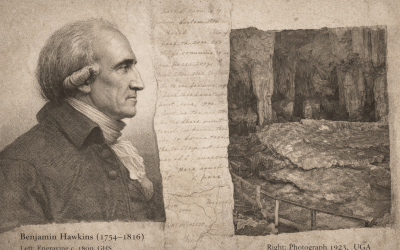
Benjamin Hawkins and the First Federal Documentation of an American Cave (1796)
In December 1796, a federal official appointed by President George Washington entered a sacred cave in what is now Childersburg, Alabama. His name was Benjamin Hawkins. He wrote about what he saw. And because he recorded it in his official capacity as a United States...
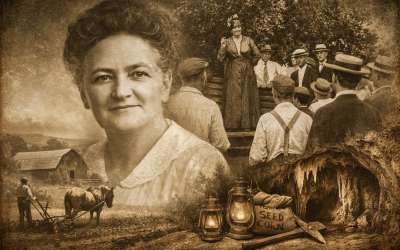
Ida Mathis and the Stewardship of Majestic Caverns
A case study in family preservation, agricultural reform, and the rare continuity of place Why Preservation Stories Matter Across the United States, historic landscapes often follow a familiar arc. Land is extracted, subdivided, redeveloped, or transferred through...

Benjamin Hawkins and the First Federal Documentation of Majestic Caverns (1796)
Intro: Why this Moment Matters In December 1796, a federal official traveling through the Upper Creek Nation recorded the existence of a large limestone cave in what is now Childersburg, Alabama. His description was not casual travel writing. It appeared in official...