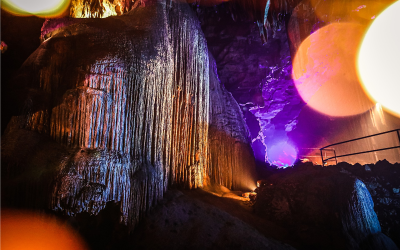
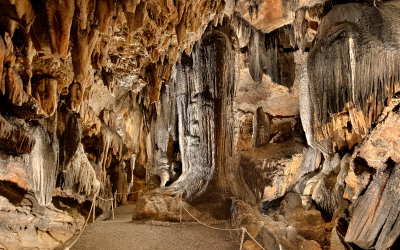
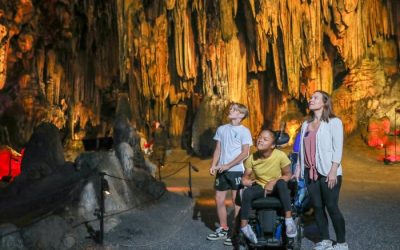
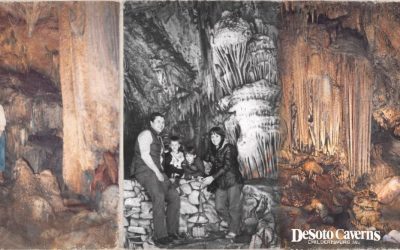
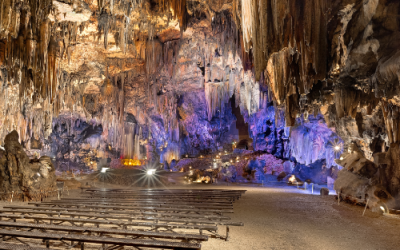
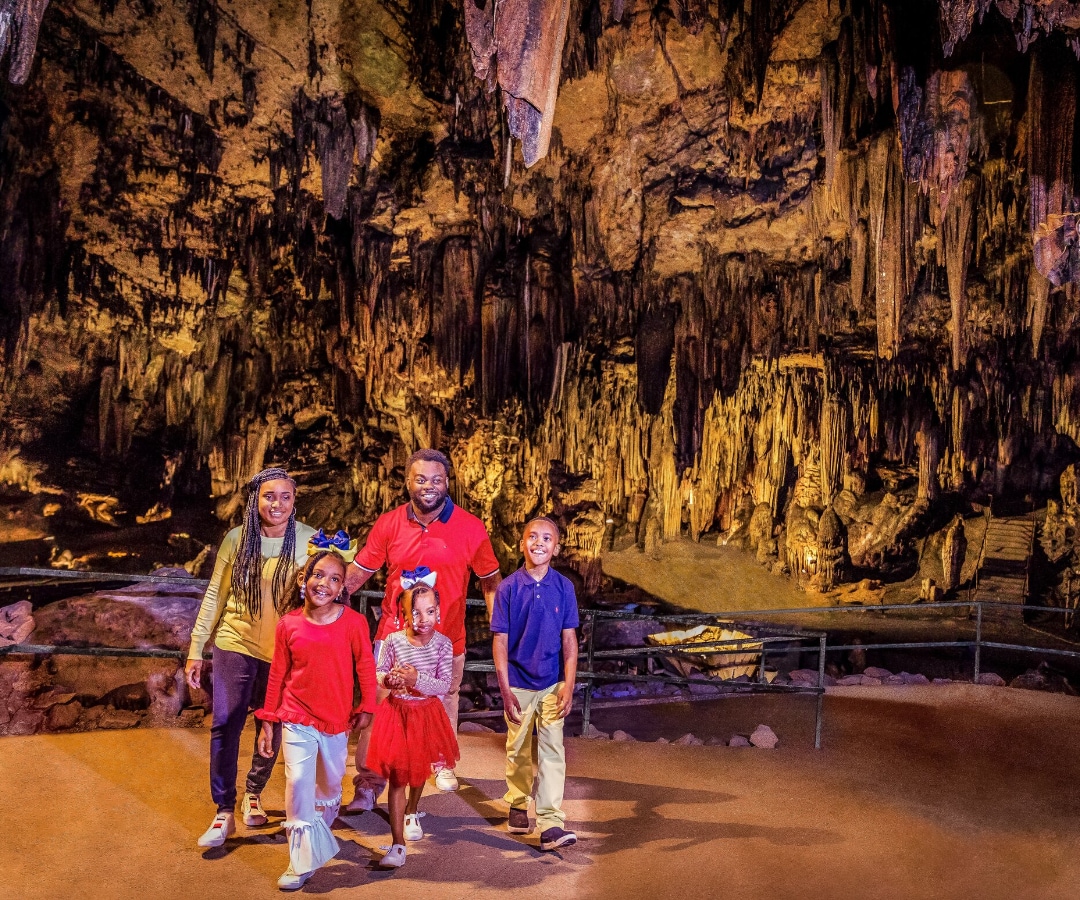
Columns, Flowstone, Onyx, and Drapery Not All Cave Formations Are the Same Majestic Caverns contains a concentrated variety of visible speleothems that can be clearly identified during a guided tour. Formations inside the cave include: • Columns• Stalactites•...
Special Events
Attractions
Cave
Groups
Your Guide To Majestic Caverns Happenings
What “Recorded During George Washington’s Presidency” Actually Means (And Why It’s Accurate)
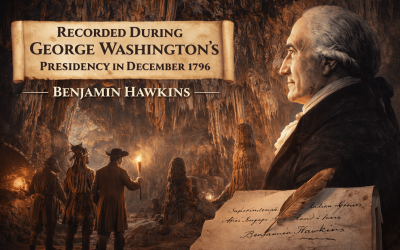
At Majestic Caverns, you may have heard this phrase: “Recorded during George Washington’s presidency.” It’s a powerful statement. It’s also one we use carefully. In an age where history is often exaggerated, misquoted, or flattened into headlines, we believe clarity...
How Natural Sites Were Documented in America’s Early Republic
Natural Documentation Before Statehood In the late 1700s, the United States did not have a National Park Service, state geological surveys, or formal preservation systems. Natural sites were documented through: • Federal correspondence• Military surveys• Land...
What Makes a Cavern “Alive”?
Geological Activity Inside Majestic Caverns A “Live Cave” Is a Scientific Classification When geologists describe a cave as “alive,” they are not speaking metaphorically. They are identifying an active karst system — a cave where mineral formation is still occurring....
Childersburg Recognized Among Alabama’s Most Unforgettable Small Towns
Recently, travel publication WorldAtlas highlighted eight unforgettable small towns across Alabama. Among mountain overlooks, coastal sunsets, and river towns, one place stood out for its deep history and underground wonder — Childersburg. For many Alabamians,...
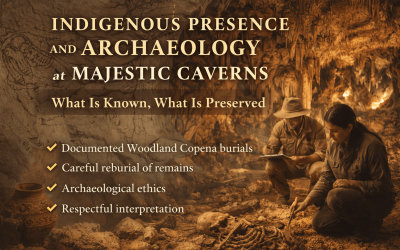
Indigenous Presence and Archaeology at Majestic Caverns
Documented Woodland Burials, Copena Culture, and Responsible Stewardship in Alabama 📜 Journalist Summary Majestic Caverns in Childersburg, Alabama contains documented Woodland-period (Copena culture) burials discovered during archaeological excavations in the 1960s....
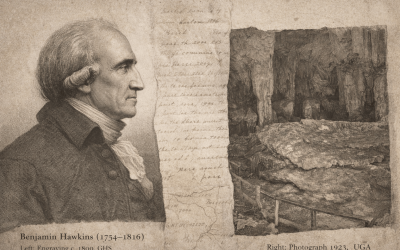
Benjamin Hawkins and the First Federal Documentation of an American Cave (1796)
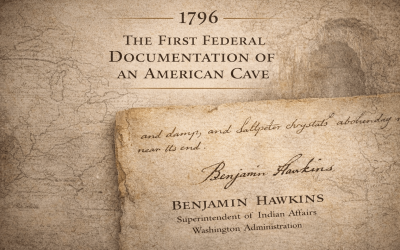
In December 1796, a federal official appointed by President George Washington entered a sacred cave in what is now Childersburg, Alabama. His name was Benjamin Hawkins. He wrote about what he saw. And because he recorded it in his official capacity as a United States...
Planning a Montgomery Trip? Don’t Miss This Underground Adventure
Montgomery has recently been featured in national travel roundups highlighting its must-visit attractions, and it’s easy to see why. The city offers powerful history, meaningful landmarks, and unforgettable cultural experiences. If you’re planning your visit, you’ll...
Allen Mathis III Stewardship in Practice at Majestic Caverns
Some historic places survive by accident.Others survive because someone chooses, day after day, to take responsibility for them. At Majestic Caverns, that responsibility became personal. For more than five decades, Allen Mathis III has served as the principal steward...
Ida Mathis and the Stewardship of Majestic Caverns
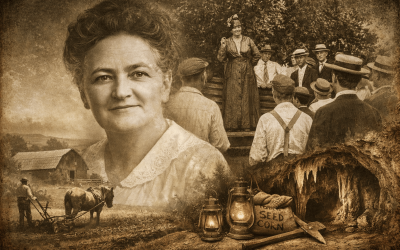
A case study in family preservation, agricultural reform, and the rare continuity of place Why Preservation Stories Matter Across the United States, historic landscapes often follow a familiar arc. Land is extracted, subdivided, redeveloped, or transferred through...
Bathrooms Inside a Cave: Why This One Feature Makes Majestic Caverns a Family Favorite
Parents don’t usually plan day trips around bathrooms—until they’ve been burned once or twice. If you’ve ever whispered “Can you hold it just a little longer?” or cut an experience short because someone needed a restroom right now, you already understand why this...
Benjamin Hawkins and the First Federal Documentation of Majestic Caverns (1796)
Intro: Why this Moment Matters In December 1796, a federal official traveling through the Upper Creek Nation recorded the existence of a large limestone cave in what is now Childersburg, Alabama. His description was not casual travel writing. It appeared in official...