Geological Activity Inside Majestic Caverns
A “Live Cave” Is a Scientific Classification
When geologists describe a cave as “alive,” they are not speaking metaphorically.
They are identifying an active karst system — a cave where mineral formation is still occurring.
Majestic Caverns is considered a live cave because water continues to move through its limestone structure, depositing calcite and forming new speleothems.
The surrounding limestone was deposited approximately ages ago. Yet the geological processes that created it are still active today.
This distinction is scientifically significant.
What Makes a Cave “Alive”?
Three geological conditions must be present:
1. Water Infiltration
Rainwater absorbs carbon dioxide in the soil, forming weak carbonic acid.
2. Limestone Dissolution
That acidic water dissolves calcium carbonate as it travels downward through rock.
3. Mineral Deposition
When water enters the cave atmosphere, carbon dioxide escapes, and calcite crystallizes — building formations molecule by molecule.
Every drip is geological construction in progress.
Visible Evidence of Ongoing Growth
Visitors on guided tours may observe:
• Active drip points
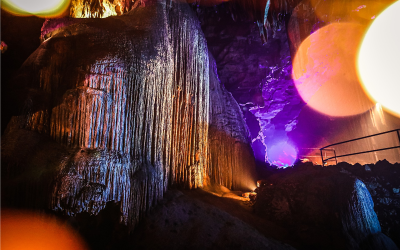
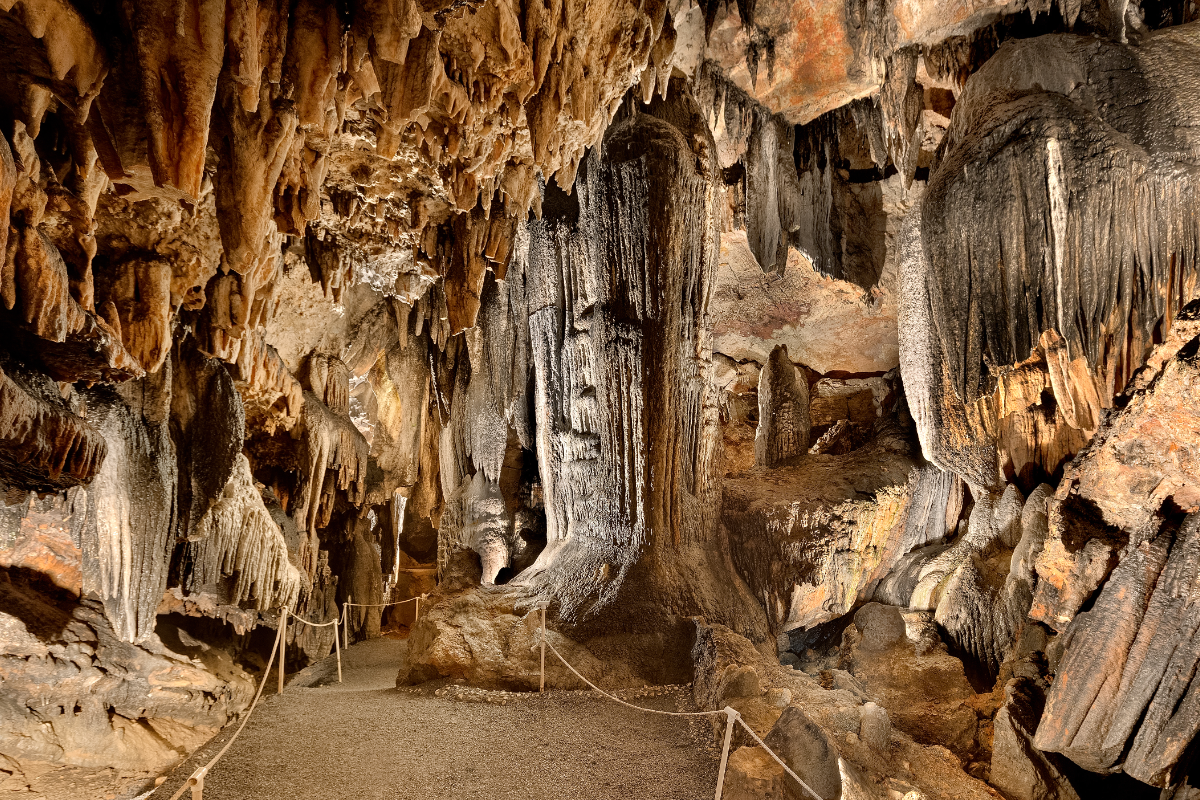
• Soda straws forming from ceiling fractures
• Glossy flowstone surfaces
• Bright white crystalline calcite indicating recent deposition
Majestic Caverns maintains a consistent interior temperature of approximately 60 degrees year-round. This stable microclimate supports mineral saturation and protects formation growth.
In geological terms, this is not a fossil cave. It is an active Earth system. View our science and geology page here.
Why Active Caves Matter 
Live caves:
• Preserve paleoclimate data within calcite layers
• Demonstrate groundwater movement
• Maintain delicate subterranean ecosystems
• Record long-term hydrological patterns
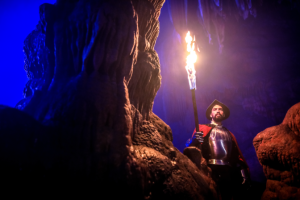
Historically, the cave was mined for saltpeter during the Civil War. Today, stewardship practices focus on preserving the geological processes still underway.
The value of the cave is no longer in extraction.
It is in preservation.
Journalist Pull Quotes
“Majestic Caverns is not a fossil cave. It is an active karst system where mineral deposition is still occurring.”
“Every drip inside the cavern represents ongoing geological formation.”
“A live cave is a functioning Earth system — not just a historic landmark.” See our educational pages here which discuss more about earth systems.
Frequently Asked Questions
What is a live cave?
A live cave is one where water continues depositing minerals and forming speleothems.
Is Majestic Caverns geologically active?
Yes. Water movement and calcite deposition continue inside the cavern.
How old is Majestic Caverns?
The surrounding limestone dates to approximately 500 million years old. The cave system formed roughly 3 million years ago.
Why is the cave always 60 degrees?
Underground environments regulate temperature naturally, creating a stable year-round climate.
Sources
Encyclopedia of Alabama – Majestic Caverns
Show Caves of the United States – Majestic Caverns
Timeless Cave Tour Materials
Official Park Historical Documentation